Can You Use Drain Cleaner in a Toilet? Safe Methods and Alternatives
Learn whether you can use drain cleaner in a toilet, the risks involved, and safer methods. This guide covers mechanical unclogging, toilet-specific products, and when to call a pro, with practical steps for DIYers.


Can you safely use a drain cleaner in a toilet? Generally, do not pour standard liquid or gel drain cleaners into toilets. They can damage porcelain, seals, and septic systems, and may create hazardous fumes. If a toilet is clogged, start with safer methods (plunger, toilet auger) and reserve toilet-specific products only if labeled for toilets and used as directed. Drain Guide recommends avoiding aggressive chemical cleaners in toilets whenever possible.
Why Toilet Drain Cleaners Are a Special Case
Toilets are more than a simple drain with a standing water trap; they connect to a sealed waste system through a wax ring and flange. Because of this design, many common drain cleaners are not suitable for toilets. According to Drain Guide, liquids and gels labeled as drain cleaners are often formulated for sinks and shower drains, not for toilets, and they can sit in the bowl longer than intended. Prolonged contact with porcelain and seals can lead to micro-scratches, softened gaskets, and even leaks around the flange. More troubling, caustic formulas can irritate eyes and lungs if fumes accumulate in small bathrooms. Some cleaners also disrupt septic systems by killing beneficial bacteria or altering pH, which can worsen clogs later. Because of these risks, the best practice is to avoid standard drain cleaners in toilets whenever possible and instead rely on mechanical methods or products specifically labeled for toilets, used exactly as directed. In short: safety, system integrity, and patience beat aggressive chemical cures.
How Toilets Differ From Other Drains
Toilets are not just another pipe in your home. They have a built-in water seal, a trap, and a direct path to the sewer line through a wax ring and flange. This configuration means clogs in toilets behave differently than those in sinks or tubs. The water in a toilet bowl can mask the true depth of a blockage, and the normal use of the toilet can force waste and debris into sections that are less accessible to cleaners. Mechanical methods like plungers or toilet augers are designed to work with this unique geometry. Also, because the toilet is connected to a sealed system and may be on a septic tank, harsh chemicals can upset the microbial balance and cause long-term issues. For these reasons, toilet safety guidance emphasizes cautious, measured steps rather than brute chemical action. If you’re unsure, consult a professional before attempting stronger chemical interventions.
Safer Alternatives to Chemical Drain Cleaners
When facing a toilet clog, start with mechanical methods that respect the fixture. A proper flange plunger creates a strong seal and allows you to apply effective suction with controlled pumps. If plunging fails, try a toilet auger to reach deeper obstructions without scratching porcelain. Enzymatic cleaners are a gentler option that can help maintain drainage over time, and they may be preferred if you’re on a septic system. They are not a quick fix for a stubborn toilet clog, but they’re safer for ongoing maintenance than caustic products. Some households find success with simple, safe options such as small amounts of hot water added gradually after plunging, but avoid boiling water that could crack porcelain. Always avoid mixing cleaners, and do not rely on unproven home remedies for serious clogs. If you must use a chemical product, choose one labeled specifically for toilets and follow the instructions to the letter. Drain Guide’s stance is clear: mechanical methods first, then toilet-safe chemicals only when necessary and clearly labeled.
How to Read Labels and Choose Toilet-Safe Products
When selecting products, look for labels that state explicitly 'toilet-safe' or 'for toilets' and check whether the product is septic-safe if you have a septic tank. Avoid cleaners with highly caustic or acidic ingredients unless the manufacturer clearly labels them for toilet use and provides safety guidance. Read the warnings, contact times, and dilution requirements; never mix products. If you’re unsure about compatibility with your plumbing material (PVC, copper, etc.), check the manufacturer’s compatibility notes. For septic systems, enzymatic or enzyme-assisted formulas tend to be gentler on bacteria, though they may take longer to work. Keep a clear space around the toilet during treatment and ensure good ventilation. In practice, you’ll often find that the safest path combines careful mechanical work with a toilet-safe product used sparingly and according to label directions.
Practical, Non-Chemical Methods to Clear a Clog
Start with the simplest physical method: a properly fitted flange plunger. Position the plunger to cover the drain and push with steady, deliberate force to create suction. A few strong cycles usually dislodge partial blockages. If plunging alone doesn’t work, move to a toilet auger and gently rotate as you push the cable into the trap. Retrieve any visible debris and flush to test. After a successful clear, flush several times with plain water to ensure the bowl drains correctly. If you still observe slow drainage, avoid repeated chemical attempts and consult a professional. Regular maintenance, such as avoiding excessive toilet paper and using safe enzymatic cleaners as part of a routine, helps prevent future clogs.
Safety First: Risks and Precautions
Always prioritize safety when tackling toilet clogs. Wear protective gloves and eye protection, and ensure you have adequate ventilation. Never mix cleaners or pour multiple products at once, as chemical reactions can release dangerous fumes or heat. If you see signs of corrosion on metal parts, cracks in porcelain, or a persistent water level rise, stop and call a plumber. If there is sewage backup or sewage odors, evacuate and contact emergency plumbing services. Store cleaners out of reach of children and pets. By combining careful mechanical work with labeled, toilet-safe products—when needed—you reduce risk and protect your home and its plumbing system.
When to Call a Professional
If a clog persists after safe methods, or you notice multiple drains behaving oddly, it’s time to contact a licensed plumber. A professional can assess whether the issue is a simple blockage, a vent problem, or a deeper sewer line problem. They may use specialized tools, such as a plumber’s snake with greater reach, camera inspection, or hydro jetting, to diagnose and clear the issue without damaging your fixtures. Early intervention can prevent more extensive damage and expensive fixes. Drain Guide recommends seeking professional help whenever there is uncertainty about safety or system integrity.
Tools & Materials
- Plunger (with flange)(Essential for basic clog clearing; ensure a good seal)
- Toilet auger(Helps reach deeper blockages without damage)
- Rubber gloves(Protect hands from mess and bacteria)
- Bucket of water(For rinsing and testing flush)
- Safety glasses(Eye protection from splashes)
- Old towels or rags(Contain spills)
- Enzymatic toilet cleaner (optional)(Safer alternative that can help maintain drains)
Steps
Estimated time: 30-60 minutes
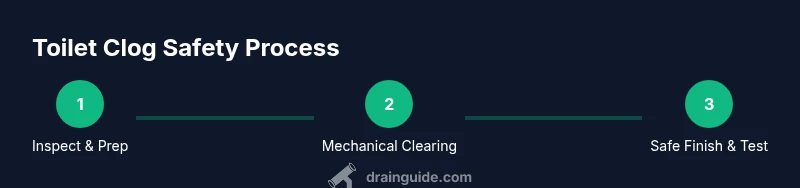
- 1
Prepare the area and tools
Clear the bathroom, lay towels, and assemble your plunger and auger. Check that the toilet is not overfilled and put on gloves. Having the right setup reduces mess and improves effectiveness.
Tip: Test the plunger's seal on the toilet rim before applying force. - 2
Attempt a proper plunge
Place the plunger over the drain to form a tight seal. Push and pull with steady, full strokes to create suction that dislodges the clog. Do not break the seal.
Tip: Keep the plunger fully submerged for best suction; use 10-20 vigorous pumps. - 3
Use a toilet auger if plunging fails
Insert the auger into the toilet bowl and gently rotate while keeping pressure on the line to break the blockage. Retrieve and inspect waste to gauge progress.
Tip: Do not force the cable; friction can scratch porcelain. - 4
Decide on chemical cleaners with caution
If you still have a clog, consider a toilet-safe product labeled for toilets. Read the label carefully and follow all safety directions; never mix cleaners, and avoid caustic blends.
Tip: Only use products explicitly labeled for toilets and septic-safe if applicable. - 5
Flush and test the toilet
Slowly pour water into the bowl after each step and flush to check if the clog clears. Repeat if necessary but stop if the water backs up again.
Tip: Use warm water, not boiling, to avoid cracking the porcelain. - 6
Assess need for professional help
If the toilet remains clogged after steps 1-5, or you notice sewer gas or weak plumbing, stop and call a licensed plumber. Pro tools may be required.
Tip: A professional can prevent further damage and identify pipe issues.
Got Questions?
Can I pour drain cleaner into a toilet?
Generally not recommended; many products can damage porcelain, seals, and septic systems. Consider mechanical methods first and use toilet-safe products if labeled.
Pouring drain cleaner into a toilet is usually not advised. Try mechanical methods first, and only use toilet-specific cleaners if labeled.
What should I use first for a toilet clog?
Begin with a flange plunger, using a proper seal and strong, controlled strokes. If that fails, try a toilet auger before considering chemical cleaners.
Start with a flange plunger, then a toilet auger if needed.
Are toilet-specific cleaners safe for septic systems?
Many toilet-specific cleaners can be gentler on septic systems; always check the label for septic suitability and avoid caustic blends.
Look for septic-safe labels and avoid harsh caustic cleaners.
Can enzymatic cleaners help with clogs?
Enzymatic cleaners may help maintain drains but are less effective for immediate clogs in toilets. They are generally safer for septic systems.
Enzymatic cleaners can help over time but are not quick fixes for toilets.
Is it safe to mix baking soda with vinegar in a toilet?
The fizzing reaction is unlikely to clear a stubborn clog and can create pressure; avoid relying on this method for toilet clogs.
Baking soda and vinegar fizz but usually won't clear a stubborn toilet clog.
When should I call a plumber?
If the clog persists after safe mechanical methods, or you suspect sewer line issues, contact a licensed plumber promptly.
Call a plumber if the clog won't clear with safe methods.
Watch Video
The Essentials
- Avoid using standard drain cleaners in toilets whenever possible.
- Start with mechanical methods (plunger, auger) before any chemical product.
- Use toilet-specific products only if labeled for toilets and follow directions precisely.
- Protect yourself and the surrounding area to prevent spills and fumes.
- If in doubt, call a professional to prevent damage.