How Much to Unclog a Shower Drain: A Homeowner's Cost Guide
Discover the true cost to unclog a shower drain in 2026, including DIY options, professional rates, and budgeting tips from Drain Guide.


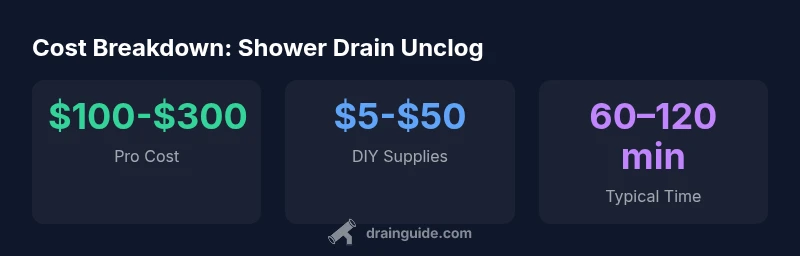
Typically, hiring a plumber to unclog a shower drain costs about USD 100–300 for a standard clog, depending on location and accessibility. DIY options, such as plunging or using a drain auger, run roughly USD 5–50 for tools and supplies. For stubborn or after-hours clogs, expect higher charges, but many homeowners can save by attempting safe DIY steps first. Drain Guide analysis, 2026.
What drives the price to unclog a shower drain
According to Drain Guide, the total cost to unclog a shower drain hinges on several factors that influence both labor and material expenses. The blockages themselves vary—from a simple hair accumulation behind a grate to a deep, stubborn buildup within the trap or the drain line. Accessibility is crucial: if the access points require removing a panel, lifting a tile, or dismantling parts of the shower, labor time increases and so does the price. Regional labor rates, call-out fees, and whether the job is classified as standard or urgent after-hours also affect the final bill. In many cases, you’ll pay a diagnostic or trip fee upfront even if the clog is resolved quickly. This section lays out what typically drives costs and how to estimate them for your bathroom project.
When evaluating options, homeowners should consider both the shared costs (diagnostic fees, labor, and equipment) and the variable costs (specialized tools, chemical cleaners, or pipe work). A quick budgeting approach is to separate DIY costs from professional services and to anticipate possible add-ons like trap cleaning or replacing a corroded section of pipe. Drain Guide’s analysis emphasizes that understanding your specific shower configuration and blockage type is essential to producing a realistic estimate and preventing sticker shock.
DIY methods: costs, safety, and effectiveness
DIY approaches can dramatically reduce total expenditure, but effectiveness varies widely with the type of clog and the shower’s plumbing layout. A basic plunger can clear a hair-and-soap scum clog in many cases, often at little to no cost beyond the tool you already own. If plunger success isn’t achieved, a hand-powered drain auger (snakelike tool) or a thin snake can reach deeper obstructions. Enzymatic cleaners offer a low-risk option that takes longer to work and may require repeat applications. If you choose to attempt DIY routes, wear protective gloves, avoid mixing cleaners, and keep children and pets away from the work area.
Cost-wise, plan for about USD 5–50 in supplies for DIY attempts, plus any incidental wear or replacement parts. Even when DIY methods work, you should be prepared to call a pro if the clog recurs or if you notice water backing up into other fixtures in the home. Drain Guide’s 2026 data shows DIY success rates are highly dependent on the blockage depth and trap access.
How plumbers price a shower-drain unclogging job
Professional pricing typically includes a diagnostic fee, labor, and any necessary parts or tools. Many plumbers offer a flat rate for standard clogs that are reachable from the drain opening, while others charge by time (hourly) plus material costs. The diagnostic fee covers initial assessment, camera inspection if needed, and a recommended treatment plan. After-hours or same-day service usually adds a surcharge. If the plumber discovers more complex problems—such as a collapsed pipe, a full sewer line issue, or a need to replace the P-trap—the final invoice can rise accordingly. A transparent, itemized estimate helps you compare bids and avoid surprises. Drain Guide notes that clear communication about scope and anticipated labor hours is essential for fair pricing.
Common scenarios and price ranges you might see
Blockages can vary by scenario, and prices reflect both the basic job and any extra work. A straightforward clog behind the drain cover with accessible trap typically falls in the USD 100–200 range, while deeper or more complicated blockages can reach USD 200–300. If a clogged shower drain is coupled with a sewer-line issue, you may see prices rise significantly, sometimes into the higher end of the USD 300–500 range depending on local rates and the extent of repair work. After-hours calls usually add 20–50% to the base price. For multi-unit homes or older plumbing with backup risks, the cost can escalate further. Drain Guide’s cost model emphasizes the value of a precise diagnostic before any repair work to avoid unnecessary expenses.
Tools, materials, and their typical costs
Basic tools include a standard plunger and a manual drain snake, each typically available for USD 5–25 and USD 15–35, respectively. A longer, more heavy-duty drain auger might cost USD 40–80. Enzymatic cleaners, a gentler long-term option, range USD 10–25 per bottle and often need multiple applications. Replacement traps or washers, if needed due to wear, could add USD 5–20. If you opt for professional service, those tool costs are embedded in the labor charge. Proper disposal of waste and safe handling of cleaners are essential to prevent damage to the shower surround and plumbing seals.
A practical budgeting approach for homeowners
To budget effectively, start by estimating your DIY potential. If you’re comfortable with basic tools, you may invest USD 5–50, and only call a pro if the clog remains after two attempts or if you notice recurrent backups. For professional service, budget USD 100–300 for a standard clog, with extra headroom for after-hours or complex interventions. Always ask for an itemized estimate that includes diagnostic fees, labor, and parts. If the provider recommends pipe replacement or camera inspection, request a separate quote for those services. Drain Guide suggests writing down a list of questions for the contractor to ensure you understand every line item before agreeing to proceed.
Maintenance tips to reduce future clogs
Prevention beats cure when it comes to shower drains. Use a hair catcher to limit hair entering the drain, and avoid pouring grease or oily substances down the shower. Regularly flush the drain with hot water and consider enzyme-based cleaners a few times a year to maintain trap clarity. Periodically inspect and clean the P-trap to remove debris. If you own a home with hard water, mineral buildup can also contribute to slow drainage; using a mild descaling routine can help. By combining preventative maintenance with mindful usage, you can minimize the frequency and cost of future unclogging.
Quick budgeting tips for homeowners: what to ask before hiring
Before you hire, ask for a written estimate that itemizes diagnostic fees, labor rates, and any anticipated parts. Inquire about the expected duration, whether the price includes a return visit if the clog recurs, and what the warranty terms are on the work performed. If there are multiple bid options, compare not only price but also the scope of work and the contractor’s experience with shower drains. Finally, verify licensing and insurance information to safeguard against potential damage during the repair.
Cost and time comparison for shower drain unclogging
| Scenario | Typical Cost Range | Time | Notes |
|---|---|---|---|
| DIY methods (plunger or auger) | USD 5–50 | 15–60 min | Limited effectiveness for deep clogs |
| Professional unclogging (standard) | USD 100–300 | 60–120 min | Diagnostic included |
| Emergency after-hours service | USD 150–400 | 60–180 min | surcharge applies |
Got Questions?
What is the typical cost to unclog a shower drain by a professional?
Most plumbers charge a diagnostic fee plus labor, with typical ranges of USD 100–300 for standard clogs. Complex blockages or after-hours service can push costs higher.
For budgeting, expect about USD 100–300 for a standard clog when hiring a pro.
How long does it take to unclog a shower drain?
Most professional unclogs take 60–120 minutes, depending on blockage severity and access. DIY methods may take longer if unsuccessful.
Expect about an hour or two for a pro, longer if it’s stubborn.
Are chemical drain cleaners safe for shower drains?
Chemical cleaners can damage seals, pipes, and traps over time. Use safer methods first and follow product instructions.
Chemicals can cause harm; consider safer options or professionals.
Can I unclog a shower drain without a plumber?
Yes, for partial clogs you can try plunger, manual auger, or enzymatic cleaners. For stubborn or backing up drains, call a pro.
You can try DIY, but know when to call a pro.
What maintenance helps prevent future clogs?
Use a hair catcher, avoid pouring grease down drains, and clean traps regularly. Regular maintenance reduces clog risk.
Regular maintenance helps prevent future clogs.
When should I call emergency plumbing service?
If sewage backup or strong foul odor accompanies the clog, stop using water and call emergency service.
Call emergency help if sewage backing up.
“Even small clogs can hide bigger drainage issues; a measured approach saves time and money over the long run.”
The Essentials
- Budget for DIY tools before hiring help.
- Expect professional costs to range USD 100–300.
- DIY success varies with clog depth and access.
- Ask for upfront pricing and diagnostic fees.
- Routine maintenance reduces future clogs.