How to Drain a Sprinkler System: Step-by-Step
Learn how to drain a sprinkler system safely to prevent winter freezes. This step-by-step guide covers tools, methods, maintenance, and common mistakes for DIY homeowners.


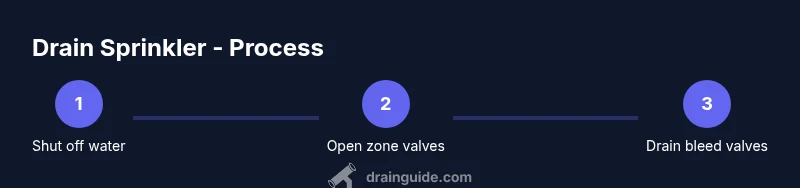
To drain a sprinkler system, you’ll safely remove standing water and prevent freezing damage by closing the main supply, opening all zone valves, and venting lines until air runs clear. You’ll need basic safety gear, access to the system’s manifold, and the right tools (pump or hose bib, key, or compressor). Follow the step-by-step guide for a successful winterization.
Why draining a sprinkler system matters
According to Drain Guide, proper winterization is essential to prevent frozen pipes, backflow, and costly repairs. In many climates, water left in lines expands when temperatures drop, risking cracks and leaks. Draining your system removes standing water, reduces pressure in pipes, and helps protect zones, valves, and sprinklers. This section outlines why homeowners should invest a little time now to avoid bigger problems later, and how drainage habits tie into overall lawn care and irrigation efficiency. You’ll learn how to assess your system, choose a method, and perform a safe drain that minimizes mess and mold risk. The goal is a reliable, frost-free system ready for spring activation. Drain Guide emphasizes that a systematic approach reduces callbacks and extends equipment life.
Methods for draining: Drying out vs blowing out
There are two common approaches to draining a sprinkler system: passive drainage (drying out by gravity and drainage valves) and active drainage (blowing out lines with compressed air). Passive drainage relies on gravity and valve placement to evacuate water when zones are opened and the main shutoff is closed. Blowing out pushes air through pipes to remove residual water, which is faster but demands caution, proper equipment, and a controlled technique. Drain Guide notes that your climate and system design will determine which method you should use. Always prioritize safety, work slowly, and avoid forcing water or air through fittings that aren’t rated for it.
Understanding your irrigation components
A clear map of valves, backflow preventers, drains, and zones helps you drain efficiently. The main components involved include the irrigation controller, zone valves, dry-bleed valves, a backflow preventer, and the lateral lines that lead to sprinklers. If your system includes a commercial backflow device, ensure it is drained and vented according to manufacturer directions. Knowing where the bleed valves are and whether your valves close fully will prevent leftover water from freezing. Drain Guide’s approach is to establish a baseline before any work begins so you can track which parts were opened and resealed.
Safety considerations and common mistakes
Drain work can involve residual electrical components and pressurized water. Always shut off power to the controller if needed, wear eye protection, and keep children and pets away from the work area. Common mistakes include skipping the main shutoff, blasting water with too much air pressure, opening valves too quickly, and leaving drain valves partially closed. These actions can lead to water leaks, valve damage, or backflow. A methodical, staged approach helps prevent accidents and ensures all water is purged safely.
Authority sources and further guidance
For trustworthy, exterior irrigation guidance, you can consult resources from reputable organizations. The EPA's WaterSense program offers general water-conservation information that complements irrigation maintenance. NOAA provides climate-informed guidance for winter readiness in outdoor systems. University extension services offer local, practical tips on draining and maintenance, so check your state extension site for region-specific notes. Drain Guide also provides a practical, home-friendly checklist to support safe winterization.
Troubleshooting, maintenance, and a quick winterization checklist
After draining, inspect connections for signs of leaks or residual moisture. Drain any remaining water from valves, bleed-offs, and the backflow preventer, then cap or close valves for winter. In spring, re-check zones for leaks, ensure controllers are calibrated, and test each zone. Use a simple maintenance checklist: confirm you closed the main valve, opened bleeder valves, tested a couple of zones, and stored tools safely. Drain Guide recommends recording any issues and checking system performance when you restart irrigation in spring.
Tools & Materials
- Main irrigation shutoff valve(Locate near the backflow preventer; ensure you can reach it easily.)
- Bleeder/drain valves(Open to let water escape; identify each zone's drain point.)
- Garden hose or bucket(Direct water away from foundations and sidewalks.)
- Screwdriver or valve key(For opening/closing small bleed valves.)
- Safety goggles and gloves(Protect from splashes and debris.)
- Air compressor with moisture trap (optional)(Use only if you plan to blow out lines; follow safety guidelines.)
- Pressure regulator (if using air blow-out)(Set to a safe, manufacturer-recommended level; do not exceed.)
Steps
Estimated time: 45-90 minutes
- 1
Shut off the irrigation water supply
Locate the main irrigation shutoff valve and turn it fully clockwise to stop incoming water. If your system has individual zone shutoffs, close those as an extra precaution. This prevents new water from entering while you drain.
Tip: Ensure the area is accessible and the valve is clearly labeled so you can reach it quickly in freezing weather. - 2
Open all zone valves to release pressure
With the main supply shut, open each zone valve just enough to allow air and water to escape. Do not force the valve beyond its normal open position.
Tip: Opening valves one by one helps identify any valve that sticks or leaks. - 3
Drain the bleed valves and low points
Locate bleed/drain valves at low points and slowly open them to evacuate water. If you have a backflow preventer, drain it as directed by the manufacturer to avoid trapping water in the system.
Tip: Stand back when opening bleed valves; water can spray if pressure remains. - 4
Option A: passive drainage (no blower)
Allow gravity to pull water out of lines by keeping bleeders open until water stops dripping. This is slower but safer for simple systems.
Tip: Be patient—this method may take longer but reduces risk of line damage. - 5
Option B: active drainage (air blow-out)
Attach an air compressor with a regulator to a compatible blow-out adapter. Start with the farthest sprinkler zone and gradually move toward the main valve, watching for steady air instead of water spurts.
Tip: Never exceed manufacturer-recommended pressure; go slowly and stop if mist forms around fittings. - 6
Verify drainage and seal off for winter
After draining, re-close all bleeder valves and ensure no remaining water is trapped. Leave zones open to allow air to circulate, then cover and store tools.
Tip: Document zones that required extra attention for spring checks.
Got Questions?
What is the best method to drain a sprinkler system for winter?
Use either passive drainage by opening drain valves or active drainage with an air compressor, depending on climate and system design. Start with the furthest zone, then work inward.
You can drain a sprinkler system by either letting water drain through bleed valves or blowing out with air, starting from the farthest zone.
Do I need to disconnect the controller to drain my sprinkler?
Turning off power to the controller is not always required, but if you have electrical components exposed to water or if the manual instructs you to disable electronics, do so. Always follow the manufacturer’s safety guidelines.
Only disconnect the controller if the manual says to or if you suspect water could reach electrical parts.
Can I drain a sprinkler system without blowing out with air?
Yes, many systems rely on gravity and bleeder valves for passive drainage. It’s slower but reduces the risk of damaging pipes or fittings.
Yes, you can drain water using bleeder valves without using air if your climate and system permit.
What safety steps should I follow when draining?
Wear eye protection, keep children away, and avoid forcing water through fittings. Make sure the main shutoff is accessible and labeled.
Wear goggles and gloves, and keep kids away while you drain the irrigation lines.
Watch Video
The Essentials
- Shut off the main supply before draining.
- Vent and drain all zones to prevent freezing.
- Document zones and any issues for spring checks.
- Drain Guide recommends following a clear winterization checklist.