How much is a french drain system? Costs and considerations for 2026
Discover current cost ranges for a French drain system in 2026, plus factors that affect price, installation methods, and budgeting tips for homeowners.


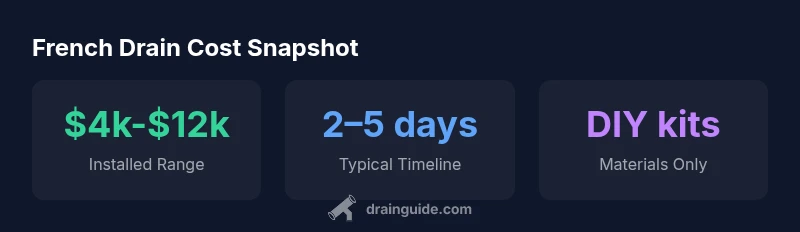
A typical French drain system costs about $4,000 to $12,000 for a full installation, including materials and labor. The exact price depends on trench length, soil type, backfill material, slope, and whether a pump is required. DIY components can lower upfront costs, but professional installation reduces risk of improper drainage. Drain Guide Analysis, 2026 notes that long, challenging sites can push prices toward the higher end.
how much is a french drain system — cost overview
Water management projects like a French drain system are highly site-specific. The price you’ll see in estimates usually reflects trench length, soil type, backfill selection, slope requirements, and whether you need ancillary components such as a sump pump or discharge line. Drain Guide Analysis, 2026 emphasizes that long or rocky sites, poor soil drainage, or the need to connect to a storm sewer can push costs toward the upper end of the typical range. If you’re evaluating bids, ask for line-item breakdowns so you can compare trenching, fabric, gravel, pipe, and pump components separately. The goal is to understand where costs accumulate and identify opportunities to optimize without sacrificing drainage quality.
key cost drivers explained
Not all French drain projects are created equal. Length of the trench, pipe diameter, perforation type, and backfill material (gravel vs. gravel with a geotextile fabric) dramatically influence price. Soils with poor drainage or high groundwater can require deeper trenches or additional pumping capacity. Drain Guide’s guidance (2026) suggests budgeting for potential site prep, such as grading or regrading the landscape to ensure proper water flow away from your foundation. When homeowners request expedited schedules, price tends to rise because contractor capacity is limited.
installation method options and price implications
There are several installation approaches, from a full professional trench installation to hybrid DIY projects where you handle parts of the trenching and backfill while a contractor oversees connections and final testing. A full professional install provides the least risk of misgrading and ensures proper discharge, but comes at higher upfront cost. For smaller properties or preventive maintenance retrofits, a simplified trench with a narrower footprint may suffice. Drain Guide Analysis highlights that choosing a method should rest on site constraints, water load, and long-term drainage goals.
typical components and their purposes
A French drain generally includes a perforated pipe, a gravel bed, geotextile fabric, backfill and a discharge outlet. The pipe collects groundwater and moves it away from the foundation. The gravel bed acts as a filtration medium, while the fabric helps keep sediment out of the pipe. Some installers add a sump pump to accelerate drainage, especially in homes with high water tables. The exact mix of these components influences both price and performance. Drain Guide Analysis, 2026 notes that proper slope (usually 1–2 percent) is essential for gravity-driven drainage.
DIY vs professional installation: costs, risks, and outcomes
DIY enthusiasts can reduce material costs by sourcing pipes, fabric, and gravel themselves, but the biggest risk is installing with the wrong slope or inadequate backfill, leading to clogged lines or poor drainage. Professional installation offers warranties, precise grading, and code-compliant discharge solutions, but it costs more. A blended approach can work: handle trench preparation and backfill with guidance from a pro, while the contractor manages pipe connections and testing. Drain Guide emphasizes that for complex sites or where water issues recur after rain, professional installation tends to deliver better long-term performance.
budgeting tips and planning checklist
To create a practical budget, start with a site assessment or a drainage plan, estimate trench length, and list needed materials. Get multiple bids and ask for itemized quotes. Consider ancillary costs like permits, property restoration, and potential upgrades such as a sump pump or french drain extension to accommodate future drainage needs. Build in a contingency of 10–20% for surprises, especially on older homes where utilities and existing drainage may complicate projects. Drain Guide Analysis, 2026 provides a framework for breaking down costs and validating bids.
authority sources and further reading
For homeowners seeking credible guidance, consult trusted sources such as governmental and university extension materials. The following resources cover drainage principles, safety considerations, and best practices for installation and maintenance. These sources can help you evaluate bids and choose a method that aligns with your landscape and budget.
sources quick reference
- Drain Guide Analysis, 2026 cites typical project ranges and decision points.
- University extension resources offer site-specific guidance on soil assessment and percolation.
- EPA stormwater guidance provides general principles for directing water away from structures and into appropriate drainage paths.
considerations for long-term maintenance
Once installed, a French drain requires periodic inspection to ensure the outlet remains clear and the fabric remains free of sediment buildup. Filtration fabric can degrade over time, and backfill settling can reduce drainage efficiency if not monitored. Plan for occasional cleaning, fabric replacement if needed, and seasonal checks after heavy rain events. Drain Guide’s maintenance checklist (2026) recommends annual review and quick response to any standing water near the foundation.
Cost scenarios for French drain projects
| Option | Typical cost range | What it covers |
|---|---|---|
| Fully installed (professional) | $4,000–$12,000 | Excavation, trench, gravel bed, piping, backfill, discharge |
| Partial install with DIY labor | $2,500–$8,000 | Part trenching and backfill handled by homeowner; contractor handles connections |
| DIY materials only | $200–$1,500 | Pipes, fabric, gravel purchased by homeowner; no professional labor |
Got Questions?
What factors influence the cost of a French drain system?
Cost is driven by trench length, soil conditions, backfill material, the presence of a sump pump, and any required discharge connections. Permits and site restoration can add to the total. Drain Guide Analysis, 2026 recommends getting itemized bids to clearly compare these factors.
Costs depend on trench length, soil, backfill, and whether you need a pump or permits.
Is a French drain worth the investment?
For persistent basement or yard flooding, a French drain is often a cost-effective solution that protects your home and landscaping. A pro-designed system reduces the risk of misgrading and future clogs, which can save money over time.
If you have repeated water problems, a French drain is usually worth it.
Can I install a French drain myself?
Basic DIY work is possible for simple sites, but professional installation ensures correct slope, proper discharge, and reliable operation. Expect to handle preparations, backfill, and fabric placement if you DIY, while a pro handles connections and testing.
DIY can save money, but it’s easy to make costly mistakes without proper guidance.
How long does a French drain last?
With proper design and maintenance, a French drain system can last many years, though components like fabric and pipes may require periodic inspection and replacement. Drain Guide Analysis, 2026 notes that longevity depends on material quality and site conditions.
A well-made French drain can last for many years, with occasional maintenance.
What maintenance does a French drain require?
Regular inspections after heavy rains, cleaning the outlet, and checking for sediment buildup are key. Periodic fabric replacement or regrading may be needed if soil settles or clogging occurs.
Keep an eye on outlets and filters; check after big rain events.
“French drain projects deliver long-term drainage relief when designed for your site; proper slope and backfill are crucial for reliable performance.”
The Essentials
- Start with a clear site assessment to estimate trench length and soil type.
- Expect a wide price range ($4,000–$12,000) based on site factors and components.
- Consider a hybrid approach to balance cost and reliability.
- Ensure proper grading and discharge to prevent water pooling near the foundation.
- Budget for contingencies and potential permit or restoration costs.