How Often to Drain Septic Tank: A Practical Guide
Learn how often to drain septic tank, what drives pumping frequency, and steps to protect your drain field. This Drain Guide article covers scheduling, maintenance, and signs you need a pump.


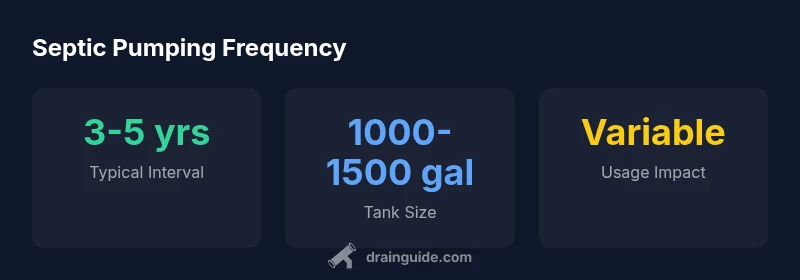
For most homes, pump every 3-5 years. If your tank is larger (1000-1500 gallons) and you have several occupants or heavy water use, you may need pumping every 2-3 years. Conversely, smaller families or tanks under 750 gallons can stretch toward 5-7 years, provided you minimize water waste and avoid disposing of solids into the system.
How septic tanks work and why pumping frequency matters
A typical residential septic system uses a tank to separate solids from liquids and a drain field to absorb effluent. Over time, solids accumulate as sludge and scum; if not pumped, solids can fill space, clog the leach field, and cause backups. The frequency of pumping depends on tank size, household size, water usage, and how you dispose of waste. According to Drain Guide, the goal is to keep sludge and scum layers well below the baffles so effluent can flow freely. For most homes, a well-planned pumping schedule protects both your system and your landscape. Regular pump-outs also help you avoid costly repairs from a neglected tank and leach field. The key is to start with a realistic baseline based on your tank size and daily water use, then adjust as needed.
If you’ve never checked your tank, start by locating the access lids and confirming the tank size from records or the manufacturer’s label. A baseline check by a licensed professional can confirm the sludge depth and whether baffles are intact. Drain Guide recommends documenting every pumping date and keeping the service notes with your home records. This habit helps you spot trends over time and plan ahead.
Factors that influence pumping frequency
Several factors determine how often you should drain septic tank. Tank size is the first major determinant: larger tanks handle more wastewater and can push intervals longer, while smaller tanks fill faster. Household size and usage patterns are equally influential: more occupants, higher daily water use, and frequent disposal of solids (like coffee grounds, fats, oils, or garbage disposal waste) accelerate sludge accumulation. The health of the leach field matters too; if the soil is poor or the field shows signs of distress, a professional may recommend more frequent pump-outs to prevent field damage.
Other considerations include tank age and the presence of a fast-draining, well-maintained drain field, which can extend the interval. Local soil type, groundwater depth, and climate also play roles; in areas with high rainfall, the dilution effect can alter pumping needs. Drain Guide Analysis, 2026, highlights that proactive inspection intervals and using water-efficient fixtures can stabilize frequencies over time. Keep in mind that chemical drain cleaners and harsh cleaners can disrupt beneficial bacteria in the tank and may affect long-term performance, so avoid routine chemical treatments as a quick fix. A proactive maintenance plan blends tank size, usage, and site conditions into a practical pumping schedule.
How to estimate your pumping schedule
To estimate your pumping schedule, start with your tank’s nominal size and the number of people using the system. Check the tank labeling or home records to confirm the capacity, typically 750, 1000, 1250, or 1500 gallons. Next, assess daily water use: showers, laundry, dishwashing, and irrigation all contribute. A family of four with average water use will typically fall within the 3-5 year range, while households with heavy water use or a smaller tank may need more frequent pump-outs. Conversely, conservative water use and a larger tank can extend the interval toward the upper end of the range. The best approach is to schedule a professional evaluation every 1-3 years, depending on age and prior pumping history, to confirm current sludge depth and tank condition. Drain Guide recommends maintaining a yearly log of pumping dates and major maintenance, so you can track how your usage patterns affect the schedule over time.
Common pumping intervals by tank size
Pumping frequency depends on the size of the tank and household usage. Here are typical ranges you might expect:
- 750-1000 gallons: 2-4 years for higher occupancy or heavy use; 3-5 years for moderate use.
- 1000-1500 gallons: 3-5 years for average families with standard waste, and potentially 2-3 years with heavy disposal or large households.
- 1500-2000 gallons: 4-7 years when water use is moderate and the leach field is healthy.
These intervals are estimates to guide planning. Always verify with a licensed septic professional who can measure sludge depth and inspect the leach field. Drain Guide notes that adjusting based on observed sludge levels provides the most reliable schedule rather than relying solely on tank size.
Practical steps to extend pumping intervals safely
Longer pumping intervals are possible with deliberate maintenance. Start with water efficiency: install low-flow fixtures, fix leaks promptly, and run only full loads. Reduce solids entering the tank by discarding fats, oils, and grease responsibly, and avoid flushing non-biodegradable items. Use a trash can in the bathroom to catch wipes, feminine products, and plus-size paper towels. Schedule regular inspections to verify baffles, scum layers, and overall system health. A well-maintained septic system benefits from routine pumping only when sludge and scum approach the outlet tee. If you rely on a garbage disposal, consider reducing usage or upgrading to a model that minimizes solid buildup, as more solids accelerate the pumping frequency. Drain Guide emphasizes combining water conservation with periodic professional checks to optimize intervals.
What to expect during a septic pumping service
During a pumping service, a licensed technician will access the tank through the lids, measure sludge and scum layers, and remove accumulated solids with a suction truck. They will inspect tank conditions, check baffles, and assess the drain field for signs of distress such as standing water, odors, or wet areas in the yard. After pumping, the technician will reseal lids and provide a maintenance summary, including recommended pumping intervals based on current conditions. Keep children and pets away from the site during pumping, and ensure access is clear for the service crew. Ask for a copy of the service report and any follow-up actions required to protect the system. Drain Guide recommends keeping a maintenance log and inspecting the leach field periodically to catch issues early.
Drain Guide's approach to septic maintenance
Drain Guide emphasizes a data-driven, homeowner-friendly approach to septic maintenance. Start with the tank size and occupancy to establish a baseline pumping interval, then validate with professional inspections of sludge depth and field health. Regular maintenance steps, including water-use awareness and careful disposal practices, help stabilize pumping frequency and prevent costly field failures. Drain Guide recommends annually reviewing your system’s performance, scheduling pump-outs as needed, and updating your maintenance plan with any changes in household size or water usage. This practical framework helps homeowners optimize septic health while protecting their landscape and property value.
Signs your system is overdue for a pumping
Watch for recurring symptoms that suggest it’s time for a pump-out: slow drains across the home, more frequent backups in one or more fixtures, gurgling sounds in plumbing, a strong sewage smell near the septic area, damp or lush spots above the drain field, or standing water in the yard. If you notice these signs, contact a licensed septic professional to assess sludge depth and field condition. Early pumping can prevent costly repairs and protect groundwater quality. Drain Guide urges homeowners to act on symptoms promptly and to schedule routine checks to avoid emergencies.
Typical pumping intervals by tank size
| Tank Size | Typical Pump Interval | Notes |
|---|---|---|
| 750-1000 gallons | 2-4 years | Small households or high-efficiency usage |
| 1000-1500 gallons | 3-5 years | Average family size and usage |
| 1500-2000 gallons | 4-7 years | Larger households or conservative usage |
Got Questions?
How often should I pump my septic tank?
Most homes with a 1,000-gallon tank should pump every 3-5 years, but frequency depends on occupancy, usage, and tank condition.
Typically every 3-5 years for a standard 1,000-gallon tank, but check with a pro for your specific setup.
What factors affect pumping frequency?
Tank size, number of people, daily water use, and solids disposal influence how often you pump. System age and soil health also play a role.
Tank size, usage, and soil health determine the pumping schedule.
Can I extend pumping intervals safely?
Yes, with water-saving fixtures, careful waste disposal, and regular inspections. Do not delay pumping beyond professional guidance.
Yes, but only with proper precautions and professional guidance.
What are the signs that my septic needs pumping soon?
Backups, slow drains, gurgling pipes, strong odors near the tank, and wet spots above the drain field indicate overdue pumping.
Backups or odors near the septic area mean it’s time to pump.
Does a garbage disposal affect pumping frequency?
Yes. A disposal adds solids that can accelerate sludge buildup, potentially requiring more frequent pump-outs.
Yes, it can speed up sludge buildup.
How does seasonal use impact pumping?
Seasonal homes or variable occupancy can shift pumping needs; monitor sludge levels and adjust with a pro.
Seasonal occupancy changes pumping needs.
“The Drain Guide Team emphasizes tailoring septic pumping to tank size, household occupancy, and waste habits. Always confirm your schedule with a licensed professional before proceeding.”
The Essentials
- Pump on a realistic baseline: 3-5 years for most homes.
- Increase frequency with heavy disposal or small tanks.
- Conserve water to stretch pumping intervals.
- Keep a maintenance log and verify with a pro.
- Regular inspections prevent field failures and costly repairs.