Can You Put Drano in a Clogged Shower? A Safer Troubleshooting Guide
Learn whether it is safe to use Drano in a clogged shower, the risks involved, and practical DIY steps. Drain Guide offers safer alternatives and a clear troubleshooting path for homeowners.


No, you should not put Drano in a clogged shower. Chemical drain cleaners can damage pipes, vent systems, and connected fixtures, especially in older homes. They may also create hazardous fumes. Safer DIY steps include hot water flushes, plunger attempts, and mechanical tools to remove hair and soap scum.
Can you put drano in a clogged shower? Key Considerations
A common question that many homeowners ask is can you put drano in a clogged shower. While the temptation to chemically dissolve the clog is strong, this approach carries clear risks to your plumbing and home safety. In most cases, Drain Guide recommends avoiding chemical cleaners in shower drains, especially if you are unsure of the pipe material or the age of the plumbing. Shower drains often have hair and soap scum building up in the trap and trap arm, and aggressive cleaners can seep into joints, soften seals, or corrode metal parts.
Before reaching for a chemical cleaner, consider the age of the home, the presence of a septic system, and any warranties on your fixtures. If you have a septic system, do not flush with chemical cleaners as they can disrupt bacteria and worsen clogs. For many households, safer DIY methods provide effective relief without the hazards of harsh chemicals. Remember, your goal is to restore flow without compromising the material of your pipes or the safety of your family.
Drain Guide emphasizes that a patient, methodical approach beats random chemical treatments. The question can you put drano in clogged shower becomes a decision between potential pipe damage and safer mechanical fixes.
Risks of Chemical Cleaners in Shower Drains
Chemical drain cleaners are formulated to dissolve organic material, but showers present a unique risk profile. Harsh chemicals can damage the plastic pipes, gaskets, and O rings that you find in modern trap assemblies. They can soften or warp PVC and ABS joints over time, especially with repeated exposure. Vapors are not friendly in small bathrooms; inhaling strong fumes can irritate eyes, throat, and lungs. Mixing cleaners with other household products, such as bleach or ammonia, can produce toxic gases. If you have a metal pipe system, acids and caustic agents may accelerate corrosion. If a clog is partial, reagents can get stuck in the P-trap or wall cavity and require professional removal. For septic systems, chemical cleaners can kill beneficial bacteria, leading to longer-term drainage problems. In short, chemical cleaners may temporarily clear the clog while creating more work later on.
Safer First Steps to Try Before Any Chemical Cleaning
Start with non chemical methods to avoid risk. Remove the drain cover and pull out obvious hair and soap scum using gloves. Use a cup plunger to create a seal over the drain and perform several firm pushes and pulls to loosen the clog. If the clog remains, a drain snake can be worked into the trap arm to break up the hair cluster. Run hot water down the drain in regular bursts to help loosen built up residue, but avoid extremely hot water if you have plastic pipes. For stubborn clogs, a simple enzymatic cleaner designed for hair and soap scum can be a safer alternative, but only after you have tried mechanical methods. Always read product labels and never mix cleaners with unknown substances.
If you have a septic system, skip enzymatic cleaners that rely on strong chemical reactions and instead focus on mechanical methods. This approach minimizes disruption to bacterial balance in the tank and riser lines. With patience, many showers regain full flow without exposure to harsh chemicals.
Safer Alternatives: How Drano Works and When It Might Be Considered
Drano and similar products are engineered to dissolve organic debris such as hair and soap scum. They work by breaking down solids and generating heat to clear the path. However, their use is not universal and depends on your plumbing material, venting, and whether you have a septic system. For metal pipes or older PVC, aggressive cleaners can corrode joints or strip seals. If you choose to consider a chemical cleaner, use it as a last resort only after mechanical methods fail and ensure you can ventilate the bathroom well. Always follow the product instructions, pour into a dry drain, and never mix with other cleaners.
If you decide to use Drano, pour slowly and avoid sealant interactions with traps and joints. After the recommended wait time, flush with plenty of hot water to clear the system. If you still notice a slow drain, stop and revert to mechanical methods or seek professional help.
Mechanical Clearing Methods for Shower Clogs
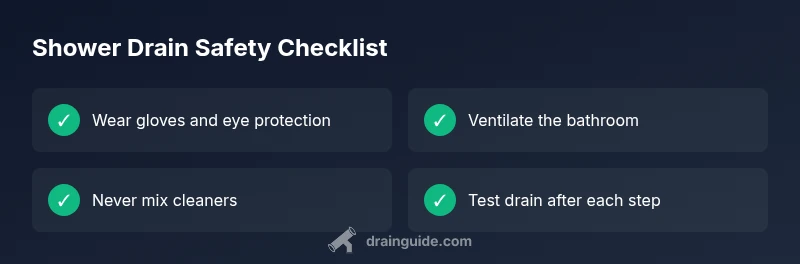
Mechanical methods are often the most reliable and safest. Start with removing the drain cover and extracting hair. Use a plunger with a good seal and apply several directed pushes to loosen the clog. If the plunger fails, insert a drain snake and rotate while gently pushing it forward to break up hair clumps. Avoid forcing the snake so you do not damage pipes. For stubborn clogs, a professional-grade auger may be needed. In all cases, wear eye protection and gloves to prevent skin contact with residue. Do not force tools into the drain deeper than necessary; if you encounter resistance, back off and reposition.
Document every attempt so you know what has or has not worked. If you must, call a plumber early to prevent water damage and ensure the clog is fully cleared.
Flushing and Rinsing Techniques to Restore Drain Function
After mechanical clearing, flush the drain with hot water in several rounds to move loosened debris through the pipe. A mild dish soap can help lubricate the flow, but avoid overuse of chemical cleaners at this stage. If you still notice slow drainage, repeat mechanical methods and verify the P-trap is clear. If possible, remove and clean the trap with a brush to eliminate trapped hair and residue. Ensure there are no kinks or obstructions in the venting that could be affecting drainage. Finally, run the shower for several minutes to confirm steady flow and no lingering odor.
Safety note: if you begin to smell sewer gas, leave the area and call a professional immediately.
When to Call a Professional and What They Can Do
If the clog persists after multiple attempts, or if you notice sewage backups, a licensed plumber is the best course of action. They can perform a deeper diagnostic, access the trap and drain lines via video inspection, and remove obstructions without risking damage to the plumbing. Professionals can also assess for more serious issues such as broken pipes, improper venting, or root intrusion. Early professional intervention can prevent more expensive repairs later and restore full function more quickly.
Prevention: Keeping Your Shower Drain Clear Long-Term
Preventive steps save time and reduce headaches. Install a fine-mesh drain screen to catch hair and reduce soap scum buildup. Regularly flush the drain with hot water after showers and avoid pouring grease or heavy cleaners down the drain. If you notice slow drainage returning, address it promptly with mechanical clearing before it becomes a full clog. Schedule periodic inspections if your home has older pipes or a history of clogs. Consistent maintenance is the key to long-term drain health.
Steps
Estimated time: 60-75 minutes
- 1
Assess and prepare
Put on gloves and safety glasses. Remove the drain cover to inspect for obvious debris. Prepare your tools and have a bucket ready for any water that may spill.
Tip: Don’t rush; a calm start prevents injuries and helps you identify the real blockage. - 2
Remove visible hair and gunk
Pull out visible hair, soap scum, and gunk from the drain opening using gloved hands or a small tool. This step often frees many shallow clogs without tools.
Tip: Use a flashlight to get a clear view of the trap area. - 3
Try the plunger
Seal the drain with a cup plunger and perform several firm pushes and pulls. If air escapes around the plug, reposition for a better seal and retry.
Tip: A good seal is essential; water around the plunger will reduce suction. - 4
Use a drain snake
Insert the snake into the drain and twist while pushing gently forward. Work the head past the trap and into the vertical portion of the pipe to capture hair strands.
Tip: Do not force beyond resistance; back off and reposition if you meet a tough knot. - 5
Flush with hot water
Run hot water in bursts to help lubricate and move debris toward the main line. Avoid boiling water if you have PVC pipes to prevent warping.
Tip: Never pour boiling water if you suspect a plastic pipe can warp. - 6
Consider enzymatic cleaners (optional)
If you prefer not to use harsh chemical cleaners, enzymatic products can help slowly break down organic matter. Use only after mechanical methods have been attempted.
Tip: Follow the product instructions and allow adequate time for action. - 7
Inspect the trap
If accessible, remove and clean the P-trap to remove hair and mineral buildup. Reassemble and re-test drainage.
Tip: Ensure the trap is fully dry before reassembling to prevent leaks. - 8
Test and monitor
Run the shower for several minutes to confirm a clear drain. If the water drains slowly again, repeat the steps or move to professional help.
Tip: Document what you tried so the pro can pick up where you left off. - 9
Know when to call a pro
Persistent clogs or sewer backups require professional evaluation. A plumber can use specialized tools to clear the line and identify underlying issues.
Tip: Early professional input can prevent water damage and higher costs.
Diagnosis: Shower drain slow or completely blocked
Possible Causes
- highHair and soap scum buildup at the trap
- mediumBlockage deeper in the drain line
- lowVent or sewer line issues causing slow flow
Fixes
- easyClear visible debris and use a plunger to attempt dislodging the clog
- mediumInsert a drain snake to break up hair in the trap arm or deeper
- hardIf unresolved, call a plumber for video inspection and professional clearing
Got Questions?
Is it safe to pour Drano down a shower drain?
Not generally. Drano can damage pipes, seals, and venting, especially in older homes or near septic systems. Mechanical methods are safer first-line options.
No, Drano is usually not safe for a shower drain. Mechanical methods are safer first.
What should I use instead of Drano for a clogged shower?
Begin with a plunger, drain snake, and hot water flush. Enzymatic cleaners can be a safer long-term option, but only after mechanical methods fail.
Try plunger and snake first, then hot water; enzymatic cleaners are a backup.
Will Drano harm a septic system?
Yes, chemical drain cleaners can disrupt bacterial balance in septic systems and worsen drainage problems. Avoid use if you have a septic system.
Yes, septic systems can be harmed by chemical cleaners.
How long does it take a plumber to fix a clogged shower?
Time varies by blockage, but most common fixes take under an hour once the blockage is accessible. Severe blockages may take longer.
It depends on the blockage, but many repairs take under an hour.
Do enzyme cleaners work on hair clogs?
Enzymes can help over time, especially for organic buildup, but they are slower and not always effective for hard blockages.
Enzyme cleaners can help slowly, but they are slower and not always effective.
Should I remove the P-trap myself?
If you are comfortable and have the right tools, you can remove and clean the P-trap. If not, a plumber can perform this safely.
You can remove the P-trap if you’re comfortable; otherwise call a pro.
Watch Video
The Essentials
- Start with mechanical methods before chemicals
- Do not use Drano if septic systems are present
- Ventilate and wear PPE during cleanup
- Call a pro if the clog persists