Can You Use Sink Water with Formula: Safety, Steps, and Alternatives
Explore whether sink water is safe for infant formula, how to prepare it safely, and practical alternatives. Learn to protect your baby with clear, step-by-step guidance.


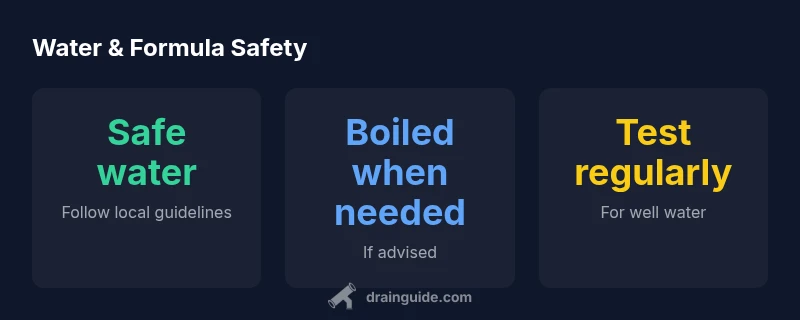
Can you use sink water with formula? In most cases, yes, but you should ensure the water is safe and prepared correctly. For formula feeding, the safest approach is to use water that is potable, boiled if advised by local guidelines, cooled to a safe temperature, and prepared following the formula instructions. Always check local water advisories.
Understanding Water Quality for Formula
Water quality is a foundational consideration when preparing infant formula. The question can you use sink water with formula depends on local safety standards, the status of your water supply, and your baby’s age. Municipal water is typically treated and tested, but private wells and older plumbing can introduce contaminants such as lead, nitrates, or bacteria. For parents and DIY enthusiasts, the key takeaway is to start with water that is known to be safe for drinking in your region. When safety concerns exist, or if your water has a distinct odor, color, or taste, treat the water before use or choose an alternative. The Drain Guide team emphasizes that water safety and formula safety go hand in hand; failing to verify water quality can increase the risk of illness for a young baby. When assessing whether you can use sink water with formula, check your city or county health department advisories and your local water utility notices. If anything looks unusual, do not rely on guesswork—seek official guidance and consult your pediatrician if you’re unsure.
In practice, families should consider three factors: water source, the baby’s age, and the formula preparation method. For newborns and premature infants, manufacturers and health authorities often stress extra caution because their immune systems are still developing. In many regions, trace elements and contaminants are tested regularly in public water systems, but private wells require independent testing. The general rule is to use water that is certified as safe for drinking, and to follow the formula’s mixing guidelines precisely. The Drain Guide team recommends documenting your local water status and keeping a simple plan for when you should switch to an alternative. If you’re reading this, you’re asking the right questions—and Drain Guide is here to help you translate those local rules into a practical routine.
Different Water Sources and Their Implications
Water quality varies widely by source. Municipal supplies are usually treated to meet safety standards, but even in well-regulated systems, occasional advisories can arise after storms or infrastructure issues. Bottled water marketed for infant use can be an alternative when local advisories suggest avoiding tap water. However, not all bottled waters are appropriate for formula; some contain additives or insufficient fluoride levels that might be unsuitable for infants. When you troubleshoot can you use sink water with formula, remember that the safest choice is to follow local guidance and your pediatrician’s advice. In some cases, using municipal water with proper treatment will be fine, while in others, bottled water or a tested well water source is recommended.
If you’re avoiding risk, you’ll want to adopt a routine that minimizes exposure to potential contaminants. A practical approach is to use cold water from the tap, not hot water, and to avoid letting taps run for long periods as this can draw out metals from pipes. The Drain Guide team notes that preparation steps matter almost as much as the water source itself. Keeping a simple water safety checklist at home—water status, boil/no-boil instruction, and formula preparation steps—helps ensure you’re following best practices consistently.
Water options for formula preparation
| Water Type | Safety Notes | Recommended Action |
|---|---|---|
| Municipal tap water | Typically treated and tested; safety varies by city | Use cold water; follow local guidance; boil if advised |
| Bottled water (nursery use) | Labeling varies by country; may be safe for formula when approved | Check label and formula instructions; avoid flavored waters |
| Well water (private supply) | Quality varies; potential nitrates/lead; requires testing | Test for contaminants; consult pediatrician before use |
Got Questions?
Can you use sink water for formula?
Yes, you can use sink water for formula in many places, provided the water is safe to drink and prepared correctly per local guidelines and the formula instructions.
Yes, you can use sink water if it’s safe and prepared correctly—follow local guidelines and the formula instructions.
Should I boil water before mixing infant formula?
Boiling is recommended by some health authorities, especially when local guidance requests it or when water safety is uncertain. If advised, boil and cool safely before mixing formula.
Boil water if local guidance says to, and cool it safely before mixing formula.
Does boiling water remove nitrates?
Boiling does not reliably remove nitrates from water. If your water source has high nitrates, use bottled water or follow local guidance on safe alternatives.
No, boiling doesn’t remove nitrates; use bottled water or other approved options if nitrates are elevated.
Can I use hot water from the faucet for formula?
Hot tap water can leach metals from pipes and may be unsafe. Use cold water only for mixing, then warm to feeding temperature if needed.
Don’t use hot faucet water; use cold water and heat it safely.
How can I test my well water for formula safety?
Have well water tested by a certified lab for contaminants like lead and nitrates, and discuss results with your pediatrician for feeding decisions.
Get a certified water test and ask your pediatrician for guidance.
What are safe alternatives if I’m unsure about tap water?
Consider ready-to-use formula or bottled water labeled for infant use, and always align with local guidelines and pediatrician recommendations.
Ready-to-use formula or infant-labeled bottled water are safer options when unsure.
“Water safety is a foundational part of safe infant feeding. Follow local guidelines and use water that’s been treated or boiled when advised.”
The Essentials
- Prioritize water safety: verify local guidance before preparation
- Always start with cold water from the tap
- Do not rely on hot tap water for formula preparation
- Boil water when local guidelines require
- If in doubt, consult a pediatrician or local health dept