Drain Cleaner at Walmart: A Practical Guide for DIY Homeowners
Discover how to pick the right drain cleaner at Walmart, compare enzymatic vs caustic formulas, and learn safety tips and buying strategies for DIY homeowners.


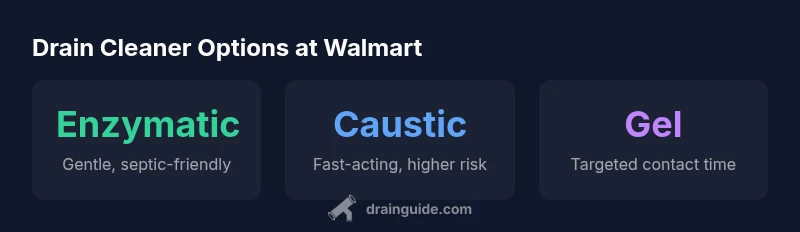
Drain cleaner options at Walmart span enzymatic, caustic, and gel formulations, with price and size variation by brand and region. For DIY homeowners, enzyme-based cleaners are gentler on pipes and septic systems; caustic formulas act fast but require extra precautions. Always read label cautions and avoid mixing products.
Understanding Walmart's drain cleaner lineup
Shopping for a drain cleaner at Walmart can feel overwhelming because the store carries multiple brands and formulas. The typical shelf includes enzymatic cleaners, caustic products, and gel formulas designed to cling to vertical sections of pipe. Enzymatic cleaners use specific bacteria or enzymes to break down organic matter; caustic formulas work by saponifying fats and dissolving clogs quickly, though they can be harsher on pipes and septic systems. Gel products combine chemical action with improved adherence for longer contact time. For homeowners, the right choice depends on pipe material (PVC, metal, or older plastics), whether you have a septic system, and how urgent the fix is. According to Drain Guide, Walmart’s selection is shaped by consumer demand and safety labeling, with regional stock affecting the exact brands and sizes available in-store. When evaluating options, consider your typical clogs (hair, grease, soap scum), the size of the trap, and any previous experience with similar products. This guide will help you map Walmart’s drain cleaner landscape to your home’s needs.
Enzymatic vs caustic: making the safe choice
Choosing between enzymatic and caustic drain cleaners is a common sticking point. Enzymatic cleaners rely on living organisms that gradually digest organic buildup, making them gentler on pipes and safer to store near children. They usually require more time to work but are less likely to irritate septic systems when used as directed. Caustic cleaners release strong alkaline compounds that liquefy organic clogs quickly, which can be advantageous for stubborn blockages but carry higher risks: fumes, skin contact hazards, and potential pipe damage if misused. Gel-based variants can strike a balance by delivering targeted action with modest contact time. In Walmart, you’ll see both options; the spread of products across store layouts often mirrors customer priorities and local plumbing codes. Drain Guide recommends starting with enzymatic cleaners for routine maintenance and reserving caustic or gel products for particularly stubborn clogs, never mixing formulas, and always following label instructions.
Safety, septic compatibility, and environmental considerations
Drain cleaner safety should be your first filter. Always wear gloves and eye protection, and never mix cleaners with other household chemicals. Enzymatic cleaners tend to be safer for septic systems because they rely on natural digestion rather than aggressive chemistry, but even these products should not be disposed of down septic fields where soil and microbial balance could be disrupted. Caustic formulas can corrode metal pipes and degrade certain plastic pipes if used excessively or incorrectly. They may also produce strong fumes that require ventilation. Environmentally oriented shoppers may prefer plant-based enzymatic products because they typically produce fewer hazardous residues and are easier to rinse away. Walmart’s labeling often indicates suitability for septic systems and hints at ingredients; take a moment to check the ingredient list for sodium hydroxide, sulfuric acid, or hydrogen peroxide—if present in high concentrations, treat with caution. Drain Guide emphasizes verifying compatibility with your pipes and septic system before purchase.
Shopping tips at Walmart: how to pick a winner
Before reaching for the first bottle, scan the label for three critical indicators: product type, septic compatibility, and safety warnings. Look for enzymatic claims such as ‘biological digestion’ or ‘safe for septic systems’—these signals suggest a lower-risk option for households with older PVC pipes. Compare the sizes and price-per-ounce; larger sizes usually offer better value, but only if you anticipate frequent use. Read the caution language: if a product warns against mixing with bleach or ammonia, do not combine with other cleaners. Investigate the shelf life and storage requirements; many cleaners require cool, dry storage away from direct sunlight. In-store shoppers can also leverage Walmart’s online catalog to compare brands side-by-side, check user reviews, and verify which products are in stock at your local location. Drain Guide notes that the Walmart supply varies by region, so if your local aisle is light on enzymatic options, you may check other nearby stores or order online for delivery or pickup.
Using drain cleaner effectively: step-by-step best practices
- Prepare the area: clear the workspace, lay towels, and ensure good ventilation. 2) Read the label carefully and wear gloves; 3) Measure the recommended amount; 4) Pour slowly into the drain, avoiding contact with skin or eyes; 5) Allow the product to sit for the prescribed contact time. 6) Rinse with plenty of water and run the tap to flush the line. If the clog persists after the maximum recommended time, avoid repeated use within a short period; instead, consider using a plunger or a drain auger (snake) to attempt mechanical removal. Do not mix chemical cleaners with each other, as dangerous reactions can occur. Finally, dispose of any residue according to the label recommendations and store the product as directed. This method reduces risk while maximizing your chances of success.
Comparison of typical drain cleaner types
| Product Type | Pros | Cons |
|---|---|---|
| Enzymatic Cleaner | Gentle on pipes and septic; biodegradable | Slower action; may require repeated applications |
| Caustic Cleaner | Fast acting on organic clogs | Can corrode pipes and septic systems; stronger fumes |
Got Questions?
Is enzymatic drain cleaner safe for septic systems?
Yes, enzymatic cleaners are milder on septic systems when used as directed. They rely on bacteria to digest organic buildup and are generally compatible with septic systems, but avoid overuse and never mix with other cleaners.
Enzymatic cleaners are typically safer for septic systems, but always follow label directions.
Can I use Walmart drain cleaner in a toilet?
Most drain cleaners sold for Walmart shelves are intended for drains, not toilets. Do not use caustic products in toilets due to risk of damage; rely on plungers or professional services for toilets.
Don’t use these in toilets; use a plunger or plumber’s snake.
How often should I use drain cleaner?
Follow the product label and avoid frequent use. If clogs recur, check for underlying issues and consider mechanical methods or a plumber.
Don’t overdo it; if it keeps happening, get a professional check.
What should I do if the clog persists after treatment?
If treatment fails, stop using cleaners and try mechanical methods like plunging or a drain snake. If still blocked, contact a licensed plumber.
If it’s still blocked, call a professional.
Are there safe DIY alternatives to chemical cleaners?
Yes. Mechanical methods (plungers, snakes) and routine maintenance (hot water, baking soda and vinegar) can prevent many clogs without chemicals.
Try plunging or a snake first, and keep up with maintenance.
How should drain cleaners be stored?
Store in the original container, away from children and pets, in a cool, dry place away from direct sunlight.
Store safely, out of reach of kids.
“Enzymatic cleaners are a safe first option for routine maintenance, with caustic formulas reserved for severe clogs after evaluating pipe compatibility.”
The Essentials
- Start with enzyme-based cleaners in Walmart; check septic compatibility
- Read label safety notes and avoid mixing products
- Choose a product matching your pipe material
- Consider mechanical methods for stubborn clogs
- Maintain drains to prevent future clogs