How Do You Use Drain Rods: A Homeowner's Guide
Learn how to safely use drain rods to clear clogs, choose the right rod, assemble and insert, and test drainage. Includes safety tips, troubleshooting, and maintenance from Drain Guide.


By the end, you will know how to safely use drain rods to clear a clogged drain, including choosing the right rod size, assembling and inserting it, rotating and pushing through the blockage, and testing the drain afterward. The guide also covers safety tips and when to seek professional help.
What drain rods are and when to use them
According to Drain Guide, drain rods are long, slender metal rods linked together by locking connectors to form a flexible baton that can reach far into a drain line. They provide controlled, mechanical force to dislodge or pull out clogs that are too deep for a plunger or trap. If you’re wondering how to approach a stubborn blockage, a set of drain rods is often the simplest, least messy tool that avoids harsh chemicals. If someone asks, how do you use drain rods? the answer is straightforward: you advance the rods step by step, rotating as you go to grip and move the obstruction, then withdraw and flush to confirm flow. Begin with a small bend just inside the cleanout and work gradually toward the main line. This approach works best for hair, soap scum, and grease accumulations near the trap, but results vary with pipe material and clog composition. Always inspect the area around the trap, disconnect any easily accessible trap, and prepare a bucket and towels to manage wastewater. When used correctly, drain rods can restore drainage without resorting to caustic cleaners or invasive methods.
Choosing the right drain rods
Not all drain rods are created equal. The ideal setup for home use is a modular kit that assembles into a longer length as you push deeper. Look for corrosion-resistant metal, smooth connectors that won’t seize when wet, and a flexible segment to navigate bends. If your pipes are PVC or budget constraints apply, prioritize a simpler kit that is easy to handle and store. Drain Guide recommends starting with a basic, user-friendly set and expanding only if you encounter more frequent clogs or longer runs. Check that the joints lock securely, and verify that any handles or grips provide solid purchase. For deep or multi-bend runs, a mid-length flexible rod segment helps you reach past the initial elbow traps without kinking. Finally, choose a tool that you feel comfortable using; confidence reduces the chance of mistakes.
Safety and setup
Before you begin, prepare your workspace. Clear the area around the sink or cleanout, lay towels, and have a bucket ready for wastewater. Put on waterproof gloves and safety goggles to protect your hands and eyes from splashes and debris. If you must remove the P-trap, place it on a towel and keep the washers and nut screws organized. Turn off the water supply to reduce pressure while you work, and avoid draining the entire line if possible. When you connect rods, do not force joints; misaligned connections can kink or break the rod. Start with the shortest assembly, then add sections only as needed. If your rod becomes snagged or begins to kink, stop and back out slightly before continuing. Never use metal rods in older cast-iron or lead pipes without caution; if you suspect pipe damage, stop and call a plumber. After you finish, clean the rods with water, dry them thoroughly, and store them in a dry place to prevent rust.
Step-by-step overview
- Step 1: Prepare the area and access point
- Step 2: Gather and connect rods
- Step 3: Insert the rod and begin gentle rotation
- Step 4: Apply steady pressure to break or move the clog
- Step 5: Extend length if needed
- Step 6: Withdraw slowly with rotation and collect debris
- Step 7: Flush the line to confirm flow
- Step 8: Reassemble and test again
- Step 9: Clean and store rods These nine steps provide a high-level map; the detailed actions are provided in the dedicated STEP-BY-STEP block.
Tools & Materials
- Drain rods (modular set)(Choose a kit with interchangeable sections, corrosion-resistant metal, and secure locking joints)
- Gloves(Waterproof household gloves to protect hands)
- Safety goggles(Protect eyes from splashes and debris)
- Bucket(Catch wastewater during removal and testing)
- Towels or rags(Place around the work area to absorb spills)
- Flashlight(Illumination to inspect inside the drain and trap area)
- Pliers or nut driver(For trap nuts or cleanouts if needed)
- Cleaning brush(Clean rods after use; remove debris from joints)
Steps
Estimated time: 40-60 minutes
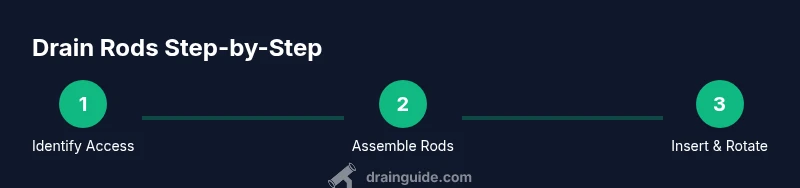
- 1
Identify access point and prep workspace
Locate a cleanout or accessible drain point and clear the area. Move furniture if needed, lay towels, and prepare a bucket. This reduces mess and gives you a clear path for the rods.
Tip: Choose an open, well-lit area and keep a clear exit path in case water spills. - 2
Assemble rods to the needed length
Connect the rods end-to-end, ensuring each joint locks securely. Do not force fittings; if the joint won’t lock, re-seat and try again.
Tip: Test the connector by gently tugging to confirm a secure lock before insertion. - 3
Insert rods into the drain
Gently feed the rod into the drain through the cleanout or trap area. Keep the rod as straight as possible to avoid kinking.
Tip: Maintain light downward pressure and avoid forcing the rod beyond its comfortable reach. - 4
Rotate and push through the clog
Twist slowly while applying forward pressure to engage the blockage. Pause if you meet resistance and reassess the path.
Tip: A steady, rhythmic motion is more effective than heavy, abrupt pushing. - 5
Extend as needed
If the blockage persists beyond the initial length, add more rod sections and repeat the rotate-and-push process.
Tip: Don’t over-extend; risk bending or snapping rods if you push too far. - 6
Withdraw and clean the rod
Carefully retract the rod while turning to prevent spraying debris. Rinse the rod with water to remove sludge as you withdraw.
Tip: Have the bucket ready to catch wastewater during withdrawal. - 7
Flush and test the drain
Run hot water or use the fixture to verify that flow has improved. Listen for changes in sound and observe draining speed.
Tip: If water still backs up, stop and reassess or switch to a different rod configuration. - 8
Reassemble and verify
If you removed a trap, reinstall it with proper seals. Check for leaks and ensure all connections are tight.
Tip: Run the faucet for a full cycle to confirm there are no drips. - 9
Clean up and store rods
Rinse all rods, dry thoroughly, and store in a dry place to prevent rust. Wipe down any tools used and dispose of waste properly.
Tip: Label your storage to remind future you which rod set you used.
Got Questions?
What are drain rods and when should you use them?
Drain rods are extendable metal rods that you twist and push to dislodge clogs in drains. They’re useful when plungers fail or clogs sit beyond the trap. Use them for hair, grease, soap scum, and other solid obstructions near the drain.
Drain rods are extendable rods used to clear clogs when a plunger isn’t enough.
Can drain rods damage pipes?
Yes, rods can cause damage if forced through brittle pipes or used with excessive force. Stop if you meet strong resistance and consider calling a plumber for older piping or suspect leaks.
Rods can damage pipes if forced; back off and reassess or call a professional for risky setups.
What length rods do I need?
Choose rods that let you reach beyond the first bend and trap area without straining the joints. Start with a manageable length and add sections as needed rather than forcing a long rod into the line.
Start with a shorter length and add sections if you still can’t reach the clog.
How do I clean drain rods after use?
Rinse the rods to remove sludge, dry them completely to prevent rust, and store in a dry place. Wipe down any connectors before stacking.
Rinse, dry, and store your rods properly to prevent rust and keep them ready for the next clog.
What should I do if the clog returns after using rods?
If clogs persist or recur, check for venting issues, inspect the trap and pipes for damage, and consider professional help for persistent or recurring blockages.
If the clog comes back, you may need a plumber to check for deeper issues.
Watch Video
The Essentials
- Prepare the space and protect yourself.
- Choose a modular, secure rod set.
- Rotate and push with steady, controlled force.
- Test drainage and reassemble carefully.
- Store tools properly after use.