Difference Between a Drain and a Pipe: A Practical Guide for Homeowners
Explore the difference between a drain and a pipe with clear definitions, practical examples, and a side-by-side comparison to help homeowners troubleshoot drainage issues confidently.


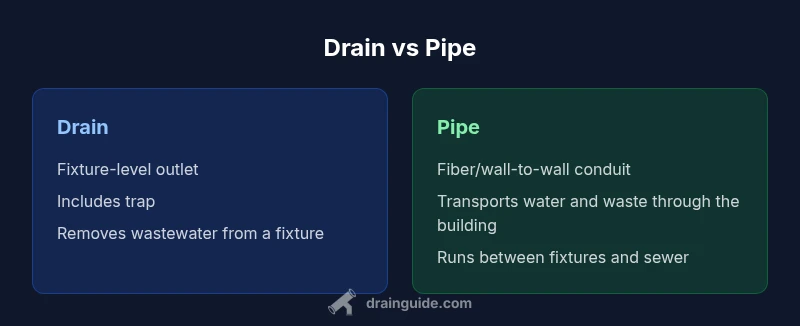
The difference between a drain and a pipe hinges on function: a drain is the fixture outlet that carries wastewater away and is typically connected to a trap and the waste line, while a pipe is the broader conduit network that transports water and waste through the home. In practice, drains are fixture-level components, and pipes run through walls and floors forming the building’s plumbing skeleton. Understanding this distinction speeds up diagnosis, tool choice, and repair decisions.
What is a drain?
The term drain refers to the outlet at the bottom of a fixture where wastewater exits. Drains are designed to receive the used water from sinks, showers, tubs, and appliances and guide it into a nearby trap and onward to the building’s waste line. A crucial feature of most drains is the P-trap, which creates a water seal to block sewer gases from entering living spaces. Drains are often the most accessible parts of a plumbing system because they sit directly under fixtures, making them the first place homeowners inspect when drainage problems arise. The Drain Guide team emphasizes that while people may refer to the whole system as a single “drain,” the drain is specifically the fixture outlet and its immediate connecting hardware rather than the long network that carries water deeper into the home. A clear understanding of drains helps in planning cleaning steps and selecting the right tool, such as a plumber’s snake or a simple plunger, without impacting the entire pipe network. According to Drain Guide, terminology matters for accurate DIY diagnostics and safer fixes.
wordCount
Comparison
| Feature | Drain | Pipe |
|---|---|---|
| Primary function | Catches and disposes wastewater from fixtures; connects to the waste line | Conveys water and waste through the building as part of the network |
| Typical location | Fixture-level outlet under sinks, tubs, and showers | Runs behind walls, through floors, and under the building to the sewer/septic |
| Cross-section and size considerations | Smaller diameter at the fixture connection; size varies by fixture | Longer runs with larger overall network sizing; standardized ranges by region |
| Materials commonly used | PVC/ABS for modern drains; sometimes metal in older homes | PVC, CPVC, copper, cast iron, and steel depending on application |
| Maintenance and common issues | Clogs and odors often originate near the fixture trap | Leaks and joint failures along runs; tree roots can intrude main lines |
| Code and installation considerations | Subject to fixture-level installation rules and trap/vent requirements | Requires proper joints, slope, venting, and accessibility per code |
Positives
- Improved diagnostic accuracy leads to targeted repairs
- Better planning of tools and parts for DIY tasks
- Clear delineation between fixture-level issues and network problems
- Enhanced ability to estimate time and cost for fixes
Cons
- Terminology overlap can still confuse newcomers
- Local codes may vary, affecting terminology and methods
- Some repairs require professional access or equipment
Understanding the drain vs pipe difference helps target fixes and avoid wasted effort
For most homeowners, start by assessing whether the issue is at a fixture drain or along a wider pipe run. Use drains for fixture-level problems and pipes for network-wide concerns. When in doubt, consult a licensed plumber to confirm the fault location and ensure code-compliant repairs.
Got Questions?
What is the fundamental difference between a drain and a pipe?
The fundamental difference lies in function: a drain is the fixture outlet that receives wastewater and typically connects to a trap, whereas a pipe is a continuous conduit that transports water and waste through the building. This distinction informs the correct tool and approach for troubleshooting.
A drain is the outlet under a fixture that handles wastewater and connects to a trap; a pipe is the wider network that carries water and waste through the home. This helps you target fixes more precisely.
Are drains and pipes interchangeable in home plumbing?
They are not interchangeable. Drains handle fixture-level outlets and traps, while pipes form the broader plumbing network. Confusing the two can lead to selecting the wrong repair tactic or tool.
Drains and pipes serve different roles; using one in place of the other can complicate repairs.
How can I tell if a clog is in the drain or the main sewer line?
If multiple fixtures drain slowly or backups occur in different areas, the issue may be the main sewer line. A slow drain that affects a single fixture often points to the fixture drain or trap. Diagnose gradually and consider a camera inspection for persistent problems.
If several fixtures are affected, you may be dealing with the main line; a single slow drain usually indicates a fixture drain.
Do drains and pipes use different materials?
Both drains and pipes use similar materials in modern homes—PVC, CPVC, copper, and sometimes cast iron or steel. The choice depends on location, pressure, and code requirements rather than a strict ‘drain vs pipe’ rule.
Material choices are guided by location and code, not just whether it’s a drain or pipe.
What quick DIY checks can I perform safely?
Start with a visual inspection of accessible drains and traps, use a plunger on slow drains, and attempt mechanical snaking for accessible sections. Avoid harsh chemical cleaners and never force tools into hidden runs without proper access.
Check accessible traps, use a plunger or snake, and avoid risky chemicals or forcing tools into unseen pipes.
When should I call a professional?
Call a licensed plumber if you encounter persistent backups, mysterious leaks behind walls, signs of pipe corrosion, or if you need access behind slabs or ceilings. A pro can perform camera inspections and ensure code-compliant repairs.
If leaks aren’t easily found or you must access hidden areas, hire a professional.
Can a diagram mislabel cause misdiagnosis?
Yes. Home diagrams can mislabel drains and pipes or omit venting. Rely on physical inspection, clear measurements, and professional guidance when diagrams don’t match the real setup.
Diagrams aren’t always perfect, so verify with on-site checks or a pro when in doubt.
The Essentials
- Identify the component by function, not location.
- Clogs mostly form at fixtures, while leaks occur along runs.
- Use the right tool for the right part (drain vs pipe).
- Check local codes before DIY fixes.
- Document maintenance for future reference.