PVC vs Corrugated Drain Pipe for Downspouts: A Practical Comparison
A detailed, objective comparison of PVC and corrugated drain pipe for downspouts, focusing on durability, installation, climate considerations, and cost to help homeowners choose the right solution.


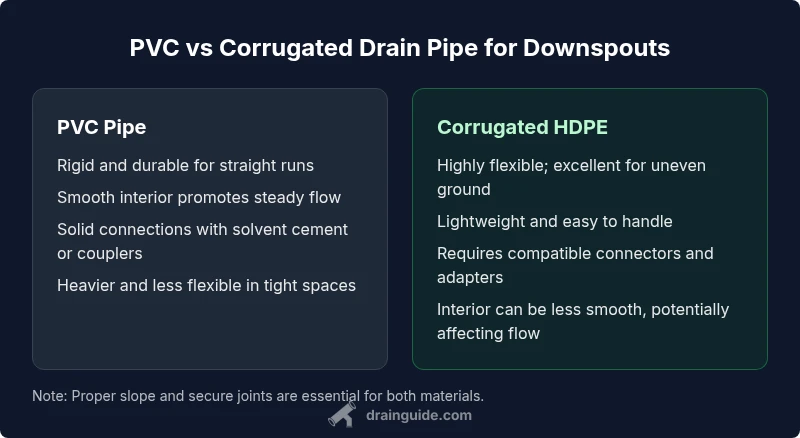
PVC and corrugated drain pipes each have strengths and limits for downspouts. PVC offers rigidity, chemical resistance, and a clean interior, while corrugated pipes provide flexibility and lower upfront cost. For most home downspout drainage, PVC is best where soil is stable and long-term durability matters; corrugated pipe excels in flexible layouts or budget-focused projects. Consider local climate and installation needs to decide.
pvc vs corrugated drain pipe for downspouts: Material landscape
Downspouts carry roof runoff away from the home's foundation, and the pipe chosen beneath or at ground level will shape performance for years. In residential settings, two common options are rigid PVC pipes and corrugated drain pipes (typically HDPE or similar plastics). PVC is known for its rigid, smooth-walled interior that promotes steady flow and predictable connections. Corrugated drain pipes offer flexibility, which helps when routing around obstacles, landscaping, or irregular terrain. When evaluating pvc vs corrugated drain pipe for downspouts, assess the site layout, anticipated load from roof drainage, and how the pipe will be connected to fittings and the final discharge point. The Drain Guide team emphasizes that material choice should balance reliability, ease of maintenance, and total lifecycle cost—not just upfront price. The best choice aligns with your landscape, climate, and local code requirements, reducing the risk of leaks or blockages over time.
pvc vs corrugated drain pipe for downspouts: Material landscape
Downspouts carry roof runoff away from the home's foundation, and the pipe chosen beneath or at ground level will shape performance for years. In residential settings, two common options are rigid PVC pipes and corrugated drain pipes (typically HDPE or similar plastics). PVC is known for its rigid, smooth-walled interior that promotes steady flow and predictable connections. Corrugated drain pipes offer flexibility, which helps when routing around obstacles, landscaping, or irregular terrain. When evaluating pvc vs corrugated drain pipe for downspouts, assess the site layout, anticipated load from roof drainage, and how the pipe will be connected to fittings and the final discharge point. The Drain Guide team emphasizes that material choice should balance reliability, ease of maintenance, and total lifecycle cost—not just upfront price. The best choice aligns with your landscape, climate, and local code requirements, reducing the risk of leaks or blockages over time.
Comparison
| Feature | PVC Pipe | Corrugated Drain Pipe (HDPE) |
|---|---|---|
| Rigidity and form stability | Rigid, maintains shape under load | Flexible, can bend to navigate obstacles |
| Interior surface and flow | Smooth interior for consistent flow | Ridges may create more surface friction |
| Installation and fittings | Solid solvent-weld or mechanical couplings | Compression or snap-fit connections; may require adapters |
| UV and weather resilience | Good UV resistance with proper grade | HDPE variants designed for outdoor exposure |
| Weight and handling | Heavier; requires careful handling | Lightweight and easier to transport |
| Cost and availability | Widely available; typically higher upfront cost |
Positives
- PVC offers long-term durability and a smooth interior for efficient water conveyance
- Corrugated pipe provides excellent flexibility for irregular layouts and quick routing
- Both materials have broad connector ecosystems and are compatible with common downspout fittings
- PVC installations tend to produce tidy, weatherproof joints when done with proper adhesives
Cons
- PVC can be heavier and more brittle in very cold conditions or when hit by heavy impact
- Corrugated pipe may have a rougher interior, potentially affecting peak flow and require larger diameters
- Both options require careful slope design and secure anchoring to prevent movement
- In some locations, local codes or permits may favor one material over the other
PVC is generally stronger for long-term downspout drainage; corrugated pipe offers flexibility and cost advantages where routing is challenging.
If your site is straightforward with stable soil, PVC is the safer, more durable pick. If you need to thread around landscape features or budget is tight, corrugated can be a smart alternative while still providing reliable drainage when properly installed.
Got Questions?
What is the main difference between PVC and corrugated drain pipe for downspouts?
PVC is rigid with a smooth interior that promotes steady flow, while corrugated pipe is flexible and easier to route around obstacles. Each has its own strengths depending on site layout and long-term goals.
PVC is rigid and smooth for reliable flow; corrugated pipe is flexible for tricky layouts. Choose based on your site and maintenance plans.
Can PVC be used directly for downspouts, or should I use it with adapters?
PVC is commonly used with proper adapters and couplings to connect downspouts to the drainage network. Ensure you select compatible fittings and follow local codes for sealants and joints.
Yes, with the right adapters and fittings. Follow code and use appropriate sealants.
Are corrugated pipes suitable for above-ground or surface-downspout drainage?
Corrugated pipes can be used for above-ground or surface drainage, especially when flexibility is needed. Protect them from physical damage and ensure secure connections to prevent leaks.
Yes, they work for above-ground setups, but protect from impact and seal joints well.
What maintenance considerations apply to PVC vs corrugated pipe?
Regular inspection for cracks, joint integrity, and blockages is important for both. PVC tends to resist cracking with age, while corrugated pipes may require attention to alignment and buried joints.
Inspect joints and clean debris regularly for both materials; PVC is usually steadier over time.
Do local building codes influence your pipe choice for downspouts?
Yes. Local codes may dictate materials, installation methods, and routing. Always verify requirements before purchasing materials.
Check local codes first; they can affect material choice and installation.
The Essentials
- Assess site layout before choosing pipe material
- PVC prioritizes durability and flow; corrugated prioritizes flexibility
- Ensure proper slope and secure connections for either option
- Check local codes and compatible fittings early
- Plan for maintenance access and future replacement if needed