Bathroom Sink Drain Blocked: Safe DIY Fixes and Prevention
Urgent guide to fix a bathroom sink drain blocked. Learn causes, fast checks, step-by-step clearance, safety tips, and prevention to restore flow without costly repairs.


Most bathroom sink drains become blocked from hair, soap scum, and mineral buildup. The fastest fix is to remove and clean the P-trap, then flush the line with hot water. If the trap is clear but water drains slowly, use a drain snake or a plunger aimed at the drain, and avoid chemical cleaners that can damage pipes.
Understanding the Problem
A blocked bathroom sink drain is more than just an annoying nuisance—it's a sign that your plumbing is working hard to move water through a narrow path filled with hair, soap scum, and mineral deposits. When you wash your hands or brush your teeth, you may notice slow drainage, standing water, or gurgling sounds from the pipe. Time is of the essence: the longer a blockage sits, the more likely it is to worsen or back up into the overflow or traps. According to Drain Guide, most bathroom clogs originate from everyday debris in the trap and pipes, so a systematic approach often resolves the issue without professional help. This guide focuses on practical, safe steps you can take today to restore flow and prevent future blockages.
Common Causes of a Blocked Bathroom Sink Drain
Understanding the root causes helps you target the right fix quickly. Hair is the top offender in bathroom sinks, combining with soap scum and minerals to create a resistant film that slows drainage. Soap scum, toothpaste residue, and mineral buildup from hard water further constrict the passage. Occasionally, small objects like jewelry or makeup applicators can fall into the drain, creating a partial obstruction. Grease and food particles, though more common in kitchen drains, can migrate from the vanity trap if the stopper is left in place or misused. Regular maintenance and mindful disposal habits dramatically cut these blockages. Drain Guide analysis shows that addressing hair and soap scum at the source is the most effective first step, followed by routine flushing and trap cleaning.
Quick Checks You Can Do Yourself (Non-Destructive)
Before taking apart plumbing, try a few fast checks that don’t require tools. Remove the sink stopper and clear visible debris by hand or with a small brush. If you hear air entering the drain when you run water, the trap or tailpiece may be partially clogged. Use a plunger designed for sinks to attempt a gentle push of the blockage, ensuring a good seal around the drain. Boiling water poured slowly down the drain can dissolve soap scum in some cases, but avoid boiling water if you have PVC pipes or if the trap is plastic. If your sink has an overflow, make sure it isn’t plugged, which can force water toward the trap rather than out the drain. These quick checks often provide quick relief and buy you time to decide on deeper fixes.
Diagnostic Flow: Symptom → Diagnosis → Solutions
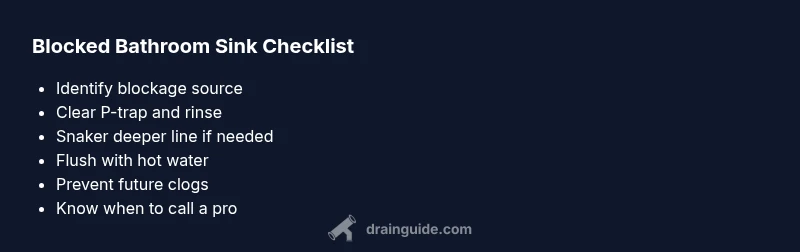
A practical workflow helps you move from symptom (slow drain, standing water) to a targeted fix. Start with surface checks (stopper, visible debris) and then move to the P-trap. If water drains but slowly, the blockage may be further down the line or in the tailpiece. When water backs up into the sink or you hear glugging noises, assume a more significant obstruction or vent-related issue. For each symptom, select a corresponding solution: remove and clean the P-trap, snake the line, flush with hot water, or substitute with baking soda and vinegar followed by a hot flush. If none of these steps resolve the issue, it’s time to call a professional. Quick, careful work now prevents a bigger mess later.
Step-by-Step: Clear the Blockage (Most Common Cause)
- Gather tools and protect the area: gloves, protective eyewear, a bucket, towels, adjustable pliers, a drain snake, and a flashlight. Pro tip: lay towels to catch spills and protect the cabinet finish.
- Turn off the water supply and place a bucket under the P-trap to catch dirty water.
- Loosen the slip nuts on the P-trap with adjustable pliers and carefully remove the trap. Inspect for hair and gunk, and set the trap aside for cleaning.
- Clean the trap thoroughly, then check the tailpiece for obstructions. Rinse the trap with hot water to wash away loosened debris.
- Reassemble the trap securely and run water to test. If drainage remains slow, proceed to snake the line.
- Use a drain snake to reach deeper blockage. Retrieve and remove hair, then flush with hot water. Pro tip: avoid forcing the snake through bends; if resistance is felt, stop and reassess. If you encounter metal corrosion, difficult clogs, or you’re uncomfortable, stop and call a plumber.
Safety, Warnings, and Prevention
Do not mix chemical drain cleaners with other cleaners or with plungers. The fumes can be dangerous and can damage pipes. Always unplug power to any nearby disposal or equipment when working near electricity. Wear gloves and eye protection. Never use metal tools to scrape inside the pipes, as you can puncture or scratch. After clearing a blockage, adopt a prevention routine: clear debris weekly, use hair catchers, flush with hot water, and avoid pouring grease or oil down the drain.
When to Call a Professional
Some scenarios require a pro: persistent blockages after attempting basic fixes, repeated clogs despite routine maintenance, unusual odors, sewage backups, or if you notice a leak around the trap. A licensed plumber can diagnose vent issues, leak sources, or more complex pipe problems. Quick action now can prevent bigger damage and costly repairs later.
Steps
Estimated time: 30-45 minutes
- 1
Gather tools and protect the area
Collect gloves, protective eyewear, a bucket, towels, adjustable pliers, a drain snake, and a flashlight. Protect the cabinet with towels to catch drips. This reduces cleanup time and keeps hazards out of reach.
Tip: Wear eye protection to guard against loose debris. - 2
Shut off water and position a bucket
Turn off the under-sink shutoff valves if present. Place a bucket under the P-trap to catch dirty water during disassembly and prevent spills on the cabinet floor.
Tip: Have a towel ready for any splashes. - 3
Loosen slip nuts and remove P-trap
Use pliers to loosen the slip nuts and slide the P-trap away from the drain. Inspect the trap for hair and gunk; set the trap aside for cleaning.
Tip: Do not twist the trap too hard; a gentle twist prevents cracks. - 4
Clean the trap and tailpiece
Rinse the trap with hot water, scrub away buildup with a brush, and check the tailpiece for obstructions. A clean trap often resolves the majority of blockages.
Tip: Keep the trap empty until you’re ready to reassemble. - 5
Reassemble and test the drain
Reconnect the P-trap, tighten the slip nuts securely, and run water to test drainage. If slow drainage persists, move to deeper cleaning with a snake.
Tip: Ensure all joints are snug to prevent leaks. - 6
Advance to deeper cleaning if needed
If the blockage remains, insert a drain snake into the drain and work it past bends to dislodge hair. Retrieve debris and flush with hot water.
Tip: Do not force the snake aggressively; meet resistance and back off.
Diagnosis: Sink drain is slow or water backs up when washing hands
Possible Causes
- highHair buildup in the trap and tailpiece
- mediumSoap scum and mineral deposits
- mediumPartial obstruction further down the line
- lowVent-related issue causing poor drainage
Fixes
- easyRemove and clean the P-trap
- mediumInsert a drain snake and retrieve the blockage
- easyFlush with hot water and/or baking soda-vinegar combo
- hardCall a licensed plumber for vent or deeper pipe problems
Got Questions?
What are the most common causes of a blocked bathroom sink drain?
Hair buildup, soap scum, and mineral deposits are the leading causes. Regular cleaning reduces blockage risk and improves flow.
Hair and soap scum are the usual culprits behind a blocked sink drain.
Can I use chemical drain cleaners to fix a blocked bathroom sink drain?
Chemical cleaners can damage PVC pipes and trap seals; mechanical methods like removing the trap or using a snake are safer and often more effective.
Chemicals can harm pipes, so use mechanical methods first.
How long does it typically take to clear a blockage?
Minor clogs may resolve in minutes with a simple flush or trap cleaning; more stubborn blockages can take 30-60 minutes with a snake or deeper inspection.
Most minor clogs clear in under an hour with proper methods.
Should I attempt DIY if a blockage persists after basic steps?
If basic steps don’t clear the drain, stop and consult a professional to avoid pipe damage or leaks; persistent issues may indicate more serious problems.
If it won’t clear, it’s time to contact a pro.
What tools do I need to clear a sink drain blockage safely?
P-trap wrench or pliers, bucket, flashlight, brush, and a drain snake or auger are typical tools for DIY clearing.
You’ll want basic tools like pliers and a drain snake.
Watch Video
The Essentials
- Clear the P-trap first for fastest relief
- Avoid caustic chemical cleaners
- Use a drain snake for deeper clogs
- Regular maintenance prevents future blockages
- If unsure, call a professional to avoid damage