Broken Drain Stopper Tub: Urgent DIY Troubleshooting Guide
Urgent, practical troubleshooting for a broken tub drain stopper. Learn how to inspect, diagnose, and fix common stopper failures with safe, step-by-step instructions from Drain Guide.


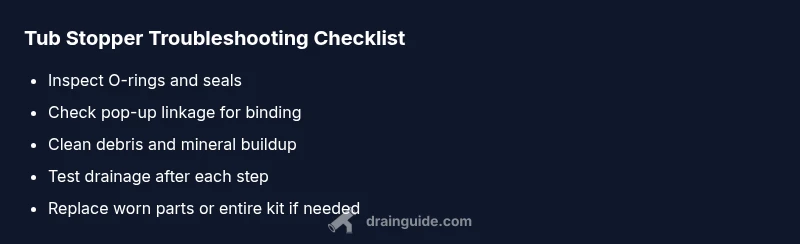
Most tub drain stopper problems stem from a seized pop-up mechanism or a worn O-ring. Start by removing the stopper, inspecting the linkage, and cleaning any debris. If it still won’t seal or drain after cleaning, replace the O-ring or the entire pop-up kit. For a lasting fix, consider replacing the entire pop-up assembly.
Understanding the Broken Drain Stopper Tub Problem
If you’re dealing with a broken drain stopper tub today, you’re not alone. Water that won’t drain, a stopper that won’t seal, or a stopper that sticks open are common symptoms homeowners face. According to Drain Guide, the root cause is often a worn rubber seal or a seized pop-up mechanism that has accumulated mineral buildup over time. When the stopper or its linkage binds, you’ll notice slow drainage, leaks, or frequent clogs. The key is to distinguish whether the problem is mechanical (movement and alignment) or a simple seal failure, then follow a methodical repair path. With the right tools and parts, most issues can be fixed without a full drain teardown. This guide will walk you through safe, practical steps to restore function and prevent repeat problems.
Common Causes of a Broken Tub Stopper
A broken tub stopper can result from several factors. Rust and mineral buildup can seize the pop-up, particularly in areas with hard water. A dried, cracked O-ring or gasket creates a leak path and poor seal. A bent or worn linkage keeps the stopper from aligning with the drain opening. Debris like hair and soap scum can lodge in the stopper chamber, reducing suction and function. Misalignment after installation or a recent repair can also produce a loose fit that leaks. Lastly, corroded mounting hardware or a loose overflow assembly may cause wobble or incomplete closure. Identifying the exact cause guides you to the correct fix and helps you avoid buying the wrong parts.
How to Inspect Your Tub Stopper Assembly
Begin by pulling the stopper out of the drain to examine visible parts for rust, cracks, or wear on seals and gaskets. Check the lift rod and pivot rod for smooth movement, ensuring there’s no binding. Operate the stopper several times to observe the linkage in action and detect any snag. If accessible, inspect the overflow plate area and flange for corrosion and confirm screws are tight. Finally, look for hair, soap scum, or mineral buildup behind the stopper that could impede operation. A thorough inspection will decide whether cleaning, part replacement, or a full assembly swap is required. Drain Guide recommends keeping tools handy and taking photos to reference during reassembly.
Safe Cleaning and Basic Repairs You Can Do Today
Many issues respond to simple cleaning and lubrication. Wear gloves and use a mild bathroom cleaner to remove soap scum and mineral deposits from the stopper and housing. Rinse, dry, and test movement. If the O-ring looks worn or deformed, replace it with a compatible size; apply a silicone-based lubricant to rubber seals (avoid petroleum-based lubricants). Reassemble the stopper and run warm water to check for leaks and proper draining. If the stopper binds again or won’t seal after cleaning, advance to part replacement rather than forcing a fix. Avoid harsh chemical drain cleaners near metal components to prevent further corrosion.
Replacing O-Rings, Gaskets, and Small Parts
O-rings and gaskets wear out with age and can cause slow draining or leaks. Remove the old seal and measure its width, inside diameter, and thickness to match a replacement. Use a high-quality rubber O-ring rated for bathroom use and coat with a light silicone lubricant to seat evenly. Replace cracked or deformed gaskets, including any gasket at the stopper body. For pop-up mechanisms, inspect springs and washers—their failure is a common culprit. When replacing seals, reassemble carefully and test with water to ensure a watertight seal before moving on to larger repairs.
Replacing the Entire Pop-Up Assembly
If the linkage is bent, the lift rod is detached, or corrosion has compromised the whole unit, replacing the pop-up kit is the best long-term fix. Measure your drain opening and select a compatible universal kit if you don’t know the exact model. Disassemble the old unit, install the new pop-up body, attach the lift rod and linkage, and recheck alignment. Tighten screws to the recommended torque and avoid overtightening, which can warp the flange. After installation, test with water and listen for smooth operation and a solid seal. If you’re unsure about alignment or parts compatibility, consult a professional.
When to Call a Professional
Some tub stopper problems are straightforward, but others require expert diagnosis. If corrosion is extensive, the drain pipe is damaged, or leaks persist after replacement, a licensed plumber can safely diagnose and correct the issue. If your tub uses a special mounting pattern or you’re unsure about removing seals under the overflow, professional help is wise. Early intervention can prevent further damage and hidden costs. If you notice unusual smells, heat near the fixture, or electrical hazards, stop and call a pro immediately.
Preventive Maintenance for a Healthy Tub Drain
Preventive care reduces the odds of future stopper failures. Schedule an annual inspection of the stopper assembly—focus on O-rings, seals, and linkage. Clean the stopper and drain monthly to prevent hair and mineral buildup. Use a silicone-based lubricant on rubber components every few months and replace worn parts promptly. Keep the overflow plate clean and ensure mounting hardware remains tight, but not overly tight. By forming these habits, you’ll extend the life of the stopper and maintain smooth, reliable drainage.
Steps
Estimated time: 60-90 minutes
- 1
Gather tools and safety gear
Assemble a screwdriver set, adjustable wrench, pliers, replacement O-rings, silicone lubricant, and safety gloves. Have a bucket or towel ready to catch water. This reduces mess and prevents slips.
Tip: Lay out parts and take photos before disassembly to reference during reassembly. - 2
Remove the tub stopper
Carefully lift or rotate the stopper to release it from the drain. If it’s stuck, apply a little silicone lubricant around the housing to ease removal. Do not force the stopper, which can damage the drain assembly.
Tip: If your stopper is a pop-up, note how the linkage sits before removal. - 3
Inspect the components
Examine the O-ring, gasket, and linkage for wear, cracks, or corrosion. Check the lift rod for bends and verify the pivot rod moves freely without binding.
Tip: Take note of which parts are most worn so you can prioritize replacements. - 4
Clean and test basic movement
Clean all parts with a soft brush and rinse. Lubricate rubber seals with a silicone-based product, then reassemble loosely and operate the stopper to test movement.
Tip: Avoid petroleum-based lubricants on rubber components. - 5
Replace worn components
Install new O-ring or gasket if the seal is damaged. Replace any bent linkage or worn springs. Recheck the fit and alignment.
Tip: Ensure parts are seated evenly to prevent leaks. - 6
Reassemble the stopper assembly
Reinstall the stopper and secure mounting hardware. Make sure the stopper seats properly and moves without obstruction.
Tip: Do not overtighten screws; this can warp the flange. - 7
Test for leaks and drainage
Fill the tub briefly and observe drainage and sealing. If water drains slowly or leaks, recheck seals and alignment, and adjust as needed.
Tip: Run warm water during tests to mimic regular use. - 8
Evaluate whether to replace the whole kit
If corrosion or wear is widespread, a full pop-up kit replacement may be more economical in the long run.
Tip: A professional can confirm if replacement is the best option.
Diagnosis: Water won’t drain, stopper won’t seal, or stopper sticks open/shuts incorrectly
Possible Causes
- highSeized pop-up mechanism from corrosion or mineral buildup
- mediumWorn or damaged O-ring or gasket
- mediumBroken or bent stopper linkage
- lowHair/debris lodged in stopper chamber
- lowLoose mounting hardware or misalignment after installation
Fixes
- easyRemove stopper and clean the assembly to remove corrosion and debris
- easyReplace worn O-ring or gasket and reseal the stopper
- mediumAdjust or replace the pop-up linkage and lift rod
- hardReplace the entire pop-up assembly if corrosion is extensive
- mediumIf you’re unsure or uncomfortable, hire a licensed plumber
Got Questions?
Why won't my tub stopper hold water after heavy use?
A worn seal or a seized mechanism is the most common cause. Inspect the O-ring and linkage, replace worn parts, and test again. If problems persist, a full kit replacement may be needed.
Common causes are worn seals or a stuck mechanism. Inspect and replace worn parts, then test again; consider a full kit if issues persist.
Should I replace the stopper or the entire pop-up assembly?
If the linkage or mount is bent or corroded, replacing the entire pop-up assembly is often the most durable fix. For isolated seal wear, a new O-ring or gasket may suffice.
If linkage is bent or corroded, replace the whole pop-up. For worn seals, swap the O-ring.
Are chemical drain cleaners safe around a tub stopper?
Chemical cleaners can corrode metal parts and ruin rubber seals. Avoid them near the stopper and use mechanical methods or approved cleaners instead.
Avoid chemical cleaners around the stopper; they can corrode parts. Use mechanical cleaning and approved products instead.
What tools do I need to replace a tub drain stopper?
Typical tools include an adjustable wrench, screwdriver, needle-nose pliers, replacement O-rings, and silicone lubricant. Check your kit for model-specific requirements.
You’ll usually need a wrench, screwdrivers, pliers, new seals, and silicone lubricant.
Can I fix a broken drain stopper tub myself, or do I need a plumber?
Many DIY fixes are straightforward, especially seal replacements. If you encounter complex corrosion, leaks in hard-to-reach areas, or uncertainty about model compatibility, hire a plumber.
DIY fixes work for simple seal changes. For corrosion or complex installs, call a plumber.
What maintenance helps prevent stopper problems?
Regular cleaning, lubrication of rubber parts, and periodic inspections of O-rings and linkage help prevent premature failure. Address signs of wear promptly.
Keep it clean, lubricate seals, and inspect components regularly to prevent failures.
Watch Video
The Essentials
- Inspect stopper components for wear and corrosion
- Choose cleaning or part replacement first, then full kit if needed
- Use silicone lubricant on rubber seals only
- When in doubt, call a professional for complex replacements