Difference Between a Sink and a Faucet: A Practical Guide
Explore the difference between a sink and a faucet with clear definitions, installation basics, and budgeting tips. Learn how each component functions, their materials, mounting options, and how to choose the right pairing for kitchens and bathrooms.


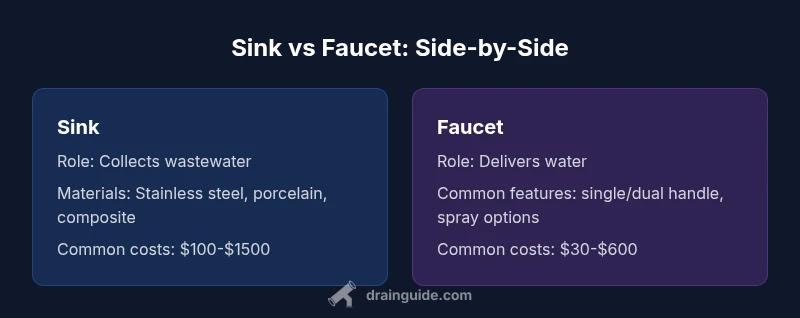
The difference between a sink and a faucet lies in their roles: a sink is the basin that holds wastewater, while a faucet is the valve that delivers water into the sink. Understanding their separate functions helps with sizing, replacement, and maintenance. In short: sink = basin; faucet = water delivery device.
What is a Sink?
Understanding the difference between a sink and a faucet begins with clarifying what a sink actually does. A sink is a basin that collects wastewater and serves as the workspace for dishes, food prep, and handwashing. It must be structurally sound, properly mounted, and resistant to water exposure. Drain Guide emphasizes that the sink's material, depth, and configuration influence ease of cleaning and the rate of wear over time. Common sink materials include stainless steel for durability, porcelain for a smooth, classic look, and modern composites that mimic stone. When choosing a sink, consider bowl configuration (single, double, or triple), mounting style (top-mount, under-mount, or vessel), and compatibility with countertops and plumbing. Understanding these choices helps ensure a smooth remodel and minimizes surprises during installation.
What is a Faucet?
The faucet, in contrast, is the water-delivery valve assembly mounted above or near the sink. Its core job is to control water flow, temperature, and pressure. Drain Guide highlights that faucet design affects ergonomics, reach, and daily use. Faucets vary in mounting style (deck-mounted, wall-mounted, or integrated with the sink), handle count (single-handle vs. dual-handle), and spray options (stream, spray, pull-out, or pull-down). Finishes range from chrome and brushed nickel to matte black. When selecting a faucet, assess reach to the center of the basin, compatibility with the sink and countertop, and maintenance needs such as aerator cleaning and cartridge replacement.
Core Roles in a Sink Assembly
To grasp the overall difference between a sink and a faucet, it helps to map out the assembly. The sink provides the basin and drainage infrastructure—the pit that collects used water and channels it to the drain via a trap. The faucet supplies the water and often includes a spout, handles, an aerator, and a cartridge. Drain Guide notes that reliability depends on proper alignment of supply lines, shut-off valves, and the drain hookup. The joint between sink and faucet must accommodate hole patterns (single, dual, or triple) and be compatible with standard plumbing fittings. A well-matched pairing minimizes leaks, reduces wear on seals, and streamlines future service.
Common Materials and Finishes
Sink materials determine durability and maintenance needs, with stainless steel offering resilience against dents and stains; porcelain providing a traditional look with smooth surfaces; and composite or granite options offering unique textures and heat resistance. Faucet bodies are typically brass or corrosion-resistant alloys, with finishes such as chrome, brushed nickel, antique bronze, or matte black. Drain Guide notes that finishes should coordinate with fixtures, hardware, and cabinetry for a cohesive aesthetic. Both sinks and faucets can feature impact-resistant coatings and protective undercoats to slow wear from water exposure, heat, and cleaning chemicals.
Installation and Compatibility Considerations
Before purchasing, assess the mounting surface, existing holes, and drain layout. A deck-mounted faucet usually requires 1–4 holes, while a wall-mounted faucet uses different plumbing lines. A sink’s mounting requires compatible countertop cutouts or cabinetry space, plus a compatible drain and trap size. Drain Guide emphasizes checking the built-in overflow and the quality of the mounting hardware. Consider whether your cabinet depth, sink bowl size, and faucet reach will work together without causing splashing or crowding of the surrounding fixtures.
Styles and Variants: From Mixers to Single-Hole Faucets
There is a wide spectrum of styles for both sinks and faucets. Sinks range from single-bowl undermounts to double-bowl kitchen models and vessel sinks that sit atop the counter. Faucets come in pull-out or pull-down spray variants, two-handle traditional designs, and modern single-handle mixer options. When evaluating the difference between a sink and a faucet, consider how the overall style aligns with your kitchen or bathroom. A modern, streamlined faucet paired with a simple undermount sink can create a clean look, while a farmhouse sink often pairs with a more traditional faucet design to balance aesthetics and usability.
How Sinks and Faucets Impact Plumbing and Maintenance
The sink and faucet system is only as reliable as its plumbing connections. The sink must drain properly through an adequate trap and venting. The faucet requires tight seals, clean aerators, and functional cartridges to prevent leaks and dripping. Regular maintenance for both includes checking for corrosion, cleaning mineral deposits, and inspecting supply lines for wear. Drain Guide notes that maintaining water pressure and addressing mineral buildup early can extend the life of both components. A properly chosen sink and faucet reduce maintenance burdens and improve daily usability.
Cost Considerations and Budgeting
Costs vary widely based on material, finish, and brand. Kitchen sinks can range from budget-friendly stainless-steel models to premium composites or copper options. Faucets also cover a broad price spectrum, with standard models typically costing less than premium designer options. In budgeting for the difference between a sink and a faucet, plan for both components separately and as a coordinated package. A reasonable range for a mid-range kitchen setup might be $100–$1,200 for sinks and $50–$600 for faucets, with higher-end materials and finishes pushing prices upward. Always factor in installation costs if hiring a professional.
Measuring and Replacing: A Practical Guide
Replacement begins with accurate measurements. For sinks, measure overall width, bowl dimensions, and sink depth, as well as cabinet clearance. For faucets, measure the hole pattern and ensure the new faucet’s reach aligns with the sink basin. Always check the faucet’s connection type (compression vs. braided supply lines) and valve compatibility. Drain Guide recommends bringing a sample of your existing plumbing to ensure accurate compatibility with new parts. When in doubt, consult a professional installer to verify drain fittings and mounting hardware before purchase.
Common Mistakes and How to Avoid Them
Many DIYers misjudge hole patterns, failing to account for multi-hole configurations or differing center-to-center spacings. Others overlook finish coherence, causing a mismatched kitchen or bath look. A frequent error is selecting a faucet with inadequate reach relative to the sink basin, leading to splashing or awkward operation. Another pitfall is choosing inexpensive finishes that wear quickly. To avoid these issues, verify hole counts, measure reach, review finish durability, and confirm compatibility with your sink’s material and countertop.
Maintenance Tips for Longevity
Routine maintenance extends the life of both sinks and faucets. Wipe sinks dry after use to prevent mineral buildup; use non-abrasive cleaners appropriate for your material. For faucets, regularly clean aerators and replace cartridges per manufacturer recommendations. Check for leaks at supply lines and around the faucet base. If you notice a slow drain or persistent leaks, address them promptly to prevent more extensive damage. Drain Guide recommends scheduling annual checkups for moving parts and seals in high-use kitchens or baths.
Putting It All Together: Making Your Selection
Choosing between the sink and faucet requires balancing function, style, and durability. Start by establishing your daily tasks: heavy dishwashing, frequent handwashing, or decorative display. Then align material choices with your budget and care routine. Remember that the sink sets the work area and drainage system, while the faucet controls water delivery. A well-chosen pairing improves usability, reduces maintenance, and creates a cohesive aesthetic across the space.
Comparison
| Feature | Sink | Faucet |
|---|---|---|
| Definition | A basin that holds wastewater and serves as the main work area. | A valve assembly that delivers water into the sink and controls flow/temperature. |
| Primary purpose | Containment and drainage of used water; supports cleaning tasks. | Regulate water delivery, mixing hot and cold, and shaping the water stream. |
| Typical mounting | Top-mount, under-mount, or vessel configurations integrated into countertops. | Deck-mounted, wall-mounted, or integrated with the sink; can be single-hole or multi-hole. |
| Hole requirements | Depends on sink style and mounting; cutouts must match basin and plumbing. | Often requires 1–4 holes depending on handle count and spray options. |
| Materials & finishes | Stainless steel, porcelain, composite; various colors and textures. | Brass or durable alloy bodies with chrome, nickel, bronze, or matte finishes. |
| Maintenance focus | Cleaning, staining resistance, and drainage efficiency. | Aerator, cartridge replacement, leak checks, and mineral buildup control. |
| Typical price range | $100-$1500+ depending on material and size. | $30-$600 for standard models; premium brands higher. |
| Best for | High-usage kitchens, laundry areas, or heavy cleaning tasks. | Regular water delivery with adjustable spray and style alignment. |
Positives
- Clarifies roles, aiding planning and budgeting
- Helps align fixtures with overall design
- Reduces risk of incompatible parts during replacement
- Supports coordinated residential remodels
Cons
- Can gloss over complex setups (e.g., integrated fixtures)
- May overwhelm first-time buyers with options
- Does not replace expert measurements for non-standard homes
Sink and faucet serve distinct, essential roles; plan replacements based on usage and compatibility.
In practice, prioritize matching faucet mounting and sink cutouts, verify drain configurations, and confirm finishes. Drain Guide's approach emphasizes accurate measurements and thoughtful pairing to minimize leaks and maintenance later.
Got Questions?
What is the difference between a sink and a faucet?
The sink is the basin that holds wastewater and serves as the workspace, while the faucet is the valve assembly that delivers water into the sink. They perform distinct functions and are selected based on fit, flow, and aesthetics. Proper pairing ensures efficient drainage and comfortable use.
The sink is the basin; the faucet controls water flow and temperature. They’re different parts with separate jobs, so choose both to fit your space.
Do I need to replace a sink and faucet at the same time?
Not always. If the sink and faucet pair well and the budget allows, replacing together can simplify installation and reduce mismatched finishes. If one component shows significant wear or leaks, address that part first but plan for a coordinated upgrade later.
Sometimes it makes sense to upgrade both at once for consistency and efficiency.
What features affect faucet price?
Faucet price is influenced by materials, finishes, cartridge quality, and special features (pull-out sprays, touchless operation, luxury finishes). Basic models are affordable, while premium finishes and advanced spray options raise costs.
Materials and features drive faucet prices from budget to premium ranges.
Are integrated sink and faucet systems worth it?
Integrated systems can offer a seamless look and fewer connection points, but they limit flexibility and can be harder to upgrade independently. They’re often best when styling is a priority and service access is straightforward.
Integrated units look clean, but think about future repairs and upgrades.
How do I measure for replacement?
Measure sink dimensions, hole patterns, and countertop clearance. For faucets, confirm hole count and reach to avoid splashing. Bring measurements to retailers or consult a professional to ensure compatibility.
Measure width, depth, and mounting holes, then compare to the product specs.
What maintenance helps extend lifespan?
Regular cleaning, aerator checks, and cartridge replacements extend life. Address leaks promptly and inspect supply lines for wear. Use manufacturer guidelines for cleaning agents to avoid damage.
Keep up with basic checks and cleanings to prevent early wear.
The Essentials
- Define roles before shopping for fixtures
- Check hole patterns and mounting compatibility
- Budget for separate and paired components
- Coordinate materials and finishes for cohesive design
- Measure carefully before replacement