Drain vs Drainless Tummy Tuck: A Clear Side-by-Side Comparison
Explore the difference between drain and drainless tummy tuck surgeries, focusing on recovery, risks, costs, and candidacy. Learn how drains influence healing and how to discuss options with your surgeon.


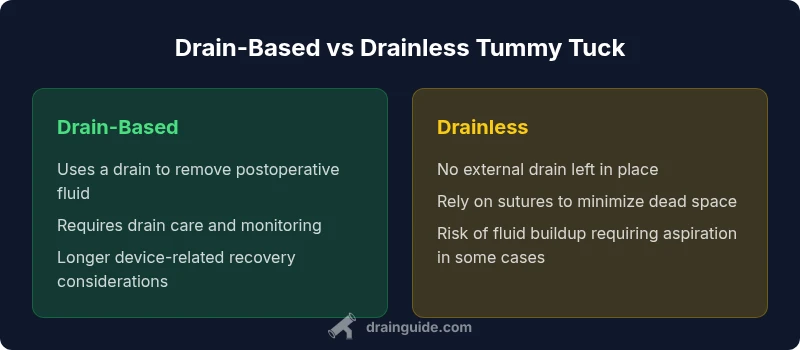
Drain-based tummy tucks place a drain to evacuate fluids; drainless variants avoid external drains using internal sutures. The main trade-offs are comfort, fluid risk, and downtime. For a full analysis, see the detailed comparison.
What is the difference between drain and drainless tummy tuck?
Understanding the difference between drain and drainless tummy tuck starts with the basic goal of both procedures: to tighten abdominal skin and underlying tissues after pregnancy, weight changes, or aging, while minimizing scarring and preserving function. The phrase 'difference between drain and drainless tummy tuck' is commonly used in patient consultations because it frames the core postoperative decisions that influence comfort, recovery, and risk. According to Drain Guide, the choice often hinges on how a surgeon manages the space where fluid tends to collect and how the patient’s body responds to surgery.
In a traditional, drain-based tummy tuck, a small tube is placed during the operation to evacuate serous fluid as the tissues settle. Drains help prevent fluid buildup (seroma) and can reduce swelling in the early days after surgery. The drain is removed once output falls below a threshold that your surgeon determines. Drains also provide a tangible indicator of postoperative fluid dynamics for some patients. However, managing a drain means daily care, a visible device, and a potential for discomfort or irritation.
In contrast, a drainless tummy tuck seeks to minimize dead space using sutures, progressive tension, or quilting techniques. The goal is to discourage fluid accumulation without an external tube. For some patients, this translates to a shorter, more comfortable early recovery, but it requires precise implanting and careful postoperative monitoring for signs of fluid collection. The Drain Guide team notes that outcomes depend strongly on patient anatomy and surgeon skill.
Drain-based tummy tuck: workflow and fluid management
In traditional drain-based tummy tucks, the surgeon creates a pocket for abdominal tissues and places a drain to evacuate serous fluid as healing begins. The presence of a drain can influence early movement, dressing changes, and daily activities. Patients often stay in a recovery setting for observation, with nursing staff monitoring drain output, incision sites, and pain control. Drain duration varies, but the clinical goal is to minimize fluid accumulation while tissues settle. Drain care includes emptying the collection device, monitoring for infection signs at the insertion site, and ensuring the drain remains secure during mobility. For some patients, this approach lowers seroma risk but introduces a visible external device that can affect comfort and clothing choices. According to Drain Guide, surgeon experience and patient risk factors heavily influence whether a drain is used and how long it stays in place.
The difference between drain and drainless tummy tuck becomes most obvious in postoperative experience: with drains, patients may experience more discomfort related to the device and have slightly longer activity restrictions; without drains, early discomfort typically centers on swelling and tissue stiffness, but there is less daily device management to handle.
Drainless tummy tuck: techniques and rationale
A drainless tummy tuck relies on meticulous dead-space management to prevent fluid buildup without an external drain. Techniques include quilting sutures that connect the abdominal skin to deeper tissues, progressive tension sutures that distribute tension across the repair, and careful contouring to reduce potential spaces where fluid can collect. The surgeon’s goal is to achieve a stable pocket that minimizes seroma risk while supporting a smooth contour during healing. Drainless approaches can offer a more comfortable early recovery for many patients and may simplify the postoperative routine since there is no drain to monitor. However, drainless outcomes are highly dependent on the surgeon’s skill and patient anatomy. Drain Guide notes that careful patient selection—considering skin quality, fat distribution, and previous surgeries—plays a crucial role in the success of drainless methods.
Prospective patients should discuss the specific drainless technique their surgeon uses and how it aligns with their body. The technique chosen should reflect not only the desired aesthetic result but also the patient’s ability to comply with postoperative instructions and follow-up visits.
Recovery, comfort, and postoperative care
Recovery experiences diverge with drain-based versus drainless tummy tucks. In drain-based procedures, patients may engage more with drain management tasks: inspecting the site, measuring output, and planning wardrobe adjustments to accommodate the device. Comfort can be affected by the presence of tubing and ancillary dressings. In drainless procedures, patients generally face less device-related discomfort, but they must carefully monitor for signs of fluid buildup, such as swelling, firmness, or localized tenderness, and adhere to activity restrictions that help prevent premature dead space formation. Pain management strategies are similar in both approaches, though drain care itself adds a separate component of recovery time. Drain Guide emphasizes coordinating with the surgical team to tailor the plan to individual tolerance, activity level, and home support. The balance between comfort and fluid risk is central to deciding which route suits a given patient.
Safety considerations and patient selection
Both drain-based and drainless tummy tucks carry safety considerations that influence candidacy. Drain-based strategies may be more forgiving for patients with higher fluid production or less predictable healing due to medical history. Drainless techniques require precise execution and favorable anatomy; otherwise, the risk of late fluid collection or hematoma may be heightened. Patient selection hinges on scar quality, skin elasticity, abdominal wall strength, history of prior abdominal surgery, smoking status, and overall health. The surgeon’s experience with either approach heavily shapes outcomes, including complication rates and recovery timelines. Informed consent should clearly outline the risks of seroma, infection, and wound healing delays for both options. Drain Guide notes that an individualized plan, based on imaging when available and a thorough physical exam, best prepares patients for success.
Cost considerations and access
Pricing for drain-based versus drainless tummy tucks varies by region, surgeon, and facility. Drain-based procedures may incur additional costs for drain supplies and post-op dressing changes, while drainless techniques may require more time in the operating room due to meticulous dead-space management. Insurance coverage can differ based on whether the procedure is deemed reconstructive versus cosmetic, and patient out-of-pocket costs will reflect facility fees and anesthesia. Drain Guide highlights that cost considerations should be weighed alongside expected recovery time and potential need for additional postoperative interventions. When evaluating options, ask for a detailed, itemized estimate that includes anesthesia, facility fees, surgical time, and any post-op visits or interventions.
Surgeon skill, facility quality, and long-term outcomes
Ultimately, the success of either approach rests on surgeon skill and the quality of the facility. A highly experienced plastic surgeon specializing in abdominal contouring may achieve excellent results with either method, provided patient selection aligns with technique. Long-term outcomes depend on maintaining a healthy lifestyle, adherence to recovery guidelines, and routine postoperative follow-up. Drain-based approaches have a longer track record, while drainless techniques continue to evolve with refinements in tissue handling and suturing strategies. Patients should review before-and-after photos, read patient testimonials, and discuss expected contour, scar visibility, and the likelihood of revisions with their surgeon. Drain Guide encourages transparent conversations about goals, potential trade-offs, and the evidence supporting the chosen method, ensuring patients feel confident in their decision.
What to discuss with your surgeon to decide between drain vs drainless
When evaluating drain versus drainless tummy tuck, come prepared with questions about the anticipated dead space management, the surgeon’s experience with both techniques, and the specific steps planned to minimize seroma risk or fluid buildup. Topics to cover include how the surgeon intends to secure tissue planes, what postoperative monitoring will occur, and how activity restrictions will differ. A clear discussion about recovery expectations, potential remodel of the abdomen, and the likelihood of drains or absence thereof should be part of the consultation. Finally, request a side-by-side plan that outlines the steps, expected milestones, and signs that would necessitate follow-up. Drain Guide emphasizes patient engagement and shared decision-making as essential components of a successful outcome.
Comparison
| Feature | Drain-based tummy tuck | Drainless tummy tuck |
|---|---|---|
| Drain requirement after surgery | Yes, external drain is placed and monitored | No external drain; relies on dead-space management |
| Recovery experience in first week | Includes drain care and dressings | Fewer devices; focus on swelling and activity limits |
| Fluid management risk | Lower seroma risk due to drainage | Potential seroma risk if dead space isn’t well-managed |
| Postoperative care | Drain site care, monitor output, longer direct care | No drain care; emphasis on garment use and monitoring swelling |
| Typical recovery timeline | Standard recovery with drain removal planned | Recovery can be rapid, contingent on surgeon technique |
| Cost considerations | Costs include drain supplies and management time | Costs driven mainly by technique and surgeon fee; possible savings on supplies |
Positives
- No external drains can mean greater comfort and freedom
- Drain-based methods provide reliable fluid control in higher-risk patients
- Drainless approaches can shorten early recovery when anatomies suit them
- Both options have strong safety profiles when performed by experienced surgeons
Cons
- Drains require ongoing care and can be uncomfortable
- Drainless technique is highly operator-dependent
- Drains may extend postoperative restrictions and activity planning
Drainless tummy tuck is preferred for comfort when patient selection is favorable
For eligible patients, drainless techniques can reduce device-related discomfort and streamline early recovery. Drains remain a safer choice for individuals with higher fluid production or healing risk; the final decision should align with anatomy and surgeon expertise.
Got Questions?
Is a drain always used in a tummy tuck?
No. Some surgeons perform tummy tucks without drains using drainless techniques, while others use drains depending on patient risk factors and intraoperative assessment. The choice should be based on fluid dynamics and surgeon experience.
Not always. Some cases use no drains, depending on the surgeon and patient factors.
What are the main downsides of drainless tummy tucks?
The primary concerns are the potential for late fluid collections requiring aspiration and a strong reliance on surgical technique. Proper patient selection and close follow-up are essential to minimize risks.
Potential fluid buildup and the need for precise technique are the main considerations.
How long does recovery differ between the two options?
Recovery profiles differ mainly in device-related comfort and the need for drain management. Drainless procedures may feel more comfortable early on, while drain-based procedures require managing the drain and its care.
Drains add care tasks; drainless can feel more comfortable early on.
Can you switch from drain to drainless mid-recovery?
Switching mid-recovery is not common and would depend on surgical planning and ongoing healing. It would typically require reassessment by the surgeon and potential changes to postoperative care.
Switching plans mid-recovery is uncommon and would need your surgeon’s guidance.
Is the drainless option suitable for all patients?
No. Drainless approaches require favorable anatomy and surgical expertise. Patients with higher risk factors or complicated abdominal history may be better served by a drain-based strategy.
Not for everyone; candidacy depends on anatomy and surgeon skill.
What costs differ between drain and drainless tummy tucks?
Costs vary by geographic region and surgeon, with drains adding supply and management costs. Drainless procedures can have higher upfront technical costs but may reduce postoperative supply needs.
Costs vary; drains add supply costs, while drainless can shift expenses toward technique and surgeon expertise.
The Essentials
- Compare how drains impact recovery and daily life
- Assess fluid risk and surgeon experience for drainless use
- Discuss candidacy thoroughly with your surgeon
- Consider long-term outcomes and comfort when choosing