Does Drainage Make You Throw Up? A Homeowner's Troubleshooting Guide
Explore whether drainage issues can cause vomiting, why sewer gases matter, safe DIY checks, and when to call a plumber. Learn practical steps to reduce exposure and prevent health risks from home drainage problems.


Sewer gas exposure and venting problems are the most likely culprits behind nausea or vomiting tied to drainage. Quick fixes include checking for dry traps and vent blockages, improving ventilation, and flushing out odors with fans and opening windows. If symptoms persist or odors linger, stop DIY and call a licensed plumber. Seek medical help if vomiting is severe or continuous.
Does drainage affect your health? Understanding the link between plumbing and nausea
Drainage problems in the home can affect more than just your sink or shower. In some cases, exposure to sewer gases or poor venting can trigger nausea, dizziness, headaches, and even vomiting in sensitive individuals. If you're asking does drainage make you throw up, the short answer is that it's usually linked to odors and gas rather than the water itself. This is why the most important first step is to address any smells or visible backups rather than assuming a pure plumbing blockage. In a typical home, a dry trap or a blocked vent can allow sewer gases to enter living spaces. These gases may irritate your eyes, nose, and throat and can provoke nausea or vomiting especially in small, poorly ventilated rooms. Always treat any persistent odor as a potential health and safety issue and use proper protective gear when inspecting under sinks or in basements.
How sewer gases reach your home
Sewer gases are primarily composed of methane, hydrogen sulfide, and ammonia. They travel through plumbing when traps dry out or vents are blocked, allowing these gases to escape into living spaces. A water seal in the P-trap normally blocks gases, but if it dries out or a vent stack is blocked, odors and potentially irritating fumes can drift into bedrooms, bathrooms, or basements. Cracked sewer lines or dry floor drains can also become entry points for gas. Even short exposures can cause throat irritation, headaches, and nausea in sensitive individuals. Remember, the presence of a smell often means more than an unpleasant odor—it can indicate a venting or trap issue that should be addressed promptly.
Quick, safe checks you can perform today
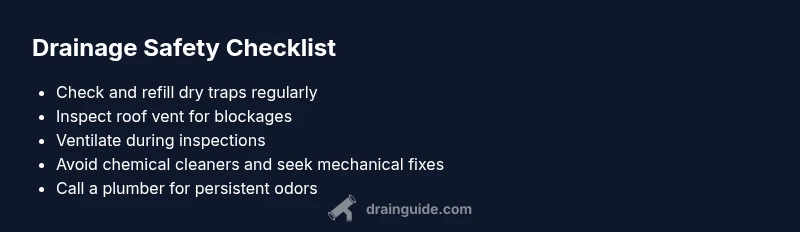
- Check for a dry or missing water trap at sinks, showers, and floor drains; add water to restore the seal if needed.
- Open windows and run an exhaust fan to improve ventilation while you inspect.
- Listen for gurgling sounds in drains; that can signal venting problems or partial blockages.
- Inspect the roof vent stack for obstructions like leaves or bird nests.
- Look for signs of leaks or moisture around plumbing connections; a small leak can create damp, moldy environments that worsen odors.
- If you notice a persistent sewer smell, avoid using chemical drain cleaners as they can release harmful fumes; instead, focus on mechanical methods and vent checks.
Safety note: If you or anyone in the home feels dizzy, lightheaded, or shows breathing difficulties, leave the area and call local emergency services. Odors from sewer gas can be harmful in enclosed spaces.
When to involve professionals
If odors persist beyond a few hours, you notice repeated backups, or you smell sewer gas near living spaces, it's time to call a licensed plumber. Professional assessment is essential when you see water backing up from multiple fixtures, hear persistent gurgling, or detect persistent rotten-egg odors that don't fade with ventilation. In cases where someone in the home experiences vomiting, headaches, or dizziness, especially after triggering odors, seek medical evaluation to rule out exposure-related illness. A plumber can verify vent stack integrity, trap seals, and sewer line condition, and a safety plan to remediate issues.
Step-by-step diagnosis for common drainage issues
A practical approach to diagnosing drainage-related nausea starts with ruling out venting problems, then traps, and finally backflow paths. Begin with simple checks (trap water and odors), then move to vent inspection, and finally professional assessment if symptoms persist. Document odors, timing with fixtures, and any gurgling sounds to share with your plumber. While many scenarios are preventable with maintenance, never ignore strong odors or continuous vomiting—these can signal hazardous gas exposure or structural issues that require immediate attention.
Prevention tips to reduce future risks
- Run water through all traps regularly, especially unused sinks or floor drains, to maintain water seals.
- Keep roof vents clear of debris and ensure seals around drains remain intact.
- Use ventilation during and after draining to reduce gas buildup in living spaces.
- Avoid chemical drain cleaners; these can release hazardous fumes when used improperly.
- Schedule periodic professional inspections to catch venting or trap issues early and prevent health concerns.
Common myths about drainage and health
Myth: If there’s no visible leak, drainage can’t affect health. Reality: Odors and gas can seep into living spaces from partially blocked vents or dry traps without obvious leaks. Myth: Sewer gas odor is just a nuisance. Reality: Prolonged exposure can irritate respiratory tissues and trigger headaches and nausea. Myth: DIY fixes are always safe. Reality: Some tasks require professional equipment and training to avoid exposure to harmful gases.
Steps
Estimated time: 60-90 minutes
- 1
Check for obvious sewer odors at fixtures
Begin by walking through the home and sniffing near each fixture. If you smell sulfur or rotten-egg odors, that points to sewer gas issues rather than a simple clog. Document where the odor is strongest and note the time of day.
Tip: Do not seal off vents entirely while testing—fresh air helps reveal real sources. - 2
Test all traps with water
Pour a pitcher of water into rarely used sinks and floor drains to restore trap seals. If the trap was dry, odors should lessen after the water seal is restored. Recheck after a short ventilation period.
Tip: If a trap doesn’t hold water after refilling, the seal may be cracked or the trap is failing—this requires replacement. - 3
Inspect the vent stack for blockages
Climb to the roof if safe, and clear obvious debris from the vent opening. If you see bird nests or lawn debris, remove them carefully. If you’re uncomfortable at height, hire a pro to inspect the stack.
Tip: Never insert foreign objects into the vent; use proper tools and consult a professional if needed. - 4
Observe drain behavior and gurgling
Run water through multiple fixtures and listen for gurgling sounds. Persistent gurgling can indicate partial blockages or venting problems that require cleaning or re-venting.
Tip: Document which fixtures gurgle together to help the plumber locate the problem area. - 5
Ventilate and avoid risky cleaners
Open windows, use fans, and avoid chemical cleaners that can release hazardous fumes when mixed with existing gases. Ventilation helps reduce exposure while you work.
Tip: Keep children and pets away from the work area during testing and cleaning. - 6
Call a licensed plumber if odors persist
If odors remain after you’ve attempted traps and vent checks, a licensed plumber can perform a professional assessment, check the sewer line, and confirm vent integrity. Do not delay professional help if vomiting recurs or worsens.
Tip: Provide the plumber with a record of odors, dates, and notes from your tests to speed up diagnosis.
Diagnosis: Vomiting or nausea noticed near plumbing fixtures; unusual sewer odors
Possible Causes
- highSewer gas from a dry trap or venting problem
- mediumBlocked or misvented vent stack
- lowBackflow or pressure-related odor release from drains
- lowMedical issues unrelated to drainage (e.g., GI illness, medication side effects)
Fixes
- easyFill dry traps with water to restore the seal; test by running water in each fixture
- mediumInspect vent stacks on the roof for blockages and call a pro if needed
- easyImprove indoor ventilation during inspections; use exhaust fans and crack a window
- mediumIf odors persist, schedule a licensed plumber to assess venting, traps, and sewer lines
Got Questions?
Can drainage issues cause vomiting?
Yes, exposure to sewer gases due to venting problems or dry traps can trigger nausea and vomiting in some people. It’s important to address odors and ensure proper venting and water seals.
Yes. Sewer gas from vent or trap issues can cause vomiting in some people; address odors and ensure proper venting and water seals.
What smells indicate sewer gas?
Sewer gas often has a rotten-egg odor from hydrogen sulfide. If you notice this smell near plumbing, treat it as a potential hazard and ventilate the area.
Rotten-egg smell near plumbing? It could be sewer gas—ventilate and check for traps or vent problems.
Are chemical drain cleaners safe for health?
Chemical drain cleaners can release hazardous fumes, especially in closed spaces. They are rarely a long-term fix for gas-related issues and should be used with caution or avoided in favor of mechanical methods.
Chemical cleaners can release dangerous fumes and aren’t ideal for gas-related problems; use mechanical methods when possible.
When should I call a plumber?
Call a plumber if odors persist after basic checks, if you notice backups, or if anyone in the home experiences vomiting, dizziness, or headaches. Persistent issues signal vent or sewer line problems.
If the odor lasts or someone in the home is vomiting or dizzy, call a plumber.
How can I prevent this in the future?
Maintain traps by pouring water periodically, keep vent stacks clear, and avoid chemical cleaners. Regular inspections help catch issues before they become health risks.
Keep traps filled with water, clear vents, and avoid harsh cleaners to prevent future problems.
What if I’m just worried about health symptoms unrelated to drainage?
If vomiting or systemic symptoms persist, seek medical care to rule out non-plumbing causes. Drainage checks are important, but health concerns may require medical evaluation.
If health symptoms persist, seek medical care to rule out non-plumbing causes.
Watch Video
The Essentials
- Recognize sewer gas odors as a health risk, not just a nuisance
- Restore trap seals and check venting to stop gas entry
- Ventilate and avoid dangerous chemical cleaners during DIY checks
- Call a professional for persistent odors or vomiting-related symptoms
- Regular maintenance reduces future risk