Down in the Drain: Urgent Troubleshooting for Slow Drains
Urgent, step-by-step drain troubleshooting to diagnose slow drains. Learn common causes, safe checks, and when to call a professional from Drain Guide.


Most likely, a partial clog down in the drain is slowing your sink. Start with simple checks: inspect and clean the P-trap, flush with hot water, and try a baking soda–vinegar treatment. Wear gloves and avoid harsh chemicals. If drainage remains slow, follow the diagnostic flow below for deeper causes.
Understanding the problem: what 'down in the drain' signals
When drains behave this way—water draining slowly, pooling after a shower, or gurgling as air escapes—you’re hearing a clue about what’s happening down in the drain. The phrase describes a blockage, backflow, or venting issue located somewhere in the trap, the branch line, or the main line. This section explains how to interpret those signals and act with urgency to restore function. For homeowners, recognizing that the problem is usually localized close to the fixture helps prevent unnecessary disassembly and reduces the risk of water damage. By paying attention to whether the water backs up in a single fixture or affects multiple fixtures, you can narrow down the likely location of the issue. DrainGuide’s approach emphasizes safety, logic, and progressive steps so you can address the problem without guesswork.
Common causes of slow drainage in residential setups
Slow drainage is usually not a mystery fault. Most home drains slow down because debris accumulates down in the drain or at the trap, forming a partial blockage that resists full flow. Hair and soap scum are classic culprits in kitchen and bathroom sinks, while grease can clog pipes in the kitchen line. Mineral buildup in hard water can also narrow pipes over time. If nearby fixtures share a line, the root cause might be farther down the main drain. Vent blockages or improper venting can trap air and reduce drainage efficiency, causing a gurgling sound and slow flow. Understanding these common causes helps you pick the right fix quickly and safely.
Quick checks you can perform safely (now)
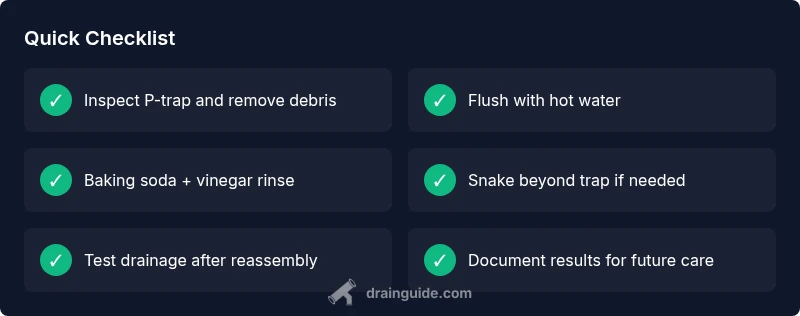
- Inspect the P-trap under the sink: place a bucket underneath, loosen the slip nuts, and remove the trap for cleaning. Look for hair, soap scum, or food particles. - Reinstall the trap and run hot water to flush out debris. - Try a baking soda and vinegar treatment: pour 1/2 cup baking soda, followed by 1 cup vinegar, and let it fizz for 15 minutes before flushing with hot water. - If you have confidence, gently twist the pipe joints to ensure a snug fit and prevent leaks. - Avoid using chemical drain cleaners as a first step; they can harm seals and don’t fix the root problem.
The diagnostic flow: symptom → diagnosis → solutions
Starting from the symptom of slow drainage, follow a simple flow:
- If only one fixture is slow, suspect a trap or local pipe clog.2) If multiple fixtures slow, consider a main drain or vent issue.3) If you hear gurgling, venting problems are likely.4) If water backs up and won’t drain at all, a severe clog or sewer line issue may exist. Each branch leads to tailored fixes, from trap cleaning to professional assessment.
Step-by-step fixes for the most common cause
This section expands the most frequent fix: cleaning the trap and nearby pipes. It covers safe disassembly, debris removal, reassembly, and testing. For deeper clogs, you’ll reach for a drain snake. The goal is to restore proper flow without damaging pipes or seals. Remember: if water is backing up into other areas, or if you suspect a main-line problem, don’t delay professional help. Documentation of what you did helps future maintenance.
Safety tips and warnings when working with drains
Drain work can be messy and slippery. Always wear gloves and eye protection. Turn off any nearby water supply if your project involves cutting or disassembly, and place a bucket to catch spills. Never mix chemical cleaners with other cleaners or vinegar; this can cause dangerous reactions. If you’re not comfortable with lifting fittings or if you detect a leak, stop and call a professional. If you notice sewage odors, unusual water levels, or dampness behind walls, treat it as a potential safety hazard and seek help.
Prevention tips to keep drains flowing and avoid future clogs
- Routinely clear hair and debris from traps and stoppers before they accumulate. - Use a mesh screen or drain stopper to catch hair in sinks and showers. - Run hot water and a mild baking soda rinse monthly to slow buildup. - Be mindful of what goes down the drain: avoid dumping grease, large solids, or coffee grounds. - If you have hard water, consider a water-softening approach to reduce mineral buildup over time. By incorporating these habits, you’ll minimize clogs and extend the life of your drainage system.
Steps
Estimated time: 45-60 minutes
- 1
Gather tools and prep area
Collect a bucket, towels, pliers, screwdriver, a drain snake or auger, and gloves. Clear the work area and place towels to catch spills. This prep reduces mess and protects nearby surfaces.
Tip: Lay out absorbent rags and have a flashlight handy. - 2
Turn off water and place bucket
Under-sink shutoff valves should be closed if you’ll be working near water. Place a bucket and towels to catch any residual water as you loosen fittings.
Tip: Close valves slowly to avoid splashing. - 3
Loosen and remove the P-trap
Place the bucket underneath the trap, then loosen the slip nuts with pliers and carefully drop the trap. Inspect for hair, soap scum, or debris.
Tip: Keep track of all small parts; place them in a labeled container. - 4
Clean the trap thoroughly
Remove all gunk from the trap; rinse with warm water and scrub with an old toothbrush. Reassemble loosely to check fit before final tightening.
Tip: Check the rubber gasket for wear; replace if torn. - 5
Snake beyond the trap if needed
If the trap is clear but water still drains slowly, insert a drain snake through the trap outlet into the pipe and rotate to dislodge the blockage.
Tip: Work slowly to avoid damaging pipes; never force the snake. - 6
Reassemble and test
Tighten all nuts securely, run water to test drainage, and observe for leaks. Re-check joints after a few minutes of use.
Tip: Run both hot and cold water to verify steady flow. - 7
Evaluate results and plan next steps
If the drain remains slow or you notice other fixtures affected, document symptoms and consider professional assessment for main-line issues.
Tip: Take photos of fittings and setup for reference.
Diagnosis: Drain is slow or water stands after use.
Possible Causes
- highPartial clog in trap or pipe just after the trap
- highBlockage in main drain or sewer line (shared with other fixtures)
- mediumVentilation issue causing poor air flow
- lowP-trap is dry or incorrectly installed
- mediumGrease buildup in pipes
Fixes
- easyDisassemble and clean the P-trap; remove hair and debris
- mediumSnake the drain beyond the trap to clear deeper blockage
- easyFlush with hot water and a baking soda–vinegar treatment
- hardInspect and correct venting or call a professional if the main line is blocked
Got Questions?
What is the most common cause of slow draining?
Hair, soap scum, and grease are frequent culprits that accumulate at the trap or in the pipe. Regular maintenance helps prevent buildup.
Hair and soap scum are the usual culprits behind slow drains. Regular maintenance helps prevent clogs.
Can pouring boiling water damage PVC pipes?
Boiling water is risky for older PVC connections in some systems. Use hot water rather than boiling and avoid repeated use on PVC.
Boiling water can harm some PVC fittings. Use hot water, not boiling, and avoid repeated use.
Are chemical drain cleaners safe to use?
Chemical cleaners can damage seals and pipes and often don’t fix the root cause. Use them only as a last resort and with caution.
Chemical drain cleaners can damage pipes and usually don’t fix the root problem. Use caution and consider safer methods first.
When should I call a plumber?
If you suspect a main-line clog, gurgling that involves multiple fixtures, or if you cannot access the blockage safely, call a professional.
If you suspect the main line or you can't safely access the clog, call a plumber.
How do I clean a P-trap?
Place a bucket, unscrew the nuts, remove the trap, rinse, and inspect for damage. Reinstall with a tight seal.
Take off the P-trap, rinse it well, inspect for damage, and reassemble tightly.
Can vent problems cause slow drainage?
Yes. A blocked vent lets air into the system incorrectly, slowing drainage and causing gurgling. A plumber can diagnose venting.
Vent problems can slow drainage and cause gurgling. A professional can check venting.
Watch Video
The Essentials
- Address the trap first for most clogs
- Differentiate between local and main-line issues
- Avoid harsh chemicals as a first step
- Call a pro for suspected main-line or vent problems