Drain a cyst: Safe guidance and medical advice
Learn why home drainage of a cyst is risky, what safe steps you can take, and when to seek professional care. This Drain Guide article covers medical realities, first-aid, and the clinician’s role in drainage.


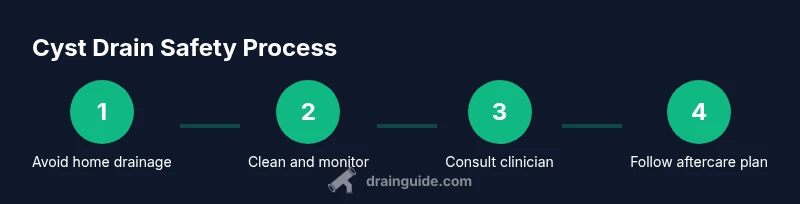
Goal: Understand why home drainage of a cyst is not recommended and what you should do instead. In most cases, a skin cyst should be evaluated by a clinician who can determine whether drainage is necessary and perform it under sterile conditions if appropriate. Until then, avoid squeezing or puncturing, maintain clean skin, apply gentle warmth for comfort, and monitor for signs of infection. According to Drain Guide, prioritizing professional assessment reduces risk of infection, scarring, and complications.
Medical reality: why home drainage is risky
Draining a skin cyst at home can seem like a quick fix, but it introduces significant risks. Cysts are closed sacs that may contain pus, fluid, or semisolid material. If you puncture or manipulate the cyst, bacteria on your skin can enter the wound, increasing the chance of infection and abscess formation. The Drain Guide team emphasizes that sterile technique, proper diagnosis, and, if drainage is needed, a controlled procedure performed by a clinician are essential for safe outcomes. Scarring, lingering tenderness, and the spread of infection are all potential consequences of unsupervised drainage. In short, the safest approach is to avoid self-draining and seek professional evaluation.
Common scenarios where professional care is advised
- The cyst is enlarging, painful, or tender to touch.
- There is spreading redness, warmth, or fever suggesting infection.
- The cyst has begun to drain spontaneously or there is pus discharge.
- You have a medical condition such as diabetes or a suppressed immune system that increases infection risk.
- The cyst is on a face, near joints, or in an area where scarring could be disfiguring.
The clinician’s perspective on drainage
Healthcare professionals consider several factors before draining a cyst, including size, depth, location, and signs of infection. If drainage is indicated, it is performed with sterile instruments, local anesthesia, and proper post-procedure wound care. Understanding that the clinician’s goal is to remove infection and reduce recurrence, not to create discomfort or unnecessary risk, helps patients prepare for a safe visit. Drainage is not always required; sometimes antibiotics or observation are sufficient depending on the cyst type and stage.
Tools & Materials
- Mild soap(Fragrance-free if possible; use for pre- and post-visit cleansing)
- Clean towels or cloth(Multiple disposable towels recommended for cleanliness)
- Warm compress (washcloth heated in water)(Test temperature to avoid burns; use gently on the area)
- Gauze pads or sterile bandage(Keep wound covered after any clinical procedure or if discharge occurs)
- Notebook or digital device to track symptoms(Log changes in size, pain, redness, fever)
- Phone to contact your clinician(Schedule inquiries or urgent care if symptoms worsen)
Steps
Estimated time: 15-30 minutes
- 1
Avoid home drainage entirely
Do not squeeze, puncture, or attempt to drain the cyst. This can push bacteria deeper and cause an infection or scarring. If the area feels warm or tender, seek medical attention promptly.
Tip: Pro tip: Mark changes in size or color with a small note to show your clinician. - 2
Wash hands and cleanse the area
Before touching the area, wash your hands with mild soap. Gently clean the surrounding skin with soap and water to reduce surface bacteria. Do not scrub the cyst itself aggressively.
Tip: Pro tip: Use a clean cloth and avoid sharing towels to prevent cross-contamination. - 3
Apply a warm, damp compress
Place a warm compress on the cyst for 10–15 minutes, 2–3 times daily. Warmth can ease discomfort and may help reduce inflammation, but it does not drain the cyst.
Tip: Pro tip: If redness or swelling increases, discontinue warmth and seek medical advice. - 4
Monitor for infection signs
Watch for increasing redness, thick pus, spreading skin changes, fever, or severe pain. If any of these occur, contact a clinician or go to urgent care immediately.
Tip: Pro tip: Keep notes of timing and symptom changes to share with your provider. - 5
Schedule a professional evaluation
Arrange an appointment with a clinician or dermatologist. They will assess whether drainage is appropriate and perform it under sterile conditions if needed.
Tip: Pro tip: Prepare a quick timeline of symptoms and list any medications you’re taking. - 6
Discuss drainage options and alternatives
During the visit, ask about the need for drainage, potential risks, recovery time, and whether antibiotics are indicated. Decide together on the safest course of action.
Tip: Pro tip: Request written aftercare instructions to avoid missteps at home. - 7
Follow post-procedure wound care
If drainage is performed, follow your clinician’s wound care plan precisely: cleaning, dressing changes, and signs of infection to watch for. Do not resume normal activities that irritate the area until cleared.
Tip: Pro tip: Keep the area dry for the recommended period and change dressings as advised.
Got Questions?
Can I drain a cyst at home?
No. Draining a cyst at home can spread infection, cause scarring, and worsen the condition. Seek medical evaluation for appropriate management.
No, avoid home drainage. See a clinician for safe treatment options.
What are signs I should seek urgent care?
Redness spreading around the cyst, fever, increasing pain, swelling, or pus drainage are signs to seek urgent care promptly.
If redness spreads, you have a fever, or you see pus, seek urgent care.
What are safe alternatives to drainage?
Safe alternatives include hygiene, warm compresses for comfort, and prompt medical assessment to determine if drainage is necessary. Antibiotics may be prescribed if infection is present.
Gentle care and medical guidance are safer than self-drainage.
What might a clinician do if drainage is needed?
A clinician uses sterile technique, may administer local anesthesia, and perform drainage if indicated, followed by wound care instructions.
A clinician will drain under sterile conditions if needed and provide aftercare.
How long does healing take after drainage?
Healing varies by cyst type and treatment, but keeping the area clean and dry helps, with follow-up as directed by your clinician.
Healing time varies; follow your clinician’s instructions for best results.
What questions should I ask my doctor?
Ask about the need for drainage, risks, alternative treatments, recovery steps, and signs of infection to watch for.
Ask about drainage necessity, risks, and aftercare to stay informed.
Watch Video
The Essentials
- Avoid attempting home drainage of a cyst.
- Seek professional evaluation for safe drainage decisions.
- Warm compresses can ease discomfort but do not drain.
- Monitor for infection signs and escalate care if needed.
- Follow post-procedure care to support healing.