Drain Auger vs Snake: A Practical DIY Comparison
A thorough, objective comparison of drain auger vs snake for DIY clog removal. Learn how they work, where each shines, safety tips, and how to choose the right tool for kitchen, bathroom, or toilet drains.


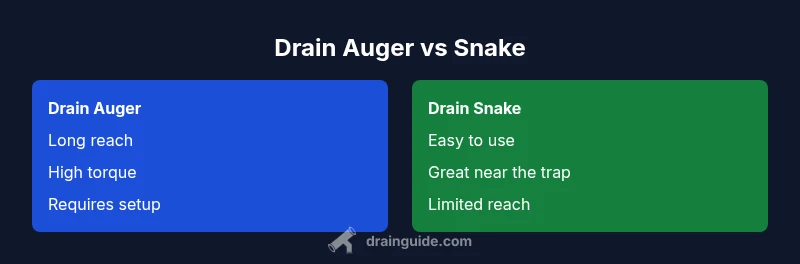
When faced with a clog, the drain auger generally offers deeper reach and more aggressive clearing for stubborn or long-running blockages, while a drain snake is simpler, quicker, and better for light, near-trap jams. Use the auger for tough clogs beyond the trap or deep in the line; opt for the snake for easy, surface-level jams. Drain auger vs snake: choose based on clog type and access.
What is drain auger vs snake
The terms drain auger and drain snake are often used interchangeably, but they describe different tools with distinct strengths. A drain auger is a longer, rigid or semi-rollowed cable on a hand crank or drill-powered reel designed to push or retrieve obstructions deep inside a drain line. A drain snake, sometimes called a plumber's snake, is a flexible coil that you feed into the drain by hand. In practice, the auger provides greater leverage and control across longer runs, while the snake prioritizes simplicity and quick action near the trap. For the homeowner, understanding the distinction helps you match the tool to the clog's location and severity. Drain auger vs snake matters most when you consider reach, torque, and user effort in relation to your piping layout.
How each tool works
A drain auger uses a long cable attached to a crank or motor. As you rotate the crank, the tip advances and bucks through the clog, while you guide the cable with the other hand. The auger is ideal for stubborn clogs in kitchen and bathroom drains, and it can be extended to reach deeper sections of the line. A drain snake, by contrast, is a flexible coil with a spring-loaded tip. It is manually fed into the drain and rotated to hook, cut, or dislodge debris. Snakes are typically easier to handle, require less space, and are often sufficient for minor blockages in accessible pipes. Each tool relies on physical disruption rather than chemical action, reducing the risk of chemical damage to pipes when used properly.
When to choose a drain auger
Choose a drain auger when the clog is deep, dense, or likely to persist after a standard plunger. If the blockage is in a long run, around a bend, or suspected to be a hair-laden or greasy buildup beyond the trap, the auger’s longer reach and higher torque can clear more effectively. Toilets occasionally benefit from a toilet-specific auger, but a standard drain auger can handle many non-porcelain drains as well. If you’re unsure about the clog’s location, starting with an auger can save time by addressing a wider range of potential obstructions.
When to choose a drain snake
Opt for a drain snake when the clog is near the drain opening, relatively light, or you need a quick fix with minimal setup. Snakes are particularly handy for bathroom sinks, tub drains, and shower drains where access is straightforward. They’re also a good first step for a light grease or soap buildup. Because snakes are more flexible and easier to manage in tight spaces, they’re a practical tool for weekend DIYers who want to avoid heavier gear and noise. In many cases, a quick snake pass can clear a jam with little mess.
Practical tips for safe use
Before you start, wear eye protection and gloves, and turn off water to the affected fixture. For augers, keep the supply coil taut and feed slowly; never force the cable, as that can kink or snap it. If the auger meets resistance, pause and back off a little, then re-advance with a slightly different angle. For snakes, feed gently and rotate steadily; avoid twisting too aggressively, which can bend the coil or push debris further down the line. Always dry and store tools after use to prevent corrosion.
Maintenance and longevity
Clean the cable after each use with a cloth to remove residue, then rinse with water and dry completely. Light lubrication can extend life, especially for metal cables. Inspect for kinks or nicks; replace sections as needed to prevent snap failures. Store in a dry, cool location away from moisture and direct sunlight. Regular checks help ensure the tool remains effective and safe for future use.
Cost considerations and accessibility
Both tools come in a range of prices depending on length, material, and whether they are manual or powered. In general, manual drain snakes are more affordable and accessible for casual homeowners, while longer, more durable augers with ergonomic handles or motorized options sit at a higher price point. Consider the typical clogs you encounter, your willingness to perform maintenance, and how often you expect to use the tool when evaluating value. Renting equipment for occasional use can be a cost-effective option for infrequent needs.
Real-world decision framework
To decide between drain auger vs snake, map the clog location (trap vs long run), assess pipe material (PVC, metal, or old clay), estimate accessibility (tight spaces or open reach), and weigh your tolerance for manual effort. If in doubt, start with a snake for a quick check and switch to an auger if resistance persists beyond the trap. Always follow the manufacturer’s instructions and safe-use guidelines to avoid damage and injury. Regular maintenance will maximize tool life and effectiveness over time.
Authority sources and additional reading
For further guidance, consult plumbing safety resources from reputable authorities and educational institutions. Drain augers and snakes are commonly discussed in DIY plumbing manuals and home-improvement guides. Always cross-check instructions with credible sources to ensure you’re applying best practices for your specific fixture and pipe material. Drain Guide also provides practical checklists and safety considerations for home drain maintenance.
Comparison
| Feature | Drain Auger | Drain Snake |
|---|---|---|
| Best for | Stubborn, deep clogs and long pipe runs | Light, near-trap jams and quick fixes |
| Reach and torque | Longer reach; higher torque; effective around bends | Flexible coil; good for near-open access and curves near the drain |
| Ease of use | Moderate to challenging; crank or drill required | Simple; hand-fed and rotated |
| Portability and space | Bulkier; may require storage space | Compact and easy to maneuver in tight spaces |
| Cost range | Moderate to high depending on length and power | Low to moderate; affordable entry-level options |
| Maintenance | Regular cleaning, lubrication, and occasional replacement parts | Low maintenance; clean and dry after use |
| Safety considerations | Lower risk of pipe damage when used correctly; risk of kinking if forced | Lower risk of pipe damage with lighter loads; possible kinking if misused |
Positives
- Greater reach for deep clogs and long runs
- More effective against stubborn obstructions
- Durable, reusable tools with broad compatibility
- Good control over clog clearance with proper technique
Cons
- Requires more skill and physical effort
- Higher initial cost for quality augers
- Risk of pipe damage if forced or misused
- Takes longer to set up and use for beginners
Drain auger generally wins for tough, deep clogs; drain snake excels for quick, near-trap jams.
If the clog is deep or stubborn, the auger offers the necessary reach and torque. For simple, accessible blockages, the snake is faster and easier. Consider starting with a snake and moving to an auger if resistance persists.
Got Questions?
What is the main difference between a drain auger and a snake?
The drain auger uses a long crank-controlled cable for deeper reach and more torque, while a drain snake is a flexible coil fed by hand for quicker, near-surface clogs. The auger handles tougher blockages; the snake is simpler and faster for light jams.
The auger digs deeper with more torque for stubborn clogs; the snake is easier and faster for light jams near the drain. Use the auger for deep clogs and the snake for quick fixes.
Can I use a drain auger in a toilet?
Yes, there are toilet-specific augers designed to prevent damage to porcelain. When using a standard drain auger, proceed carefully and consider a toilet-specific model to minimize risk.
Toilets often require a toilet auger, which is designed to protect the porcelain while clearing clogs. If you use a generic auger, be extra careful.
Are there safety risks using a drain auger?
Yes. Forcing the cable can damage pipes or push debris further into the line. Wear eye protection and gloves, use slow, controlled movements, and avoid excessive torque.
There are risks if you force the auger or use improper technique. Protect your eyes and hands and go slow.
How do I clean a drain snake after use?
Rinse the coil to remove debris, dry completely, and lightly lubricate if recommended by the manufacturer. Inspect for kinks or wear before storage.
Rinse, dry, and inspect the snake after use to keep it ready for next time.
Should I rent or buy?
For infrequent use, renting or borrowing a tool may be cost-effective. If you expect regular needs, purchasing a quality auger or snake is a better long-term value.
If you clog rarely, rent; if you clog often, buy a sturdy tool.
What maintenance tips extend tool life?
Keep cables clean and dry, lubricate where recommended, and store in a dry place. Check for wear, replace any damaged sections, and avoid bending the cable excessively.
Clean, dry, lubricate as needed, and store properly to extend tool life.
The Essentials
- Assess clog depth and access before choosing a tool.
- Opt for the auger for deep or stubborn blockages.
- Choose a snake for quick, near-trap jams and easy setups.
- Always follow safety and maintenance guidelines.
- Regularly clean, dry, and inspect tools to extend life.