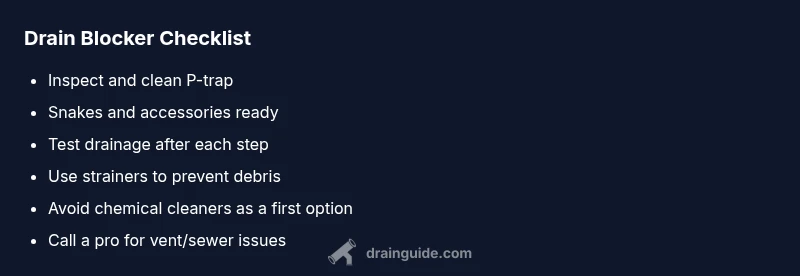
Drain Blocker Troubleshooting Guide for Homeowners
A urgent, practical guide to diagnosing and clearing drain blockers in kitchen and bath drains. Learn common causes, safe steps, effective tools, and when to call a pro to restore free flow fast.


Most drain blocker issues start with a simple clog in the trap or horizontal pipe. The quickest fix is to clear the trap and run water to test flow; if that fails, use a drain snake or plunger, then flush with hot water. If odors persist or backups occur, escalate to professional help.
What is a drain blocker and why it happens
A drain blocker is any buildup that restricts water flow in a drain line, from the kitchen sink to the shower. In most homes, the problem starts small: hair, soap scum, grease, or food particles gradually adhere to the pipe walls, forming a partial blockage. Over time, the restricted passage becomes a true clog, causing slow drainage, gurgling sounds, and occasional backups. According to Drain Guide, the simplest blockages often originate near the trap—the U-shaped section beneath sinks—where debris tends to collect. Understanding that most drain blockers begin as local, manageable clogs helps homeowners approach fixes with the right mindset and tools. By starting with the easiest, most conservative steps, you reduce the risk of damaging pipes and save time and money.
The term “drain blocker” covers a range of issues, from a compact hair bundle in the trap to grease buildup in the pipe wall. The goal is to restore a clear path for wastewater and prevent return of the problem. A methodical investigation, rather than a guess, yields the safest and fastest resolution. Drain Guide emphasizes the value of patience and a steady hand when dealing with blockages, especially in hard-to-reach sections or older plumbing. Remember: many clogs are solvable with basic tools and safe techniques.
In this guide, you’ll learn how to identify the most common culprits, perform safe inspections, and use practical fixes that work for most households. The emphasis is on actionable, repeatable steps you can perform on weekends without calling a plumber for every hiccup.
Common sources of blockages you can fix yourself
Blockages often arise from predictable sources that you can tackle without specialized equipment. In kitchens, grease, oil, and food scraps combine with soap residue to form a stubborn film that narrows the drain. In bathrooms, hair, soap scum, and mineral deposits collect in the trap or in the elbow joints, especially in showers and sinks used daily. A slow-draining shower might also signal a hair accumulation near the drain’s top or a curved portion of the pipe. Low-flow fixtures and reduced venting can contribute to gurgling or slow drainage as well. If a clog remains stubborn after a few attempts, move to a slightly more involved method, such as a drain snake or a deeper trap inspection.
To prevent future drain blockers, adopt simple habits: scrape leftovers into a trash bag instead of the disposal, run hot water after cleaning greasy pots, and perform a basic trap cleanout every 6–12 months. Drain Guide notes that consistent maintenance is often the most effective defense against recurring clogs.
In short, most clogs originate in the trap or the first few feet of pipe. Starting there with basic tools gives you the highest chance of a quick victory, minimizes mess, and reduces the need for harsher chemical cleaners.
Safety and prep before you start
Safety comes first when tackling drain blockers. Start by turning off the water supply to the affected fixture to avoid accidental overflow. If you have a garbage disposal, unplug it to prevent accidental activation while you work. Put on gloves and eye protection, and lay down towels or a drop cloth to catch spills. Ventilate the area if you’re using cleaners or strong odors, and keep children and pets away from the workspace. If you’re working near electrical outlets or appliances, be mindful of water exposure and consider shutting off the circuit that powers nearby outlets for extra safety.
Before you crack open any plumbing connections, make sure you have a plan. Identify where the P-trap is located and confirm you can access it with basic hand tools. If you’re unsure about the plumbing layout, consult a professional before disassembling more complex joints. Following a careful prep routine reduces the chance of leaks, cross-contamination, or personal injury and makes the process smoother overall.
Quick checks you can do before disassembling anything
Start with the simplest checks that often solve the problem. Remove and inspect the P-trap under the sink: place a bucket beneath, loosen the slip nuts, and pull out the trap to check for hair, grease, or food debris. Rinse the trap thoroughly and reassemble, ensuring all connections are snug but not overtightened. If the drain is still slow, check the drain’s vertical portion and rough-in sections for any visible buildup and clear as needed with a brush.
Test the drainage by running warm water. If water drains smoothly, you’ve likely cleared a local clog; document the fix and monitor it over the next days. If the flow remains hindered, move to a snake or deeper access point. While you perform checks, avoid banging or forcing tools, which can damage pipes or seals.
Diagnostic flow overview: how to identify the cause
This section maps symptoms to likely causes and suggested actions in a logical sequence. If you notice slow drainage only after heavy use, the problem is often localized to the trap or short drain line. Backups that recur after clearing indicate deeper blockages in the main line or further down the run. Gurgling sounds can signal venting issues or a partial blockage within the plumbing stack. Visual signs such as wet spots or unexplained odors point to possible trap leaks or sewer gas intrusion that require professional assessment. By following this flow, you can pinpoint the cause without unnecessary disassembly and know when to escalate.
Keep track of symptoms as you test. Note whether the issue is isolated to a single fixture or affects multiple drains; this helps determine if the blockage is local or main-line in nature. Drain Guide recommends starting with the simplest fix first and progressively addressing more complex possibilities while prioritizing safety and pipe integrity.
Tooling and materials you’ll want on hand
Having the right tools makes the job faster and safer. Assemble a plastic bucket, old towels, rubber gloves, a basin wrench, pliers, and a dedicated drain snake or auger. A bottle of hot water, baking soda, and white vinegar can help with mild buildups and odor control. Keep a small brush or old toothbrush for trap cleaning, a flashlight for dark pipes, and a few rags for cleanup. If you don’t own a snake, consider renting one or purchasing a basic kit for future maintenance. Remember: avoid metal-on-metal banging, which can scratch or deform PVC pipes. Always test after each step to confirm flow improvement.
Drain Guide emphasizes using non-chemical, mechanical methods first. If you reach for chemical cleaners, do so sparingly and never mix products, which can create dangerous fumes or pipe damage. A well-stocked toolbox makes tackling drain blockers easier and safer in the long run.
Step-by-step fixes for the most common causes
This section provides a practical overview of fix paths for typical clogs: P-trap cleaning, trap-arm snaking, and targeted plunging for minor blockages. Start by removing and cleaning the P-trap as described earlier. If that restores flow, reassemble and run hot water to verify. If the clog persists, insert a drain snake into the drain line from the trap end and gently rotate to dislodge hair and debris. For slow-draining showers or tubs, you can carefully remove the drain cover and use a small snake to clear the trough. Flush with hot water and a splash of vinegar afterward to help prevent future buildup. Always avoid forcing equipment past resistance, and stop if you encounter secure fittings you’re unsure about. If you resolve the issue, document your maintenance and consider a quarterly trap check.
If you still experience problems after these steps, the blockage may be further down the line or in a vented system. Drain Guide advises calling a licensed plumber for more advanced inspections to avoid pipe damage or venting issues that could create harmful conditions.
When to call a professional and what they’ll do
There are times when a professional is the safest option. If you’ve performed basic trap cleaning, snaking, and plunging without clear results, or if you notice foul odors, water backups in multiple fixtures, or suspect vent or sewer-line issues, it’s time to call a pro. A licensed plumber can perform a camera inspection to identify the exact location and cause of the blockage, check vent integrity, and evaluate the main line for tree roots or structural damage. Professional intervention can prevent repeated failures and protect your home’s plumbing system. Drain Guide’s team recommends consulting a professional for persistent or complex blockages to ensure a safe, lasting fix.
Budget for the possibility of minor repairs or vent cleaning, and ensure the plumber is licensed and insured. Clear documentation of what you’ve tried will help the technician diagnose the problem faster and more accurately.
Prevention tips to keep drains clear
Prevention is the best cure for drain blockers. Establish a routine that includes regular trap cleanouts, mindful disposal of grease, and a quick monthly flush with hot water to dissolve minor buildup. Use drain strainers in sinks and shower drains to catch hair and debris before they enter the pipe. Periodically pour a baking soda and hot water rinse, followed by a cup of white vinegar, to keep the pipes clean and odour-free. Monitor your drains for changes in flow and address them promptly rather than letting the issue escalate. Drain Guide underscores the value of consistent maintenance as the most reliable long-term defense against clogs.
Steps
Estimated time: 45-60 minutes
- 1
Shut off water and prep area
Turn off the affected fixture’s water supply and unplug any nearby disposals. Place a bucket and towels to catch spills. Don gloves and eye protection before touching drains.
Tip: Have all tools within reach to avoid abandoning the task mid-way. - 2
Locate and inspect the P-trap
Place the bucket under the trap, loosen the slip nuts, and carefully remove the trap. Inspect for hair, grease, soap scum, and food particles.
Tip: Check for cracks or worn washers—replace if needed. - 3
Clean and reassemble the trap
Brush out debris, rinse the trap, and reattach with fresh seals. Ensure tight but not over-tightened connections.
Tip: Run water slowly at first to test for leaks. - 4
Snaking the drain
Feed a drain snake into the drain until you meet resistance; twist and pull to break up or snag debris. Retract gradually and clean the head.
Tip: Avoid forcing beyond resistance to prevent pipe damage. - 5
Plunge for stubborn clogs
Seal the drain and plunge with steady, confident pressure. Repeat several times, then rinse with hot water.
Tip: Use a proper sink plunger—not a toilet plunger—for best results. - 6
Flush and test
Run hot water for several minutes to clear loosened debris. Check for smooth drainage and no leaks.
Tip: If odors persist, consider a baking soda and vinegar flush. - 7
Vent and main-line considerations
If multiple fixtures share slow drainage, the issue may be venting or a main-line blockage. Avoid attempting major vent work unless you’re trained.
Tip: Document steps and results to aid a professional if needed. - 8
When to call a professional
If you still see backups after trying basic steps, or if you suspect vent or sewer-line problems, contact a licensed plumber for camera inspection.
Tip: Choose a pro with clear pricing and licensing. - 9
Maintain to prevent future clogs
Establish a simple maintenance routine: trap cleanouts every 6–12 months, strainers in every drain, and a quarterly baking soda/hot water rinse.
Tip: Regular maintenance reduces the risk of future blockages.
Diagnosis: Slow-draining or backing-up drains with occasional gurgling
Possible Causes
- highBlockage in P-trap or immediate drain line
- highHair, grease, and soap buildup further down the line
- mediumVent pipe blockage or improper venting
- lowForeign object lodged in pipe
Fixes
- easyDisassemble and clean the P-trap; remove debris and rinse
- easySnaking the drain line from the trap arm to clear deeper buildup
- easyGentle plunging to dislodge minor blockages
- mediumInspect and clear venting path or call a pro if vent is obstructed
Got Questions?
What is a drain blocker and what causes it?
A drain blocker is any buildup that restricts flow in a drain, commonly hair, grease, and soap scum. They form gradually and can affect sinks, showers, and tubs. Understanding typical sources helps you address the issue safely.
A drain blocker is a buildup that reduces drainage, usually hair or grease. Knowing common sources helps you fix it safely.
Can chemical drain cleaners solve the problem?
Chemical cleaners may provide a temporary fix for light buildup but often fail on deeper blockages. They can also damage pipes and emit hazardous fumes if mixed with other cleaners. Mechanical methods are generally safer and more effective.
Chemical cleaners aren’t always the answer and can be risky. Safer, mechanical methods work better for most blockages.
When should I call a professional?
Call a professional if you’ve tried basic disassembly, snaking, and plunging without lasting results, or if you notice odors, backups in multiple fixtures, or suspect vent issues. A pro can perform a camera inspection and diagnose root causes safely.
Call a pro if simple fixes don’t work or if vent or sewer issues are suspected.
Is it safe to use a plunger on a clogged drain?
Yes, plungers are a safe, first-line tool for many clogs. Ensure a proper seal and use steady, downward pressure. If the blockage resists, stop and try other methods rather than forcing the tool.
Plungers are usually safe for quick fix attempts. Use steady pressure and avoid forcing.
How can I prevent clogs in the future?
Use strainers, dispose grease properly, and flush with hot water after heavy use. Regular trap cleanouts every 6–12 months can prevent most blockages and odors.
Install strainers and flush regularly; routine maintenance prevents most clogs.
Will venting affect my drains?
Yes. A blocked vent can cause slow drainage and gurgling. If you suspect a vent problem, do not attempt risky vent work yourself—call a professional to inspect the vent stack.
Vents matter. If you think a vent is blocked, get a pro to check it.
Watch Video
The Essentials
- Start with the trap; most clogs are local.
- Dislodge blockages with safe tools before calling a pro.
- Vent issues require professional assessment if not obvious.
- Maintain drains regularly to prevent future blockages.