Drain Hair: Step-by-Step Guide to Clearing Hair Clogs
Learn how to remove drain hair clogs safely using hands-on methods, tools, and preventative care. This comprehensive how-to covers plunger and snake techniques, safe cleaners, and maintenance to keep drains clear.


Goal: Learn to safely remove a hair clog from kitchen or bathroom drains using practical tools and non-hazardous methods. You’ll start with confirmation of the clog, then use a plunger, a drain snake, and simple household solutions like baking soda and hot water. Finally, you’ll learn prevention steps to reduce future hair buildup.
Understanding drain hair and why it clogs
Hair in the shower, sink, or tub can accumulate in the P-trap and along the pipe, gradually forming a dense clog. When a drain hair buildup blocks the flow, you’ll notice slow draining, gurgling sounds, and water backing up in the fixture. The problem often starts with the hair you shed during grooming or brushing, which catches on soap scum and mineral deposits over time. Recognizing this pattern helps you choose the right removal method and avoid unnecessary chemical cleaners. Drain hair is a common issue for homeowners, and addressing it promptly can prevent more serious blockages down the line. As you read, remember that small, regular maintenance can save you from larger repairs later, and these steps align with Drain Guide’s practical approach to home drainage care.
Diagnosing the clog: symptoms and checks
A clogged drain typically presents as slow drainage or standing water after a few seconds. Look for a visible hairball near the top of the drain or inside the trap cover. Check multiple fixtures to determine whether the blockage is localized (one drain) or widespread (plumbing network). If only one fixture is affected, the clog is likely in that trap or the immediate pipe. If several fixtures are slow, there may be a more complex blockage or venting issue. For drain hair, the culprit usually sits in the P-trap or the next segment of the pipe. Safely removing the clog requires a plan that minimizes water spills, protects your skin, and avoids harsh chemical reactions. This is where a simple, methodical approach saves time and reduces risk.
Quick checks before you begin
- Clear the area and remove any standing water with a cup or small container. - Inspect the P-trap for a hair buildup and remove it if accessible. - Gather your tools and wear gloves to protect hands from sharp edges and debris. - Ventilate the area if you plan to use stronger cleaners to avoid fumes. Cleaning a drain hair clog is a step-by-step process, and being prepared makes the job smoother.
Safety first: PPE and workspace prep
Before you start, equip gloves, eye protection if you’re using cleaners, and a flashlight to inspect the pipe inside the drain. Work over a stable, waterproof surface and place a bucket beneath the P-trap to catch any spills. If your plumbing fixtures are old or corroded, take extra care to avoid leaks. Clear labeling and organization help you stay focused during the task, reducing the chance of dropping tools or misplacing parts. Harboring drain hair is common, but handling the clog with proper PPE protects you and your home. Drain Guide emphasizes safety and methodical work as the foundation of any drain-clearing effort.
Mechanical removal techniques: plunger, snake, and alternatives
A plunger can dislodge a hair clog near the drain opening. If the clog is deeper, a handheld drain snake (also called an auger) can reach into the pipe to hook or break up hair tangles. For shallow clogs, a homemade wire hanger bent into a crook can sometimes retrieve hair at the trap’s mouth. Avoid forcing objects into pipes, which risks damaging seals or pushing the clog further. Repeated gentle motions work better than brute force. If you have a disposer or a high-velocity drain, use a purpose-built tool to prevent damage. The key is to stay patient and apply controlled force until the clog loosens.
Chemical and enzymatic cleaners: when to use and safety considerations
Chemical drain cleaners can be effective for hair clogs, but they carry safety and environmental risks. Only use products labeled for hair clogs and follow the manufacturer’s directions precisely. Enzymatic cleaners are gentler but slower; they work best as a preventive measure or for minor buildup. Never mix cleaners with other household chemicals, and avoid draining harsh acids or caustics into septic systems. For best results, combine mechanical removal with a safe cleaner to address any remaining hair residue. Drain Guide recommends prioritizing mechanical methods for hair blockages and using cleaners sparingly and safely.
Cleaning the trap and interior pipes after removal
After dislodging the clog, flush the system with hot water to carry out any dislodged hair. Remove and rinse the P-trap, then reinstall it securely. Inspect the trap for any cracks or leaks, and test the drain by running water for a minute to ensure smooth flow. Cleaning the trap eliminates hair that could soon re-enter the pipe, while flushing clears residue in the immediate pipe. Regular maintenance, including trap cleaning, significantly reduces future hair buildup and keeps drains flowing freely.
Prevention strategies to reduce future drain hair clogs
Install a fine-mesh hair catcher on every bath or shower drain to intercept hair before it reaches the pipe. Establish a routine: wipe the stopper and trap every few weeks and run hot water with a splash of baking soda regularly to slow buildup. Periodically inspect exposed pipes for slow drainage and address issues promptly. Avoid pouring grease or large food scraps down drains, and consider a simple routine of flushing with hot water after shaving or washing your hair. These practices help maintain efficiency and prevent hair from becoming a persistent problem in your home.
When to call a professional: signs you need expert help
If you experience persistent slow drainage after multiple attempts, hear unusual banging, or notice sewage odors, contact a licensed plumber. A professional can assess venting, diameter issues, or more complex blockages that DIY methods can miss. If you rely on a septic system and the blockage recurs, a pro can help diagnose whether the problem is a septic tank or lateral line issue. Drain hair clog repair is often straightforward, but some situations require specialized equipment and expertise to avoid costly damage.
Tools & Materials
- Rubber gloves(Protect hands from debris and chemicals)
- Plunger (cup or flange)(Create suction to loosen the clog)
- Drain snake/auger (3-6 ft)(Reach deeper hair tangles)
- Bucket or shallow tray(Catch spills and keep area clean)
- Safety goggles(Eye protection when using cleaners)
- Old toothbrush or small brush(Scrub the trap lightly)
- Baking soda(Chemical booster for gentle cleaning)
- White vinegar(Combine with baking soda for fizzing cleanup)
- Hot water kettle or pot(Flush hair remnants after mechanical removal)
- Pliers or adjustable wrench(Use carefully if trap nuts are tight)
Steps
Estimated time: 60-90 minutes
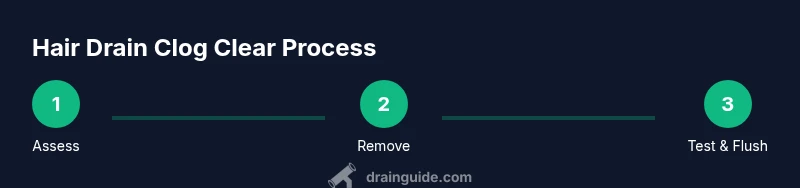
- 1
Assess the clog and prepare
Identify the clog location and gather all tools. Put on gloves and safety glasses, if using cleaners. Clear the area around the drain and place a bucket to catch spills.
Tip: Being organized reduces mess and prevents tool misplacement. - 2
Remove standing water and access the trap
If there is standing water, scoop it out into the bucket. Loosen the trap beneath the sink with a wrench if needed, and carefully remove the trap to inspect for hair buildup.
Tip: Place rags under the trap to catch residual water. - 3
Use the plunger to dislodge the clog
Seal the drain and give strong, steady suction with the plunger. Work in short, firm strokes to avoid splashing. If water begins to drain, move to step 4 or 5 as needed.
Tip: Do not hammer the plunger; let suction do the work. - 4
Run the drain snake into the pipe
Insert the snake until you feel resistance, then rotate to hook the hair. Retrieve slowly to bring out debris. Repeat until you can pull free hair and loosened clog material.
Tip: Keep the snake aligned with the pipe axis to avoid kinking. - 5
Flush with hot water and safe cleaners
Run hot water through the pipe to wash away loosened hair. If needed, add a mild baking soda and hot water flush to help scouring, then rinse again with water.
Tip: Avoid mixing baking soda with vinegar in a closed container. - 6
Reassemble and test
Reinstall the trap securely, dry all connections, and run water to confirm proper flow. If the drain still drains slowly, repeat steps 3-5 or consider professional help.
Tip: Ensure all seals are tight to prevent leaks.
Got Questions?
What causes drain hair to clog and how can I prevent it?
Hair naturally sheds and can wrap around soap scum or mineral deposits, forming a hairball that narrows the pipe. Use hair catchers, clean traps regularly, and avoid pouring hair-laden substances down the drain to prevent clogs.
Hair clogs form from shedding and soap buildup. Use hair catchers and clean traps regularly to prevent it.
Are chemical drain cleaners safe for hair clogs?
Chemical cleaners can be effective but pose risks to skin, eyes, and septic systems. Use them sparingly and follow the label. For hair clogs, mechanical methods are often safer and more reliable.
Chemicals can be risky; use them only as directed and consider mechanical methods first.
What’s the difference between enzymatic cleaners and traditional ones?
Enzymatic cleaners break down organic material over time and are gentler on pipes, but they work slowly. Traditional cleaners act quickly but can damage pipes and harm the environment if overused.
Enzymatic cleaners work slowly but are gentler; traditional cleaners work fast but can harm pipes if overused.
When should I use a drain snake?
Use a drain snake when plunger attempts fail or the clog seems deeper. Insert gently, rotate to grab hair, and pull out debris in stages to avoid pushing the clog further.
Use a drain snake if plunging doesn’t work; rotate and pull out debris carefully.
Can I DIY if the clog involves a disposer or venting issue?
Disposer clogs or venting problems may require specialized tools and knowledge. If in doubt, stop and call a professional to avoid damaging the system.
Disposer or vent problems can need a pro; don’t push ahead if unsure.
How do I tell if a clog is septic-related?
If multiple drains are slow or backing up, or if you hear gurgling, this may indicate a septic issue rather than a simple hair clog. A licensed plumber or septic service should assess the system.
Multiple slow drains or gurgling can signal septic issues; get a pro to inspect.
Watch Video
The Essentials
- Identify the clog location before starting.
- Mechanical methods protect pipes from chemical damage.
- Hair catchers dramatically reduce future clogs.
- Test drains gradually to verify success.
- Call a professional if symptoms persist or you suspect venting issues.