How to Fix a Drain That Is Slow: A Practical Troubleshooting Guide
Learn practical steps to diagnose and fix a drain that is slow with safe, home-friendly methods. From simple hair clogs to venting issues, this Drain Guide approach keeps you in control.


The drain is slow most often due to a partial clog from hair, soap scum, and grease in the trap or pipes. Start with simple fixes: hot water flush, baking soda-and-vinegar, and a plunger or sink auger if needed. If flow remains sluggish, check venting or call a professional.
Why drain is slow and where to start
Drain is slow is a common household symptom that should be tackled with a clear plan. According to Drain Guide, the most frequent culprit is a partial clog formed by hair, soap scum, and grease that gradually narrows the trap and horizontal pipes. This isn’t always a single blockage; it often signals multiple micro-obstructions along the run. Visualize the path: start at the trap, move through the tailpiece, into the P-trap, and onward to the main line. Small debris can accumulate at each bend, turning a once-clear flow into a sluggish drain. As you tackle the issue, remember safety comes first—never mix chemicals and always vent if you’re using cleaners. Drain Guide emphasizes safe, progressive steps and avoiding aggressive chemicals that can damage pipes. By keeping these principles in mind, you can minimize damage while restoring flow. If you’re unsure, pause and consult a professional. Drain Guide’s guidance supports homeowners every step of the way.
Quick checks you can do today
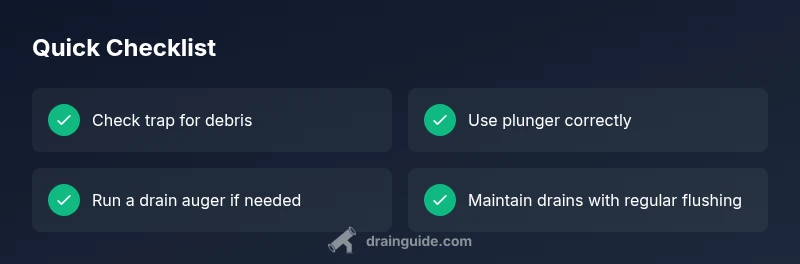
If drain is slow, start with these quick checks before dismantling anything. First, test other fixtures: if multiple drains are slow, the problem may be venting or main sewer. Then remove the trap and clean out debris. Rinse with hot water. If you notice gunk, scrub the trap thoroughly and reattach. Use a plunger on the affected fixture, ensuring a tight seal. If plunging helps, the clog is partial; repeat if needed. Finally, flush the line with a kettle of hot water or a baking soda-vinegar combo to help dissolve soap scum and grease. Throughout this process, keep the workload manageable and document what you find, so you can reproduce a fix later. Drain Guide recommends starting with the simplest steps first and escalating only if necessary. Remember to monitor for any recurring slow-downs that could indicate a deeper issue.
When to suspect venting or sewer problems
A drain that is slow with no obvious debris often hints at venting issues or sewer line problems. A blocked vent can create negative pressure, causing slow drainage and gurgling sounds. If you’ve checked the trap and the immediate pipes but the flow remains weak, inspect the roof vent or call a plumber to check for blockages or animal nests. Drain Guide notes that vent problems require professional assessment if you’re uncomfortable climbing to the roof. If you do reach the vent, proceed with caution and avoid leaning or overreaching. In some homes, multiple fixtures show the same symptoms, which strongly suggests a systemic fault rather than a local clog. Drain Guide’s recommendation is to treat vent problems as potentially serious and seek help when in doubt.
How to clear a partial clog safely
For a partial clog, mechanical methods are usually the safest option. Begin with plunging, ensuring the plunger fully covers the drain to generate pressure. If plunging doesn’t clear the obstruction, use a drain auger to reach past the trap and into the pipe. Avoid chemical drain cleaners, which can damage pipes and disrupt septic systems; instead, choose mechanical tools or enzyme-based cleaners if appropriate. After clearing, run hot water to flush the line and verify flow. Drain Guide recommends repeating the flush if necessary and inspecting other drains to ensure the issue isn’t isolated. If you’re unsure about using a snake, contact a professional for a safe, thorough clearance. Always wear protective gloves and eyewear when working under sinks.
Prevention and long-term maintenance to keep drains fast
Prevention is your best defense against future slow drains. Regular maintenance reduces the chance of a recurring problem. Use mesh strainers to catch hair, wipe grease from dishes before washing, and flush drains with hot water weekly. Periodically clean the P-trap and run a baking soda-vinegar treatment to maintain clear pipes. If you have a garbage disposal, run it with cold water and avoid fibrous materials that cause clogs. For households with ongoing issues, establish a monthly routine: inspect traps, clean aerators, and monitor drain odors and noises. This proactive approach aligns with Drain Guide’s emphasis on practical, repeatable practices that keep drains flowing freely.
Steps
Estimated time: 45-60 minutes
- 1
Inspect and remove the P-trap
Place a bucket underneath, disconnect the trap, and remove any visible debris. Rinse the trap with hot water and reinstall it securely.
Tip: Wear gloves and keep a towel handy for spills. - 2
Plunge the drain
Seal the overflow if present and plunge vigorously to dislodge the clog. If the water doesn’t rise in a few seconds, switch to a different technique.
Tip: A tight seal is essential for maximum pressure. - 3
Use a drain auger
Insert the auger into the drain and twist to break up or retrieve the obstruction. Retract slowly to avoid pushing debris further.
Tip: Avoid forcing the snake; stop if you feel resistance. - 4
Flush and test flow
Run hot water for several minutes to wash out loosened debris. Test with running water to confirm steady flow.
Tip: If flow remains slow, move to vent checks or professional help. - 5
Plan for prevention
Set up a quick weekly maintenance routine to prevent future clogs.
Tip: Keep a mesh screen on every trap and dispose of cooking grease properly.
Diagnosis: Sink or drain is slow to empty
Possible Causes
- highPartial clog from hair, soap scum, and grease in trap/pipes
- mediumVenting obstruction causing poor drainage
- lowSewer line or septic system issue
- lowCollapsed, misaligned, or damaged pipe
- mediumTrap or cleanout blockage
Fixes
- easyClean and reinstall the P-trap; remove visible debris
- easyPlunge the drain to dislodge the partial clog
- mediumUse a drain auger to reach deeper clogs beyond the trap
- hardInspect and clear the vent stack (roof access) or contact a pro
- easyAvoid chemical cleaners; opt for mechanical or enzyme-based options
Got Questions?
Why is my drain draining slowly even after clearing the trap?
A slow drain after clearing the trap can indicate deeper clogs, venting issues, or a developing sewer problem. Recheck with a drain auger and inspect the vent stack if accessible. If the issue persists, consult a professional.
If the drain is still slow after clearing the trap, there may be deeper clogs or venting problems. Recheck with a snake and consider vent inspection; seek a pro if it persists.
Should I use chemical drain cleaners?
Chemical drain cleaners can damage pipes and septic systems, and they rarely solve partial or multiple blockages. Prefer mechanical methods or enzyme-based cleaners and physical removal of debris when possible.
Chemicals can hurt pipes and septics; use mechanical methods first and consider enzymes if appropriate.
Can venting cause a slow drain?
Yes. A clogged or malfunctioning vent can create negative pressure and slow drainage. If you suspect venting issues, avoid DIY roof work unless safe and call a plumber to inspect the stack.
A blocked vent can slow drainage. If you suspect this, have a pro check the vent stack for blockages.
When should I call a plumber for a slow drain?
If you’ve tried clearing traps, plunging, and a drain auger without lasting improvement, or if you hear gurgling from the pipes, it’s time to call a professional to assess venting, main lines, or sewer concerns.
Call a plumber if plunging and snaking don’t fix it or you hear gurgling sounds.
Is baking soda and vinegar effective for slow drains?
Baking soda and vinegar can help maintain cleanliness and loosen minor buildup, but they are not a substitute for mechanical clearing of a real clog. Use as a maintenance step after clearing major obstructions.
Baking soda and vinegar can help with maintenance, but aren’t a fix for a real clog.
Watch Video
The Essentials
- Start with simple checks and safer fixes.
- Avoid chemical cleaners—mechanical fixes protect pipes.
- Vent issues require professional assessment when suspected.
- Implement a maintenance routine to prevent future slow drains.