Drain Snake Service: Step-By-Step Guide for Clear Drains
Learn how drain snake service works, compare DIY vs professional options, choose the right snake, and follow safe steps to clear kitchen, bathroom, and utility drains with confidence.


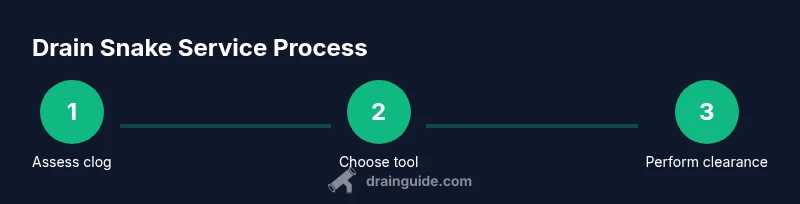
Drain snake service clears stubborn clogs by feeding a flexible auger into the drain until it breaks through the blockage and restores flow. You can tackle minor clogs with a manual snake or rent a powered model, but professional service ensures proper tool use and minimizes pipe damage. Choose the right tool based on clog type, pipe material, and access.
What drain snake service entails
Drain snakes, also called augers, are long, flexible coils that navigate through pipes to break apart or hook debris causing a clog. A service visit involves selecting the appropriate snake type, preparing the workspace, inserting the tool, and testing the drain after clearance. The goal is to restore normal flow without harming pipe walls or fittings. For homeowners, understanding the basics helps you decide between DIY attempts and hiring a professional. According to Drain Guide, using the right size and technique reduces the risk of pipe damage and future clogs. This knowledge also helps you communicate clearly with a technician if you opt for a pro visit.
Key takeaway: not all clogs require the same approach; tool choice matters for long-term reliability.
DIY vs professional drain snake service: making the call
Deciding between DIY and a professional service hinges on the clog’s location, severity, and pipe material. DIY with a manual snake is feasible for slow-draining sinks or shower stalls with accessible access points. Pros bring powered augers, diagnostic probes, and experience to handle tough blockages, grease buildup, or clogs located far inside the line. Drain Guide Team notes that safety and proper tool handling are major benefits of a pro visit, especially where gas lines, waste lines, or stacked fixtures are involved. Consider the cost, time, and risk to pipes when deciding.
Tip: if multiple fixtures are affected, or the clog recurs after a DIY attempt, a pro service is likely the best path.
Types of drain snakes and their typical uses
There are several varieties of drain snakes, each suited to different scenarios. A manual hand-crank auger offers control for light clogs near accessible traps. A drum-style or power-assisted snake reaches deeper into long runs and greasy blockages. Flexible rods are ideal for curved pipes, while stiff, rigid tips help dislodge stubborn materials. For kitchen drains with heavy grease, a larger-diameter snake may be necessary. Drain Guide emphasizes matching cable diameter and length to the pipe size to avoid kinking or damage.
Bottom line: choose the snake that matches the clog depth, material, and pipe diameter for a smoother job.
Checking compatibility with your pipes and fixtures
PVC and metal pipes respond differently to augers. PVC is more forgiving but can be scratched if you push too hard; metal pipes handle more aggressive contact but are prone to denting if you force the tip. Always turn off water supply and protect surrounding surfaces with towels. Remove the trap under the sink if you can access the drain more easily, and keep a bucket handy for water and debris. If you encounter a hard stop or the clog shifts to a different fixture, step back and reassess the approach to avoid creating a bigger problem.
Note: if you hear banging or observe a change in the sound of water flow, stop and re-evaluate.
A practical, step-by-step DIY approach (overview)
A structured plan helps you stay organized and reduces the chances of cute mistakes. Start by preparing the area with protective gear and tools within reach. Identify the drain’s access point and remove any dead-end traps. Slowly feed the snake into the drain, rotating the handle to keep the coil engaged with the clog. When resistance diminishes, gently pull back and repeat until you feel the clog release. Finally, run hot water to flush debris and test the drain’s flow.
Caution: never force the cable; if it binds, back out and try a different angle or step.
Maintenance and preventive steps to avoid repeats
After clearing a clog, clean and dry the snake thoroughly to prevent corrosion and residue transfer. Schedule regular drain maintenance by flushing with hot water, baking soda, and vinegar in small amounts (avoid chemical cleaners that can interact with the auger). Install drain strainers to catch hair and food scraps, and address grease buildup in kitchen lines by avoiding pouring fats down the drain. Routine maintenance reduces frequency and severity of clogs over time.
Pro tip: perform a quick flow test after each load of laundry or dishwashing cycle to catch slow drains early.
When to call a professional and what to expect on service day
Professional drain snake service is often worth it when clogs are located deep in the main line, recur after DIY attempts, or involve suspected pipe damage or sewage backup. A licensed technician uses calibrated tools, inspects for underlying issues (like broken pipes or vent problems), and provides a written estimate. Expect a safety briefing, a rapid assessment, and a plan that may include camera inspection if needed. The Drain Guide Team recommends scheduling a follow-up check if clogs return within a few weeks.
Tip: ask for a post-service care plan to avoid repeat problems and confirm warranty coverage on work performed.
Cost considerations and planning for a drain snake project
Costs vary by region, clog complexity, and whether you hire a pro or DIY. A DIY kit may cost a modest amount for a basic hand-crank snake, while professional service typically includes labor, diagnostic work, and any minor repairs. If a pro is needed, you’ll often see a two-part pricing structure: a diagnostic/travel fee plus the actual service charge. Drain Guide notes that upfront estimates and clear scope help you compare options and plan a safe, effective resolution.
Quick-start checklist for your first drain snake project
- Identify the clog location and accessibility. - Gather tools and protective gear. - Clear the work area and place towels or a drop cloth. - If accessible, remove the P-trap to improve access. - Feed the snake slowly and rotate frequently. - Clean the tool after use and test flow with hot water. - Know your limits: call a pro if you hit a hard stop or suspect a main-line issue.
Tools & Materials
- Drain snake (manual auger)(Choose 1/4" to 1/2" cable, length 3-25 ft depending on the job)
- Gloves (rubber or nitrile)(Protect hands from grime and sharp edges)
- Safety goggles(Eye protection against splashes and debris)
- Bucket(Catch water and loosened debris)
- Towels or rags(Protect surfaces and absorb spills)
- Flashlight(Better visibility in tight pipes)
- Adjustable wrench or pliers(To disconnect P-trap or tighten fittings if needed)
- Shop towels or rags(For quick cleanups during and after)
- Old clothes or apron(Protect clothing from grime)
- Powered drain snake (drill-powered) accessory(Optional for deep or stubborn clogs)
- Penetrating lubricant (optional)(Useful for easing stubborn fittings)
Steps
Estimated time: 30-60 minutes
- 1
Prepare and protect the area
Clear the workspace, lay towels, and put on gloves and goggles. If working under a sink, place a bucket nearby to catch water. Disconnect the water supply for sinks or fixtures if reachable to minimize spills.
Tip: Have a helper hold towels and stay nearby to avoid slips. - 2
Access the drain
If possible, remove the P-trap beneath the sink to gain direct access to the drain. Use an adjustable wrench to loosen fittings carefully and place removed parts in a labeled tray. If you can’t reach the trap, work with the access point you have.
Tip: Take photos of fittings before disassembly to aid reassembly. - 3
Insert and feed the snake
Insert the snake into the drain and begin turning the handle slowly to feed it toward the blockage. When you meet resistance, repeat a few gentle forward-and-back motions while rotating. Stop if you hear scraping or feel unusual resistance near a bend.
Tip: Mark the depth with tape on the snake to monitor progress. - 4
Break through the clog
Continue to advance and rotate the snake to dislodge the clog. If the snake advances past the initial resistance, slowly pull back a bit and try again to ensure debris is cleared from the line.
Tip: Do not force the cable—excessive force can damage pipes. - 5
Retract and clean the snake
Slowly retract the snake, wiping off any gunk with a rag as you go. Coil and store the tool in a dry place after cleaning. Return any removed trap components and tighten fittings securely.
Tip: Rinse the trap area with warm water to flush residual debris. - 6
Test the drain
Run the faucet or flush the toilet to test flow and ensure the drain clears. If water drains slowly, repeat steps 3-5 or consider a more thorough approach. If multiple fixtures are involved or you hear gurgling, stop and reassess.
Tip: Finish with hot water and a quick baking soda rinse to keep pipes clean.
Got Questions?
What is a drain snake and how does it work?
A drain snake is a flexible auger that breaks up or hooks debris to clear clogs. It advances through the pipe as you rotate the handle, allowing you to reach blockages beyond a plug or hairball. Proper use minimizes pipe damage and improves flow.
A drain snake is a flexible auger that clears clogs by twisting through the pipe and breaking up debris. It helps reach blockages that a plunger can’t, with careful use reducing the risk of damage.
Can I use a drain snake on kitchen sinks with garbage disposal?
Avoid feeding the snake directly into a garbage disposal. If you must access the line, disconnect power to the disposal and remove the debris by hand. In some cases, it’s best to run the snake through the main drain rather than the disposal side.
Be careful with disposals. If in doubt, don’t run the snake through the disposal and consider clearing the main drain instead.
How long does drain snake service take?
DIY drain snake clearing can take 20-60 minutes depending on the clog’s depth and complexity. A professional visit may take longer if diagnostic work or camera inspection is needed.
Most DIY jobs take under an hour, though more complex clogs or inspections can take longer.
Is a drain snake safe for PVC pipes?
Yes, when used correctly. Avoid forcing the cable and work gently to prevent scratches or cracks. PVC is relatively forgiving but still requires careful handling.
PVC pipes are generally safe with a drain snake if you’re careful not to force or scrape the pipe.
When should I call a professional instead of DIY?
Call a pro if the clog recurs after DIY attempts, if you suspect main-line issues, or if sewage backup is involved. A professional can diagnose pipe damage and provide a clear plan.
Call a professional if clogs keep returning or you notice sewage backups, or you’re unsure about the pipe layout.
What other tools work with drain snakes?
A plunger, adjustable wrench, bucket, gloves, and towels are common companions. For stubborn clogs, a camera inspection may be recommended by a pro to locate the blockage.
Use a plunger and bucket along with gloves and towels. A camera check helps if the clog is hard to reach.
Watch Video
The Essentials
- Assess clog location before starting
- Choose the right snake type for the job
- Work slowly to avoid pipe damage
- Test flow after clearing and perform maintenance