Drain vs Drain Cleaner: 2026 DIY Comparison
A rigorous, evidence-based side-by-side look at mechanical drain methods versus chemical drain cleaners, detailing effectiveness, safety, costs, and scenarios where each approach shines for homeowners and DIY enthusiasts in 2026.


TL;DR: For most home clogs, start with mechanical methods (plunger or drain snake) before turning to chemical drain cleaners. Chemical cleaners can be effective for light, organic clogs but carry risks to pipes, fixtures, and septic systems if misused. Follow labels, never mix products, and call a pro for persistent or dubious issues.
Overview: Drain x Drain Cleaner — What this comparison covers
In this article we examine the practical differences between traditional, mechanical approaches to clearing drains and commercially labeled drain cleaners, framed around the term drain x drain cleaner. The goal is to equip homeowners with a clear, analytical framework for choosing the right tool for the job. According to Drain Guide, the best outcomes come from diagnosing the clog type first and using the simplest, safest method that works. We’ll cover effectiveness, safety, cost, and best-use scenarios, with real-world examples that stay practical for busy households. By the end, you’ll know when a plunger or snake is preferred, when a cleaner can help, and when to escalate to a professional.
Understanding Clogs and How Your Choice Matters
Clogs form for many reasons: soap scum and hair accumulation, grease solidification, mineral deposits, and foreign objects. The clog’s composition strongly influences which method will work best. A hair-laden kitchen sink, for example, behaves differently from a mineral buildup in a bathroom drain. The choice between drain x drain cleaner hinges on whether the goal is speed, safety, or long-term maintenance. Drain Guide emphasizes that recognizing whether a clog is organic, mineral-based, or mixed guides the selection of the most appropriate method and avoids unnecessary chemical exposure or pipe stress.
Mechanical Methods: Plunger, Auger, and Smart DIY Tactics
Mechanical methods rely on physical force or obstruction removal rather than chemical action. The plunger is the first-line tool for many clogs, especially in sinks and tubs with a clear trap. A plumbing auger or sewer snake can reach deeper into the pipe to break apart or latch onto the obstruction. For best results, use steady, controlled movements and avoid excessive force that can damage seals or pipes. We also discuss technique nuances, such as the difference between flange and cup plungers, and how to orient the snake tip to maximize contact with the clog. These methods are inexpensive, immediate, and pose minimal chemical risk when used correctly.
Chemical Drain Cleaners: Types, Chemistry, and When They Shine
Chemical drain cleaners come in caustic, acidic, and enzymatic forms. Caustic cleaners dissolve organic matter by generating heat and chemical reactions, while acidic formulas can dissolve mineral buildup. Enzymatic cleaners rely on bacteria to digest organic waste over time, offering a slower but gentler approach. The effectiveness of chemical cleaners depends on the clog’s composition and the pipe material. They can be quick for light, organic clogs but may be ineffective for hair-packed blocks or mineral deposits. Always follow label instructions, and never mix products, as dangerous fumes or chemical reactions can occur.
Safety and Environmental Considerations: What to know before you pour
Safety matters with drains. Chemical cleaners can cause chemical burns, emit toxic fumes in enclosed spaces, and damage downstream plastics or copper if misused. They may also harm septic systems by killing beneficial bacteria or causing imbalances. Personal protective equipment (gloves, eye protection) and proper ventilation are essential when handling cleaners. Environmental considerations include avoiding overuse and ensuring runoff won’t harm landscaping or groundwater. Proper disposal should follow local guidelines, and never reuse containers for other chemicals.
Effectiveness Across Clog Types: Matching method to clog chemistry
Hair and grease clogs often respond well to mechanical methods, especially when promptly addressed. Mineral deposits and rust can resist enzyme cleaners and require physical or chemical treatments with care for the pipe material. For mixed clogs, a staged approach—start with mechanical methods to reduce bulk, then apply a targeted cleaner if appropriate—can be effective. Drain Guide’s analysis highlights that success correlates with accurate clog diagnosis and method selection rather than brute force or aggressive chemical use. This section synthesizes practical insights for homeowners seeking reliable results.
Plumbing Materials and Septic System Considerations: What you’re really protecting
Older pipes (metal or galvanized) may react differently to chemical cleaners than modern PVC. Prolonged exposure or high concentrations can lead to pipe stress or seal damage. Septic systems add another layer of complexity: some cleaners disrupt microbial balance, potentially causing longer-term problems. If you’re on septic, prioritize mechanical methods and consult a professional before using any chemical cleaners. Knowledge of your home’s plumbing layout helps prevent mistakes that could trigger leaks or backups.
Cost, Availability, and Value: Weighing upfront versus ongoing costs
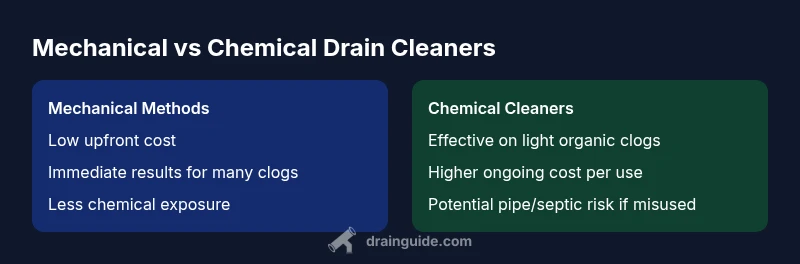
Mechanical tools such as plungers and snakes have a low upfront cost and are reusable, delivering nearly immediate results for typical clogs. Chemical cleaners involve a per-use cost and vary by formulation; you’ll pay for convenience and speed but may face diminishing returns on stubborn clogs. When estimating value, consider the clog type, frequency of use, and plumbing material. A balanced strategy often relies on inexpensive mechanical methods for routine maintenance and cautious, limited use of cleaners for specific, light organic clogs.
Step-by-Step Diagnosis and Decision Tree: A practical workflow
Begin by inspecting the drain trap for obvious blockages and lifting debris manually if safe. If the clog remains, try a mechanical method (plunger, then auger). If that fails, assess the clog’s likely composition: hair/soap buildup, grease, or mineral scale. For organic light clogs, a properly labeled cleaner used sparingly may help; for mineral or mixed clogs, mechanical methods or professional service is more reliable. Always read the product’s instructions and test in a small area when uncertain.
Real-World Scenarios and Recommendations for 2026
Scenario 1: A bathroom sink with hair buildup and slow drainage. Start with a plunger, then use a narrow snake if needed. Scenario 2: A kitchen sink with grease buildup and a mild odor. Mechanical methods can help first; if not, a low-concentration enzyme cleaner may address organic waste without harsh chemicals. Scenario 3: A tub that drains slowly due to mineral scale. Mechanical methods are often more effective, and chemical cleaners may offer limited benefit unless specifically designed for mineral deposits.
Myths vs Facts: Clearing up common misconceptions
Myth: Chemical drain cleaners are always safest. Fact: They can damage pipes and septic systems if overused or misused. Myth: Snakes are dangerous. Fact: When used correctly, snaking is a safe, effective method that minimizes chemical exposure. Myth: Drains never need maintenance. Fact: Regular maintenance—such as mindful disposal and occasional flushing with hot water—helps prevent frequent clogs and reduces the need for cleaners.
Maintenance Strategy and Quick Start Plan: A practical approach for busy homeowners
Create a quarterly routine: (1) use hot water and a physical trap check to keep drains clear, (2) address slow drains with light mechanical methods, (3) limit chemical cleaner use to a single incident per clogged drain, (4) schedule a professional inspection if issues persist beyond two attempts. This approach minimizes chemical exposure, preserves plumbing, and supports long-term drain health.
Comparison
| Feature | Mechanical Methods | Chemical Drain Cleaners |
|---|---|---|
| Effectiveness on common clog types | Strong on hair and grease; rapid response for many household clogs | Effective for light organic clogs; limited on mineral buildup or heavy blockages |
| Safety & environmental impact | Low chemical risk when used as directed; minimal environmental impact | Chemicals pose burn risks, fumes, potential pipe damage, and septic concerns |
| Cost range (upfront vs ongoing) | Low upfront for tools; reusable and long-term value | Low per-use cost but ongoing purchases; variable by product |
| Time to clear | Often minutes to clear light clogs; faster with proper technique | Can take minutes to hours depending on product and clog severity |
| Best for | Maintenance, quick fixes, and stubborn blocks when used properly | Stubborn organic clogs when mechanical methods fail; not ideal for mineral deposits |
Positives
- Low upfront costs for common tools and quick access to results
- Immediate feedback for many mechanical clogs
- Minimal chemical exposure when used correctly and sparingly
- Widely available at hardware stores and supermarkets
Cons
- Risk of pipe damage or seal failure with improper use
- Chemicals may not address mineral buildup or septic system health
- Potentially hazardous fumes or skin irritation if mishandled
- Can create a false sense of resolution without addressing root cause
Mechanical methods should be your first line; drain cleaners are a backup when used cautiously
Prioritize plungers and snakes for most clogs. Use chemical cleaners sparingly, only for appropriate organic blockages, and always follow the label. For persistent or uncertain clogs, consult a professional to avoid damage.
Got Questions?
How do I know which method to use first for a clog?
Begin with a basic inspection of the trap and try a mechanical method (plunger, then auger) to remove the obstruction. If this fails, assess the clog type before considering a chemical cleaner. This minimizes chemical exposure and reduces risk to pipes.
Start with a plunger or snake to clear most clogs. If that doesn’t work, assess the clog type before using cleaners.
Are enzyme cleaners safer than chemical drain cleaners?
Enzyme cleaners are generally gentler and work over time by digesting organic waste. They are safer for frequent use and septic systems but slower and less effective for hard clogs. Use them as a preventative maintenance option or for light blockages.
Enzyme cleaners are gentler and good for maintenance, but not fast for tough clogs.
Can chemical drain cleaners damage pipes?
Yes, chemical drain cleaners can damage certain pipe materials, seals, and joints when used improperly or in high concentrations. They can also react dangerously with other cleaners if mixed. Always follow the product label and avoid combining products.
Chemicals can damage pipes if misused or mixed with other cleaners.
Should I use drain cleaner if I have a septic system?
Caution is advised. Some cleaners disrupt the beneficial bacteria in septic systems, potentially causing longer-term problems. Mechanical methods are usually safer first choices, and consult a professional before using chemical cleaners on a septic system.
If you have a septic system, manual methods are safer first; check with a pro before cleaners.
How often should I clean drains to prevent clogs?
Adopt a maintenance routine: flush with hot water weekly or monthly, address slow drainage promptly, and use mechanical methods first for minor buildup. Avoid overreliance on chemical cleaners, which should be occasional and targeted.
Maintain with routine flushes and prompt attention to slow drains.
Can I mix baking soda with vinegar or cleaners?
Mixing baking soda with vinegar can create fizz but is unlikely to clear stubborn clogs and can reduce the effectiveness of some cleaners. Do not combine with chemical drain cleaners or other products. Stick to proven methods.
Avoid mixing cleaners with baking soda or vinegar for clogs.
What signs indicate I should call a plumber?
If you experience multiple slow drains, recurring clogs, sewage odors, or backups that don’t resolve after two attempts with safe methods, it’s time to call a plumber. A professional can assess venting, pipe size, and possible root intrusion.
Call a plumber if problems persist after safe methods.
The Essentials
- Start with mechanical methods for most clogs
- Use drain cleaners only for suitable organic blockages
- Never mix cleaners and follow label instructions religiously
- Consider pipe material and septic system when choosing a method
- Regular drain maintenance reduces reliance on cleaners