Drain Yard: A Practical DIY Guide to Yard Drainage
Learn how to diagnose and fix yard drainage issues with practical, step-by-step instructions. From grading to French drains and maintenance, Drain Guide helps homeowners solve soggy lawns with clear, actionable steps.


By following this guide, you will diagnose yard drainage issues, choose a solution (grading, French drains, or catch basins), and install or upgrade components to prevent soggy zones. You’ll learn to assess slope, select materials, plan a drainage path, and verify performance with rainfall tests after installation. This is suitable for typical residential yards.
Understanding Yard Drainage: Why It Matters
Water in a yard that isn’t draining properly can cause a range of problems: soggy lawns that die back, soil erosion around flower beds, damp crawlspaces, and even foundation shifts if water pools near a home. The term drain yard describes the process of moving water away from the house and toward an appropriate discharge point. Effective yard drainage protects landscaping, preserves soil structure, and reduces pests that thrive in flooded patches. For homeowners, the goal is to create a controlled path for water so it doesn’t sit in low spots or flow toward living spaces. Drainage work, when planned correctly, improves your yard’s health and usability for outdoor living, gardening, and play.
Common Yard Drainage Problems
Common issues include pooling water after rain, an overly damp lawn that won’t recover between storms, and gutters that deposit water at the foundation. Poor grading, compacted soil, and blocked or undersized drains can all contribute to soggy areas. Downspouts that discharge too close to an area you want dry, or trees with aggressive root systems that interfere with buried lines, can worsen the problem. Recognizing the symptoms—standing water, a spongy feel underfoot, or puddles that linger for days—helps you decide on the right remedy.
Planning Your Yard Drainage Project
Before you buy materials, take a careful look at your yard’s layout. Map the area, identify low spots, and note any potential discharge points (streets, drainage ditches, or a municipal storm sewer if available). Consider how much water your yard receives during typical rain events and from roof runoff. Decide on a drainage strategy: simple grading to encourage shallow runoff away from the house, a French drain system for subsurface movement, or a combination with catch basins at critical points. Local codes and property setbacks should guide where you place drains and how deep you trench.
Drainage Solutions for the Yard: Options and Pros/Cons
There isn’t a one-size-fits-all solution. Gentle grading can sometimes solve minor pooling without any buried components. For persistent wet spots, a French drain or a perforated pipe system under a fabric wrap provides continuous, subterranean water movement. Catch basins in high-water zones can collect surface runoff and route it toward a designated discharge point. Dry wells offer storage temporarily during heavy rain, releasing water slowly. Each option has trade-offs between cost, disruption, and effectiveness, so matching the approach to your site conditions is key.
Maintenance and Seasonal Checks
Yard drainage isn’t a “set it and forget it” project. After installation, inspect surface inlets, clean debris from grates, and ensure outlets remain free-flowing. Periodically check fabric wraps and trench cleanliness, especially after storms that push leaves and sediment into the system. In the off-season, keep an eye on frost heave and ensure that soil settles evenly around the drainage components. Regular maintenance extends the life of the system and preserves performance.
Tools & Materials
- Tape measure(Essential for planning distance and slope.)
- Shovel(Use a digging shovel for trenches.)
- Trenching shovel(Narrow blade helps inside trenches.)
- Gravel (pea or crushed rock)(Backfill base and trench bedding.)
- Perforated drainage pipe (drain pipe)(Core drainage conduit with holes.)
- Geotextile fabric (filter fabric)(Wrap pipe to prevent silt ingress.)
- Drainage catch basin(Optional entry point for surface water.)
- Downspout extension kit(Directs roof water away from the area.)
- Utility locator(Identify buried lines before digging.)
- Level or laser level(Keep a consistent slope away from structures.)
- Shingle or soil tester(Check soil compaction and drainage path after installation.)
Steps
Estimated time: 6-12 hours
- 1
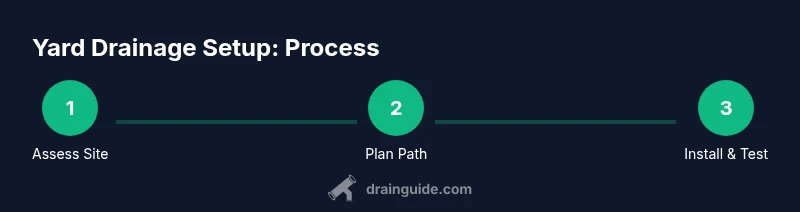
Assess area and determine slope
Walk the yard and note low spots where water tends to pool. Use stakes and a string line to visualize the intended drainage path. Check existing outlets like gutters and downspouts to see where water is coming from and where it should discharge.
Tip: Mark the high and low points with colored flags so you can reference the path later. - 2
Plan drainage path and select method
Decide whether you’ll grade the yard, install a French drain, or use surface drains with catch basins. Sketch a simple diagram showing water flow away from the house toward the chosen discharge point.
Tip: Choose a path that avoids roots of mature trees and minimizes disturbance to prized plantings. - 3
Dig trench and prepare base
Carefully trench along the planned path, keeping a consistent downward slope away from structures. Remove excavated soil to a safe location or reuse as top fill after backfilling.
Tip: Call 811 or your local utility locator service before digging to prevent striking buried lines. - 4
Lay fabric, pipe, and bedding
Place a geotextile fabric along the trench to prevent sediment ingress. Position the perforated pipe with holes facing down, and cover with a layer of gravel to promote drainage.
Tip: Wrap the pipe with fabric before covering to extend its life and maintain flow capacity. - 5
Backfill, grade, and compact
Cover the pipe with gravel, then a layer of soil, and lightly compact to prevent settling. Re-grade the surface so water naturally runs toward the discharge point.
Tip: Avoid over-compacting; allow air gaps for water to move and prevent clogging. - 6
Test drainage and finalize connections
Run water through the system or observe during a rain event to ensure water moves freely to the outlet. Connect downspouts and add extensions as needed to keep roof runoff out of the drainage area.
Tip: If water backs up, inspect fabric and joints for leaks or blockages and adjust grade if necessary.
Got Questions?
What is the first step in fixing yard drainage?
Begin with a site assessment to identify pooling areas, existing outlets, and discharge points. Plan a drainage path before buying parts.
Start with a site check to locate water pockets, then plan the drainage path before buying materials.
Do I need a permit to install yard drainage in a residential yard?
Most residential drainage work does not require a permit, but check local codes and HOA rules to confirm requirements.
Usually no permit is needed, but local codes may require approval.
How long does installation typically take?
Time varies with yard size and chosen method; a small project may take a day, larger projects could stretch into a weekend.
It depends on yard size, but you can expect a day or two for many projects.
What maintenance is required after installation?
Regularly clear inlets, inspect for sediment buildup, and watch for soil settling. Re-check slope after heavy rain and adjust if needed.
Keep outlets clear and recheck slope after big rains.
Is a French drain necessary for every yard?
Not always. A French drain is helpful where groundwater is persistent or surface water pooling is widespread; otherwise, grading or surface drains may suffice.
A French drain is great for persistent groundwater, but not always required.
What safety precautions should I take?
Wear gloves and eye protection, work with a partner when handling heavy materials, and always verify utilities before digging.
Wear protective gear and verify utilities before you start.
Watch Video
The Essentials
- Assess site first to identify water flow and problem areas
- Choose a drainage strategy that fits site and landscape
- Use fabric-wrapped pipe and proper backfill for longevity
- Grade surfaces to direct water away from buildings
- Test and maintain the system regularly