Drainage Issue in Yard: Step-by-Step Troubleshooting Guide
Urgent, practical troubleshooting guide to diagnose and fix a drainage issue in yard. Learn quick checks, diagnostic flow, step-by-step fixes, safety tips, and when to call a pro for lasting yard drainage.


Most drainage issues in the yard start with grading and blocked outlets. Start by confirming water flows away from your foundation, ensuring downspouts and swales aren’t obstructed. Check soil compaction and lawn elevation where water pools. If these basics don’t fix it, follow our diagnostic flow to identify the root cause and fix it quickly.
Understanding the Drainage Scene in Your Yard
According to Drain Guide, a drainage issue in the yard is rarely caused by a single fault. Most homeowners experience a combination of grading problems, soil type, vegetation, and man-made landscape features that slow or redirect water toward the foundation. In this section, observe common symptoms: puddling in low spots after rain, muddy patches that won’t dry, soggy turf in areas of foot traffic, and water pooling around the home’s edges. Recognizing these signs early helps you choose the right fix rather than wasting time and money on guesswork. Drain Guide’s guidelines emphasize starting with simple, reversible checks before committing to expensive installs. By watching the water paths during a storm, you can map the drainage flow and identify where improvements are most needed. In many yards, the problem is not a single clogged pipe but a system-wide mismatch between your land’s natural slope and how gutters and drainage pipes release water. This is especially true on flatter properties or lawns with dense clay soils that resist infiltration. Start by tracking where water enters your yard, where it stops, and where it travels fastest, then plan targeted improvements.
Quick Checks You Can Do Today
- Inspect gutters and downspouts; remove leaves and blockages so water can flow freely.
- Confirm downspouts extend several feet away from the foundation; use elbows/extensions if needed to redirect water outward.
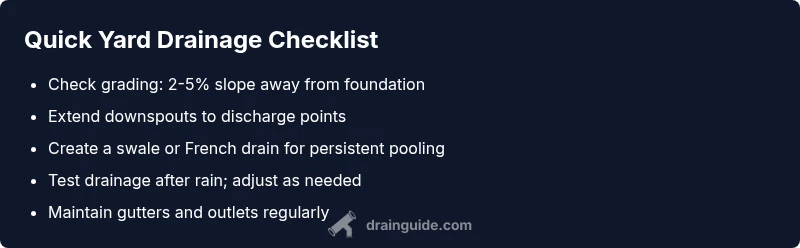
- Check the yard grade around the foundation; soil should slope away from the house at a gentle 2-5% gradient for at least 6-10 feet.
- Look for low spots or depressions where water pools after rainfall; note the duration and frequency of pooling.
- Test soil drainage by digging a small pit and filling with water; if water sits for more than 24-48 hours, soil drainage may be slow.
- Evaluate any swales or shallow trenches; ensure they channel water toward a suitable discharge path rather than toward the foundation.
- If you have catch basins or drainage tiles, flush and inspect for clogs or breaks; consider temporary alternatives if a blockage is suspected.
If these checks don’t resolve pooling, proceed to the diagnostic flow below to identify root causes and plan targeted fixes.
How Water Should Move Across Your Yard
Healthy drainage depends on predictable water paths. A yard should drain water away from the house and toward an existing storm drain, swale, or dry well. Proper grading typically provides a slope of about 2-5% away from the foundation over the first 6-10 feet, which translates roughly to a 2-3 inch drop every 10 feet. Over longer distances, the slope can taper to preserve airflow to plant roots and minimize erosion. Natural features like beds, trees, and fences can interrupt flow, so you may need to designate an intended path and shape the landscape to guide water along that route. Swales—shallow ditches lined with soil, grasses, or rock—are effective on larger properties to move runoff gradually. If your yard is flat or soil is very compacted, you may see slow infiltration and persistent pooling. In those cases, combining grading with a dedicated drainage solution (like a perforated pipe or a French drain) often yields the best long-term results.
Diagnosing the Root Cause
Diagnosing a yard drainage issue requires a structured approach. Start by ruling out simple, reversible causes: debris clogging gutters, blocked downspouts, and misdirected water paths. Next, confirm that the soil can absorb water effectively; clay soils drain slowly, while sandy soils drain fast but may require more volume management. Observe rainfall intensity relative to pooling duration to estimate required drainage capacity. If pooling persists after basic cleaning, the root cause could be inadequate grading, an ineffective swale, a blocked or undersized pipe system, or a combination of these. Consider nearby landscape features that might redirect water toward your yard, and assess whether neighboring properties contribute to the issue during heavy storms. By mapping water flow during or after rain, you can pinpoint where improvements have the biggest impact and minimize disruption to landscaping.
Fixes and Prevention for Common Causes
Many yard drainage issues respond to staged fixes. Start with simple improvements:
- Regrade the area to achieve a consistent 2-5% slope away from the house.
- Extend or reroute downspouts to carry roof runoff to designated discharge points away from foundations.
- Install a swale or shallow ditch to guide water toward a proper outlet, ensuring it is lined or stabilized to prevent erosion.
- For persistent pooling, consider a perforated pipe or French drain with gravel and filter fabric to collect and move water away from problem zones.
- Planting and landscaping can help absorb moisture; select drought-tolerant grasses and deep-rooted perennials to improve soil structure over time.
- If grading or drainage paths need to cross difficult areas (driveways, walkways), use permeable surfaces or trenches that minimize trip hazards and soil disruption.
Prevention after fixes is critical. Regular maintenance of gutters, downspouts, and drainage outlets, plus yearly rechecking of grading and outlet paths after heavy rains, reduces the likelihood of future pooling. Drain Guide recommends documenting your drainage plan so future home improvements don’t undo your fixes.
When to Call a Professional
If pooling persists after your initial fixes, or if you’re dealing with large-scale flooding, standing water near the foundation, or heavy clay soil that resists infiltration, professional help is wise. A drainage contractor or licensed landscaper can perform a site survey, perform soil tests, and design a customized solution such as a French drain system, catch basins, or a complete regrading plan. In some areas, alterations to drainage systems may require permits or adherence to local codes; a pro can navigate these requirements to ensure safe, compliant work. Drain Guide emphasizes that complex installations benefit from a professional design and professional-grade materials to guarantee long-term performance.
Case Studies: Real-World Yard Drainage Fixes
- Case A: Flat lot with pooling behind the garage. A shallow swale directed toward a dry well eliminated pooling and reduced surface erosion within two weeks of grading.
- Case B: Downspout runoff overwhelmed by heavy storms. Extending downspouts and adding a small trench with perforated pipe dramatically reduced water accumulation near the home foundation.
- Case C: Clay soil with slow infiltration. A layered solution combining soil modification, a French drain, and a shallow bioswale offered permanent relief and improved lawn health over a season.
Tools & Materials You Might Need
- Shovel and trenching tool
- Landscape rake and level
- Perforated drainage pipe and gravel
- Filter fabric and geotextile
- Downspout extensions and elbows
- Swale edging and erosion control options
- Soil testing probes and moisture meter
Steps
Estimated time: 2-4 hours
- 1
Assess the problem area
Walk the yard during or right after a rain to observe where water collects and where it flows toward the house. Mark low spots and note soil type. Confirm gutters and downspouts are clear and directing water away from the foundation.
Tip: Take photos and sketch water paths; this helps you plan the drainage route before digging. - 2
Plan the grading and discharge path
Determine a slope of 2-5% away from the foundation for at least 6-10 feet. Decide whether to add a swale, extend downspouts, or route to an existing drain. Ensure the discharge path ends in a suitable area (yard drainage area or street ditch).
Tip: Avoid routing water toward sidewalks or driveways to prevent erosion and safety hazards. - 3
Clear obstructions and test flow
Flush gutters and downspouts; remove debris. Test with a hose to observe how water moves through the proposed path. Confirm water doesn’t pool near the foundation after testing.
Tip: Only test with steady, moderate flow to simulate a rain event without overloading the system. - 4
Install the drainage solution
If using a swale, dig a shallow trench and shape it to your planned path. For a French drain, excavate a trench, lay a perforated pipe with gravel, wrap with filter fabric, and cover with soil.
Tip: Maintain a consistent slope and keep pipe joints above grade to prevent ground settling. - 5
Redirect downspouts and finalize
Attach extensions to downspouts to guide water to the new path. Refill trenches with soil, tamp gently, and reseed or sod to restore lawn cover.
Tip: Pat down soil gently to avoid crushing the new setup; seed after installation for quick stabilization. - 6
Test after installation
Simulate a heavy rain with a hose and observe for new pooling. Check the discharge path for erosion and adjust as needed. Maintain a regular inspection routine.
Tip: Schedule a follow-up test after a heavy rain event to verify long-term performance.
Diagnosis: Puddling and prolonged wet spots after rain near a yard edge or foundation
Possible Causes
- highImproper grading or slope directing water toward the foundation
- mediumBlocked or undersized downspouts/outlets
- lowSoil with poor drainage (clay-heavy or compacted)
Fixes
- hardRegrade the area to create a 2-5% slope away from the house over at least 6-10 feet
- easyExtend downspouts with elbows and a discharge pipe to move roof runoff away from the foundation
- mediumInstall a swale or French drain to capture and relocate subsurface water
Got Questions?
What are the most common causes of a drainage issue in the yard?
The most frequent causes are improper grading that directs water toward the foundation, clogged or undersized downspouts, and soils that don't drain well (often clay). A combination of these factors can worsen pooling after rain.
Common causes are grading toward the house, blocked downspouts, and clay soils that drain poorly.
Can I fix yard drainage without hiring a professional?
Yes for small problems like clearing gutters, extending downspouts, or regrading a small area. More complex fixes such as installing a French drain or major regrading may require a professional to ensure proper design and code compliance.
Yes for small fixes, but big installs may need a pro.
How long does it take to see results after a fix?
Results depend on rainfall and soil type. You should see improvement within a season for grading changes, while drainage systems like swales or French drains may show results after a few heavy rain events.
Expect improvements over a season with grading changes; drains show up after a few heavy rains.
Do drainage improvements require permits?
It depends on local regulations and the scope of the project. Check with your city or village building department before major work.
Local rules vary; check with your building department before big work.
Will adding a drain harm existing plants or lawn?
If installed correctly with proper trench depth and soil backfill, drainage systems should not harm plants. Some temporary disturbance is normal, but proper planning reduces long-term impact.
A well-planned drain should not harm plants; expect minor temporary disturbance.
Watch Video
The Essentials
- Identify all pooling areas and map water flow
- Prioritize simple fixes before expensive installs
- Use grading, swales, and downspout extensions to move water away
- Reserve French drains for persistent or large-area pooling