Floor Drain vs Floor Trap: A Practical Home Guide for Homes
Understand the differences between floor drains and floor traps, where each fits best, and how to maintain them to prevent leaks, odors, and drainage problems in your home.


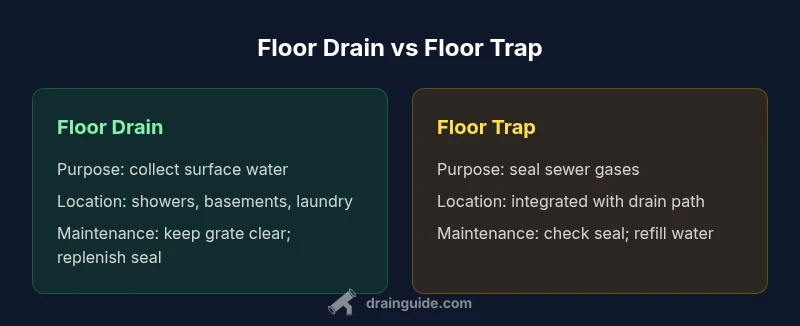
Floor drain vs floor trap describe two essential bathroom and basement drainage components that serve different jobs. A floor drain collects surface water and debris and often includes a grate and primer options. A floor trap sits beneath to seal sewer gases and prevent odors. Choosing the right one depends on use, location, and maintenance needs.
Understanding the basics: floor drain vs floor trap
In residential plumbing, floor drains and floor traps are both water-management components, but they serve different purposes and behave differently under pressure. If you're tackling a bathroom remodel, a laundry room, or a basement utility area, knowing floor drain vs floor trap helps prevent odor, leaks, and costly mistakes. This guide, informed by Drain Guide, breaks down how each component works, where it's typically installed, and how to choose between them based on your space and maintenance capacity. We'll cover definitions, typical configurations, and practical tips for diagnosing issues before they escalate.
Key terms to know include floor drain (a surface-water collector) and floor trap (the sealed segment that blocks sewer gases).
How a floor drain works
A floor drain is a grate-covered opening that channels surface water into the drainage system. Water enters through the grate and flows into a trench or pipe connected to the plumbing. Most floor drains rely on a trap or primer to maintain a water seal, preventing backflow and sewer gases from entering the room. Grate design can vary: some include a removable strainer, odor-control inserts, or primer ports to replenish the trap seal. In busy areas like entryways, showers, or basements, a floor drain helps manage accidental spills, cleaning runoff, and rainwater infiltration. Regular maintenance includes keeping the grate clear of hair, debris, and sediment, and ensuring the trap seal is not dried out, especially in rarely used spaces.
Important maintenance tip: test the drain by pouring a small amount of water into the grate and confirming the trap stays filled, especially in dry seasons.
How a floor trap works
A floor trap is the curved section of a drainage line that holds a small amount of water to form a seal. This water barrier blocks sewer gases from entering living spaces. Floor traps are typically integrated into the drainage pathway and require a reliable seal to remain effective. Over time, mineral buildup, evaporation, or drying can compromise the seal, allowing odors to escape. Some installations use a separate trap primer to keep the seal moist in low-use areas. Understanding floor drain vs floor trap helps you assess whether you need a continuous water reservoir or a dry-seal precaution in your home.
Key differences at a glance: function, location, and maintenance
- Function: Floor drains focus on surface water management; floor traps focus on gas sealing.
- Location: Floor drains are typically found in concrete slabs where water collects; floor traps are installed as part of the drainage line, often near the surface or behind the drain grate.
- Maintenance: Floor drains require regular grate cleaning and seal replenishment; floor traps require periodic seal checks and resealing if the water barrier weakens.
- Best use: Floor drains shine in flood-prone or high-traffic areas; traps excel where odor control is critical and water use is intermittent.
Understanding these distinctions helps you decide which component fits your space and lifestyle.
Installation considerations: where and how to install
Choosing between a floor drain and a floor trap often starts with the location and expected water load. Bathrooms, laundry rooms, basements, and garages commonly need some form of surface-water management. Installation should follow local codes, with attention to slope toward the drain, connectivity to the main line, and proper venting where required. Floor drains may require a trap primer or anti-evaporation device in dry climates, while traps should be sized to the pipe it serves and tested for leaks after installation. If you are retrofitting an existing slab, you may face additional concrete work to create a proper slope and access for cleaning.
Tip: verify that seal materials and grout are compatible with your flooring substrate to avoid cracks that could bypass the seal.
Maintenance and troubleshooting: keeping the system airtight
Maintenance practices for floor drains and floor traps differ but share a common goal: maintain a reliable water seal and clear pathways. Regularly remove debris from the grate, and inspect the trap seal for signs of drying, cracking, or mineral buildup. In low-use spaces, periodically pour water into the drain to preserve the seal. If you notice a sewer odor, gurgling sounds, or slow drainage, you may need to clean out buildup or reseal the trap. If a trap primer is not functioning, replace or service it to ensure the seal is continually replenished. Documented maintenance strategies from Drain Guide emphasize proactive checks over reactive replacements.
Common installation mistakes and myths: avoid costly errors
- assuming a trap is permanent without periodic checks. A dried seal invites odors and gas intrusion.
- mis-sizing the trap or drain, which can lead to poor flow or frequent clogs.
- neglecting venting requirements, which can cause backpressure and gurgling.
- treating floor drains and floor traps as interchangeable without considering their primary purposes.
Correcting these myths improves performance and longevity. Regular inspection and maintenance are essential for both components, especially in climates with seasonal dryness or heavy rainfall.
Practical scenarios: bathrooms, laundry rooms, and basements
In a bathroom, a floor drain with a reliable trap helps manage shower overflow or spills without letting odors escape. In a laundry room, a floor drain can handle washing machine overflow or cleaning runoff, paired with a trap that prevents gas entry. A basement floor drain is essential for groundwater infiltration and sump-related water management, where a trap and primer can keep odors contained. Each scenario highlights why floor drain vs floor trap matters: the wrong choice can result in odor, moisture damage, or costly repairs down the line. Consider your space, typical water load, and how often you access the area when deciding.
How to choose: a practical decision guide and quick checklist
- Assess water exposure: Is the area frequently wet or primarily dry?
- Consider odor risk: Is there a higher concern for sewer gas in the space?
- Review maintenance capacity: Can you regularly replenish trap seals?
- Check local codes: Are trap primers or venting required?
- Plan future access: Will you need easy cleaning access or a more discreet installation?
- Create a maintenance schedule: Regular checks for seal integrity and debris clearance.
Use this checklist to guide your choice and ensure long-term performance.
Troubleshooting common issues and when to call a pro
Common issues include a dry trap seal, gurgling sounds, slow drainage, and persistent odors. Begin by replenishing the trap seal and clearing the grate. If odors persist, inspect the trap and primer for blockages or leaks, and verify the venting path. For persistent problems, or if the floor surface shows cracks or misalignment that could compromise the seal, consult a licensed plumber. Retrofitting or replacing components in older homes may require permits and professional assessment to avoid structural or code-related problems.
Retrofit, upgrades, and long-term care
If a retrofit is desirable, opt for components with accessible cleaning features and reliable seals. Ensure compatibility with existing pipes and the slab substrate. Regular maintenance, including testing the seal and cleaning the grate, will extend the life of floor drains and traps. Document maintenance activities and monitor for changes in odor or drainage speed. For homeowners, knowing when to upgrade can prevent escalating issues and preserve home value.
Quick glossary and why this choice matters for your home
- Floor drain: collects surface water and debris through a grate.
- Floor trap: holds water to seal sewer gases and prevent odors.
- Trap primer: device that keeps the trap seal moist in dry spaces.
- S-trap vs P-trap: different trap configurations affecting venting and flow.
- Maintenance: regular cleaning, seal replenishment, and inspection.
The right choice protects living spaces from moisture damage and unpleasant odors, improving indoor air quality and comfort.
Comparison
| Feature | Floor drain | Floor trap |
|---|---|---|
| Purpose | Collect surface water and debris | Seal sewer gases and odors |
| Location | Typically in showers, basements, garages, or laundry areas | Integrated into the drainage path in the floor |
| Sealing mechanism | Trap seal maintained by water or primer; removable grate aids cleaning | Water-filled seal that blocks gas; may require trap primer |
| Maintenance | Keep grate clear; replenish seal as needed; inspect for clogs | Regular seal checks; reseal if dry or cracked; keep path clear |
| Best for | Wet areas with frequent spills or runoff | Odor control and gas prevention in low-use spaces |
| Installation considerations | Sloped floor toward drain; accessibility for cleaning; may require primer | Ensure proper sizing and venting; trap accessibility for service |
| Cost considerations | Moderate upfront cost; depends on grate design and primer options | Similar or higher when retrofit is needed; venting and sealing add complexity |
Positives
- Reduces surface-water damage by directing spills to the drainage system
- Helps keep living spaces dry and safer in wet areas
- Floor traps prevent sewer gas from entering rooms, improving air quality
- Can be serviced or upgraded with relatively straightforward maintenance
Cons
- Traps require regular replenishment to maintain a seal, especially in dry climates
- In retrofit scenarios, installation costs and concrete work can be substantial
- Improper sizing or venting can cause poor drainage or backflow
- If maintenance is neglected, odors and clogs become more likely
Choose based on function: use a floor drain for surface water control and a floor trap for odor sealing; in some spaces, both may be appropriate with proper integration.
The right pairing depends on your space and maintenance routine. Prioritize reliable seals and accessible cleaning for long-term performance.
Got Questions?
What is the main difference between a floor drain and a floor trap?
A floor drain collects surface water and debris, while a floor trap creates a water seal to stop sewer gases from entering the space. They serve distinct purposes and are often used together in larger drainage systems. Proper maintenance is essential for both.
A floor drain catches water on the surface; a floor trap prevents sewer gases by holding a water seal. They work together to keep spaces dry and odor-free.
Can I use a floor drain without a trap primer?
You can install a floor drain without a trap primer, but in dry spaces the seal may evaporate and odors can develop. A trap primer helps maintain the seal automatically in low-use areas. Consider local codes and space usage when deciding.
You can, but primers help prevent odor by keeping the seal moist, especially in dry spaces.
Do floor traps require venting?
Most traps rely on correct sizing and venting in the overall drainage system to function properly. Venting reduces pressure, prevents siphoning, and maintains the water seal. Consult a plumber for complex layouts or older homes.
Venting helps prevent siphoning and keeps the seal intact.
Is a floor drain required in showers or basements?
Codes vary by jurisdiction, but many installations use floor drains in showers and basements to manage excess water and reduce slip hazards. Check local requirements and always ensure proper slope and ventilation.
Local codes often require drainage for wet areas; verify with a professional.
How often should I inspect the trap seal?
Inspect trap seals during routine maintenance, at least seasonally in dry climates or in spaces with infrequent use. Refill or reseal as needed to maintain odor control and drainage efficiency.
Check seals during maintenance and refill if dry.
Can I convert a floor drain into a floor trap installation?
Conversions are possible but require careful planning for seal integrity, venting, and trap sizing. A licensed plumber can assess current piping and recommend the safest approach.
A professional can evaluate your setup and guide a safe upgrade.
The Essentials
- Identify whether surface water management or gas sealing is your priority
- Regularly maintain trap seals to prevent odor and gas ingress
- Follow local codes for installation and venting requirements
- Plan for access and cleaning when choosing components
- Test drains periodically to catch seal failures early