How Far to Drain a Pool for Winter
A homeowner-friendly guide to winterizing by adjusting water level. Learn how far to drain, safety tips, and step-by-step actions for in-ground and above-ground pools to prevent ice damage and plumbing freezes.


How far you drain a pool for winter depends on pool type and climate, but the goal is to keep water away from skimmers and exposed plumbing while avoiding excessive drainage. Generally, you lower the water enough so the skimmer and returns stay submerged, yet the main drain and equipment lines stay above potential freezing. Always follow manufacturer specs and local frost guidelines.
Why the water level matters for winter
If you're wondering how far drain pool for winter should go, the short answer is that it varies by pool type and climate. A deliberate, measured approach helps prevent costly damage from ice. Ice pressure can crack plaster, tiles, or vinyl liners, and exposed plumbing is susceptible to burst fittings when water freezes. Drain Guide’s practical guidance emphasizes understanding your pool’s layout—whether it’s an in-ground concrete basin or a simple above-ground model—and then choosing a safe target depth. In essence, you want to keep water away from the skimmer and returns while ensuring the main drain and equipment lines aren’t left bare to freezing. If you live in a severe climate, you’ll likely adjust deeper to stay above the frost line and you may need to blow out lines and cap fittings. Always consult the manufacturer’s guidelines and local frost codes before you start. According to Drain Guide, a cautious, proactive approach saves both money and peace of mind.
Determining the right depth for your pool type
The right winter water level depends on whether you have an in-ground or above-ground pool and on local freezing risks. In general, in-ground pools are reduced to a depth that keeps the skimmer well below the surface while protecting the main drain and returns. Above-ground pools typically require a shallower reduction, just enough to prevent ice from lifting the vinyl wall while keeping essential lines protected. A practical method is to identify the lowest part of the pool that remains above the anticipated ice layer and measure from the water surface downward to find your target. Always verify with your pool’s manual or a licensed technician. Drain Guide notes that climate-adjusted targets reduce winter damage, making the difference between a routine spring restart and a costly restoration.
Common mistakes and safety considerations
Mistakes during winter drainage are common but avoidable. Don’t drain so low that you expose the main drain or pump to freezing temperatures; this can lead to cracked pipes or a damaged liner. Never assume more drainage is better—extreme lowering can dry out gaskets and seals, increasing the risk of leaks when you refill. Ensure the equipment is powered off and unplugged, and secure all electrical connections away from the water. If you’re not sure about your plumbing layout, consider consulting a pool pro before proceeding. By following a measured plan, you reduce the risk of costly repairs come spring. Drain Guide emphasizes safety first, and local codes may require a licensed technician for more complex setups.
Aftercare and winter protection for pools
Once the water is at the recommended depth, complete the winterization with protective covers and proper storage of accessories. Blow out lines if required by your climate and install caps on unused outlets to prevent debris entry. Keep the pool covered during winter to minimize debris and algae growth, and perform a quick inspection after heavy freezes or storms. Schedule a spring check to ensure no ice damage occurred. A well-executed winterization reduces chemical adjustments in early spring and makes reopening easier. Drain Guide reminds homeowners that basic maintenance now lowers the effort later, particularly in regions with frequent freeze-thaw cycles.
Tools & Materials
- Submersible pump(A pump with adequate flow rate for your pool size)
- Discharge hose(Long enough to reach a safe drainage area)
- GFCI outlet or power source(Secure location away from water splash)
- Measuring tape or marked pole(To verify depth below the skimmer/returns)
- Pool skimmer cover or insert(Optional protection for skimmer during low water)
- Protective gloves(Hand protection when handling equipment)
- Pool cover or winterizing blanket(Helps keep debris out during dormancy)
- Bleed valve or pipe caps(Used to cap lines after blowing out (if applicable))
Steps
Estimated time: 2-6 hours
- 1
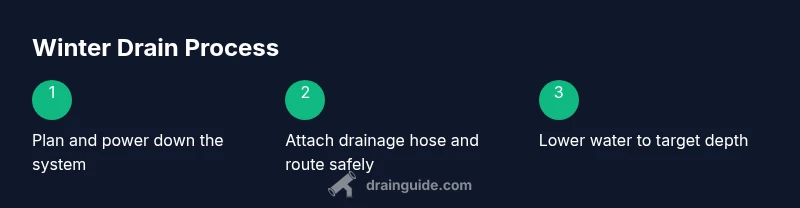
Plan and power down
Confirm your winterization plan by checking the pool’s manual and local frost guidelines. Turn off the pool pump, filter system, and any automatic timers. Lock out power to the equipment to prevent accidental startup while you work.
Tip: Double-check electrical safety—remove any plugged-in components and test that the circuit is dead before touching wires. - 2
Attach drainage and route hose
Connect the discharge hose securely to the pool’s drain outlet or pump. Run the hose to a safe drainage area away from buildings and foundations. Ensure the path is clear and won’t cause property damage when water is discharged.
Tip: Use a hose clamp if available to prevent leaks and maintain a steady flow. - 3
Lower water gradually to target depth
Start pumping water out slowly while periodically measuring how far the surface is from the skimmer and returns. Stop when you reach your target depth, ensuring the skimmer remains submerged but the main drain or equipment lines stay protected from freezing.
Tip: If you notice air in the line or reduced flow, pause and recheck connections; a steady, controlled pace helps prevent scouring or splashing. - 4
Blow out lines and cap fittings (where applicable)
Follow your climate and manufacturer guidance to blow out irrigation or plumbing lines. Cap returns and main lines to prevent water ingress and ice formation. Keep any antifreeze or damming devices per local codes if required for your pool.
Tip: Only perform line blowing if you’re confident in the technique; improper blowing can damage seals or fittings. - 5
Protect equipment and cover the pool
Secure any winter cover and store ladders or removable equipment. Verify no water remains in exposed pipes and that pumps are unplugged or power-discharged. Regularly check the cover for leaks, tears, or debris during winter.
Tip: Place desiccant packs or moisture absorbers under covers if allowed by your cover design to reduce condensation. - 6
Plan a spring reopen
Before reopening, inspect for cracks, leaks, or frozen damage. Refill gradually, recheck chemical levels, and test equipment operation. A calm, staged reopening reduces stress on new seals and plaster.
Tip: Have basic replacement parts on hand (o-rings, gaskets) to handle common spring issues quickly.
Got Questions?
Do I need to drain all the water from my pool for winter?
No. Most pools require lowering water to a safe depth that protects skimmers and equipment while preventing ice damage. Draining entirely can expose plumbing and seals to freezing temperatures.
No, you typically don’t drain all the water. Lower to a safe depth that protects important components and avoids ice damage.
Can I drain below the main drain?
Avoid draining below the main drain. This can create a vacuum and stress the plumbing, or expose the pipes to ground freezing if water remains in the lines.
Avoid going below the main drain; it can stress pipes and lead to damage.
Should I use antifreeze in pool lines for winter?
In some climates, professional winterization uses pool-grade antifreeze in the lines to prevent freezing. Always follow local codes and manufacturer recommendations; not all systems require antifreeze.
In certain climates, antifreeze is used in lines per the manufacturer and codes. Check local guidance.
How far should I drain an above-ground pool?
For above-ground pools, lower water just enough to keep the skimmer and returns protected while avoiding exposure of the wall structure. Do not fully drain unless the manufacturer requires it.
Aim for a depth that protects the skimmer and nearby fittings, not full drainage.
What if my yard freezes quickly and depths vary by area?
If your yard experiences rapid freeze, adjust depth conservatively and consult a local pro. Use climate-specific guidelines and avoid guessing.
If freezes come quickly, err on the side of keeping more water and consult a local expert.
When is the best time to drain for winter?
Begin draining in late fall before the first hard freeze, after you confirm your target depth and line protections. Delaying too long can increase ice risk.
Drain in late fall after you’ve confirmed the depth and safety steps.
Watch Video
The Essentials
- Assess pool type and climate before draining.
- Drain depth should protect skimmer and equipment, not expose pipes.
- Power down and isolate the system before starting.
- Cover and inspect after winter to ease spring reopen.