How Long Does Drainage Last? A Practical Lifespan Guide
Learn how long drainage systems last, what factors influence lifespan, and practical steps to extend life. This Drain Guide analysis covers materials, maintenance, signs of aging, and repair vs replacement considerations for homeowners.


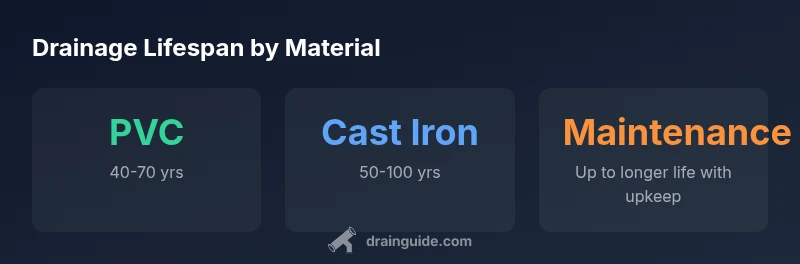
Drainage lifespan depends on materials, installation, soil, and maintenance. In most homes, a well-installed drainage system lasts several decades, with PVC pipes typical of 40–70 years and cast iron roughly 50–100 years under favorable conditions. Regular inspections, timely repairs, and proper seasonal maintenance can substantially extend life, according to Drain Guide analysis.
What 'how long does drainage last' means in practice
How long does drainage last in a typical residential system? The lifecycle refers to how long pipes, joints, traps, and connections maintain their ability to move wastewater without leaks or backups. Lifespan is not a fixed age; it reflects the health of the system under soil pressure, root intrusion, chemical exposure, and mechanical wear. A well-designed, properly installed system in moderate soil can operate for decades, while aggressive soils or poor maintenance shorten that window. For homeowners, the key question isn't a clock, but when preventive maintenance and proactive replacement should occur to avoid failures. Drain Guide notes that predicting an exact age is less important than understanding failure modes and planning around them.
In practical terms, how long does drainage last influences budgeting for inspections, potential repairs, and future replacements. A strategic plan—supported by regular checks and timely fixes—can delay significant failures and keep your home’s drainage functioning smoothly. This approach aligns with Drain Guide's philosophy: longevity comes from proactive care, not from chasing a single age.
Key factors that influence drainage lifespan
Several variables control how long drainage lasts before major failures occur. Material choice is foundational: different pipe materials have different wear characteristics and reaction to soil chemistry. Installation quality matters; even premium materials fail prematurely when joints aren't sealed or pipes are stressed during backfilling. Soil conditions, including moisture, acidity, and root activity, can accelerate corrosion or physical damage. Water pressure and flow rate influence wear and joint integrity, especially in aging homes with fluctuating pressure. Sediment buildup reduces cross-sectional area, increasing pressure on joints and causing leaks. Accessibility for maintenance—cleanouts, inspection ports, and easy-to-access transitions—makes timely interventions more likely. Finally, climate factors like freeze-thaw cycles and temperature extremes influence material fatigue, particularly for outdoor sections of the system.
Material-specific lifespans: PVC and cast iron
Understanding material-specific lifespans helps homeowners plan replacements. PVC (polyvinyl chloride) is corrosion-resistant and lightweight, commonly lasting about 40–70 years under typical residential conditions. Cast iron pipes are exceptionally durable in many soils, with lifespans roughly 50–100 years when joints are intact and soil acidity is not aggressive. Clay and ABS offer other options with their own pros and cons; clay can last many decades if installed properly, but is brittle and root-sensitive; ABS shares PVC's advantages with slightly different performance in certain temperatures. Maintenance practices, including cleanouts and camera inspections, help validate the remaining life and guide replacement timing.
Material choice should align with climate, soil, and homeowner budget. In many neighborhoods, a blend of materials is common, making regular inspections even more important to catch early signs of wear.
The role of maintenance in extending life
Proactive maintenance is the single best lever to extend drainage life. Establish a yearly inspection schedule with a licensed plumber who can run camera inspections to spot cracks, root intrusion, and misaligned joints. Keep cleanouts accessible and clear; remove debris near the entry points. Manage tree roots by trimming or installing barriers near exterior pipes, and consider root-control products only with advice from a pro. Avoid chemical drain cleaners; they can degrade materials over time and mask underlying problems. Flushing lines with water and a mild cleaning regimen prevents sediment buildup in traps and lower sections. Protect exterior pipes from freezing in cold climates by insulating or heating pipes and ensuring proper drainage away from foundations. Document each service and any observed issues; early signs of trouble often manifest in minor symptoms that escalate quickly.
Regular maintenance also extends life by preserving joint integrity and reducing the likelihood of root intrusion, which is a common cause of early failures. A simple schedule and a trusted pro can keep you ahead of problems.
Diagnosing aging drainage: signs and tests
Watch for signs that aging drainage is impacting performance. Slow draining in multiple fixtures, frequent clogs, gurgling sounds, or sewage odors indicate hidden problems. External wet spots or basement backups can signal leaks. Tests include dye testing to trace leaks, hydrostatic pressure tests for pipe integrity, and internal video inspection to assess joints and roots. A periodic camera survey provides a concrete baseline for planning replacement. If blockages are recurrent, if wastewater backs up in more than one fixture, or if you see cracked pipes, it is often time to consult a professional about a replacement plan.
Timely diagnosis helps you choose the most cost-effective path, whether a targeted repair or full system replacement.
Repair vs replace: a decision framework
Use a structured decision approach: estimate remaining life, weigh replacement costs, consider the impact of partial repairs vs total replacement, and factor in future home resale value. If more than 30–40% of the system shows age-related damage or if major joints are failing, replacement may be more cost-effective than ongoing repairs. For aging blocks, trenchless options can minimize disruption. Always obtain quotes from multiple licensed plumbers and ask about warranty coverage and expected lifespan after replacement. Consider the impact on property value and the potential for future renovations that could affect drainage access. A well-timed replacement can prevent cascading failures that would otherwise disrupt multiple fixtures.
DIY tips, professional help, and budgeting for longevity
DIY maintenance tasks that homeowners can safely perform include regular cleaning of trap-access points, clearing minor surface debris, and checking cleanouts for debris or blockages. For more complex tasks like pipe replacements, root barriers, or camera inspections, hire a licensed plumber. Budgeting for longevity means planning for a major replacement once the system approaches the end of its expected life and setting aside funds for potential repairs and upgrades. Consider financing or home improvement loans if needed. Keep records of all services and upgrades to guide future decisions and improve resale value.
Common drainage pipe materials and approximate lifespans
| Material | Typical Lifespan | Notes |
|---|---|---|
| PVC | 40-70 years | Lightweight, corrosion-resistant |
| Cast iron | 50-100 years | Durable but heavy; soil conditions matter |
| Clay | 50-100 years | Brittle; good in stable soils if installed properly |
| ABS | 40-75 years | Plastic alternative; good impact resistance |
Got Questions?
How long does drainage last in modern homes?
Lifespan varies by material and maintenance, typically decades. PVC: 40-70 years; Cast iron: 50-100 years; keeping up with inspections and prompt repairs can extend life.
Drainage lasts for decades and depends on material and upkeep; regular inspections help you catch issues early.
What signs indicate aging drainage?
Look for slow drains across fixtures, frequent clogs, gurgling sounds, and odors. External wet spots or basement backups suggest leaks.
If you notice slow drains, clogs, or odors, aging drainage is a likely culprit.
Should I repair or replace aging drainage pipes?
Assess the extent of damage, age of the system, and cost. If multiple sections show wear or joints fail, replacement may be more cost-effective long-term.
Usually, replace when many sections show wear; otherwise, targeted repairs can buy time.
Does root intrusion affect lifespan?
Yes. Roots can crack pipes and accelerate leaks. Addressing roots early with barriers or professional remediation helps preserve life.
Roots can seriously damage pipes; controlling them early protects lifespan.
When is trenchless replacement recommended?
Trenchless options are ideal to minimize disruption in aging urban lots or where landscaping is a concern, but not always suitable for extensive damage.
Trenchless methods work well to reduce disruption when replacement is needed.
“Longevity in drainage systems is driven by material choice and proactive maintenance; aging components don't fail overnight if inspected regularly.”
The Essentials
- Know material lifespans to plan replacements early
- Schedule regular inspections to detect aging early
- Maintain cleanouts and protect pipes from roots and freezing
- Choose professional assessments for accurate life expectancy