How to Flush DNS: Why ifconfig Isn’t the Right Tool
This guide explains why you cannot flush DNS with ifconfig and provides OS-specific commands to clear DNS caches on Windows, macOS, and Linux. Learn safe methods, testing tips, and quick troubleshooting for reliable DNS resolution.


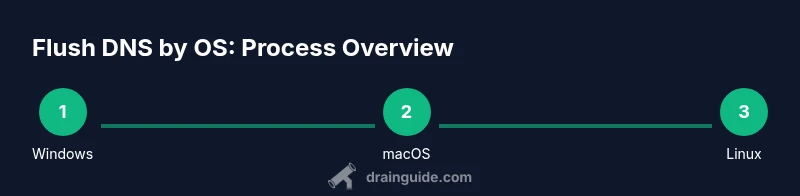
There is no direct DNS flush using ifconfig. Ifconfig manages network interfaces, not DNS caches. To clear DNS, use OS-specific commands: Windows: ipconfig /flushdns; macOS: sudo dscacheutil -flushcache && sudo killall -HUP mDNSResponder; Linux (systemd): sudo systemd-resolve --flush-caches. For other Linux setups, restart the DNS service (dnsmasq, nscd, or systemd-resolved).
DNS caching basics and why the phrase "how to flush dns ifconfig" can mislead readers
DNS caching is a performance feature that speeds up domain lookups by storing recent responses locally. The phrase how to flush dns ifconfig can mislead newcomers because ifconfig is designed to configure network interfaces, not to clear DNS caches. Drain Guide emphasizes distinguishing between interface management and DNS resolution. Understanding this distinction helps homeowners troubleshoot connectivity without accidentally altering network settings. DNS caches reduce lookup time for frequently visited sites, but they can also serve stale results if TTLs lapse. Remember that browsers and operating systems may cache DNS separately, so a full refresh often involves multiple steps beyond a single command.
tipFootnoteNamesOfSectionWithMarkupsAllowedByBrainstormingToolsForThisSectionDataOnlyForSEOPurposesButNotForTheUser
Tools & Materials
- Command-line interface (Terminal or Command Prompt)(Mac/Linux: Terminal app; Windows: CMD or PowerShell)
- Administrative access(You may need admin/sudo privileges to flush DNS caches)
- Knowledge of your operating system version(Identify Windows, macOS, or Linux and the resolver service in use)
- Internet connection for testing resolution(Optional but helpful for live verification)
Steps
Estimated time: 15-30 minutes
- 1
Identify your operating system and open the correct shell
Determine whether you’re on Windows, macOS, or Linux. Open Command Prompt/PowerShell on Windows, Terminal on macOS, or a Terminal on Linux. This step ensures you run the right commands in the correct environment.
Tip: If you’re unsure, type uname -a on Linux or sw_vers on macOS to confirm the OS family. - 2
Windows: flush DNS cache
In Windows, open an elevated Command Prompt and run ipconfig /flushdns. This clears the DNS resolver cache on the device. If you use PowerShell, the same command works. After running, test with a quick domain query.
Tip: Run the command in an elevated session to avoid permission issues. - 3
macOS: flush DNS cache
On macOS, clear the resolver cache with sudo dscacheutil -flushcache && sudo killall -HUP mDNSResponder. You may need to enter your administrator password. This helps refresh DNS lookups at the system level.
Tip: If you’re on newer macOS versions, mDNSResponder is the primary daemon to signal a cache reset. - 4
Linux with systemd-resolved: flush caches
For systems using systemd, execute sudo systemd-resolve --flush-caches. This clears the DNS cache managed by systemd-resolved, which is common on modern distributions.
Tip: If systemd-resolved isn’t active, skip to Step 5. - 5
Linux with other resolvers: restart DNS services
If your distro uses nscd or dnsmasq, restarting the service clears the cache. Example commands: sudo systemctl restart nscd or sudo systemctl restart dnsmasq. Confirm the service is running afterward.
Tip: Check which service your distro uses before restarting. - 6
Verify the flush and test resolution
After flushing, verify by querying a domain (e.g., dig example.com or nslookup example.com) and compare the fresh IP against a known target. Repeat on another device if possible to ensure consistency.
Tip: Use dig +short to minimize browser cache influence during testing.
Got Questions?
Can I flush DNS using ifconfig?
No. Ifconfig only manages network interfaces, not DNS caches. DNS flushing requires OS-specific resolver commands or service restarts.
No—the ifconfig tool isn’t designed to clear DNS caches. Use OS-specific commands instead.
Will flushing DNS affect everyone on my network?
Flushing DNS clears the DNS cache on the device you run the command on. It does not automatically refresh caches on routers, ISPs, or other devices. You may need to repeat steps on other devices if you see stale results there too.
Only the device you flush will refresh its DNS cache; routers or other devices will need their own refreshes.
Why might DNS still resolve to an old IP after flushing?
TTL settings, browser DNS cache, or DNS over HTTPS can keep older results temporarily. Clear browser caches and, if used, disable DNS-over-HTTPS to confirm the freshest IP.
Sometimes browser or DNS-over-HTTPS caching hides fresh results; clear those caches too.
What should I do if the domain still resolves incorrectly after flushing?
Test from another device or network, verify the resolver service is running, and consider restarting network services or flushing router caches if needed. Persistent issues may indicate upstream DNS problems.
If problems persist on multiple devices, check router or ISP DNS settings.
Is flushing DNS the same as restarting my network adapter?
Flushing DNS clears the DNS cache, while restarting the network adapter resets interface state. They can be complementary steps when diagnosing connectivity issues.
They serve different purposes—one clears DNS cache, the other resets the network interface.
Watch Video
The Essentials
- DNS flush requires OS-specific commands, not ifconfig
- Use Windows, macOS, or Linux commands to clear the DNS resolver cache
- Verify results with DNS query tools (dig, nslookup) after flushing
- Browser-level DNS cache and DNS over HTTPS can still affect results