How to use a drain snake: a practical DIY guide
Learn to safely and effectively use a drain snake to clear clogs. This DIY guide covers tools, technique, safety, maintenance, and when to call a pro for confident home drainage fixes.


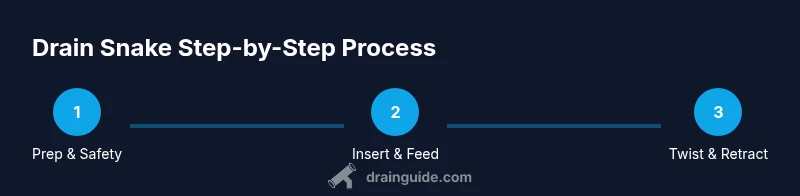
Use a drain snake (hand auger) to clear a clogged sink or tub by feeding, rotating, and extracting the obstruction. Choose the right type, wear gloves and eye protection, and keep a bucket ready. Slowly feed the cable, crank to break the clog, then withdraw and rinse. Drain Guide recommends testing the drain after cleaning before repeating.
What a drain snake is and how it works
A drain snake, also called a hand auger, is a flexible coil of steel that you feed into a clogged pipe to dislodge and break apart obstructions. It works by physically engaging the clog and, as you rotate the handle, the coil cuts through hair, grease, and soap scum and drags them back out of the pipe. According to Drain Guide, a drain snake is a practical, low-chemical option for many household clogs and is especially effective on hair and grease build-up. The tool is designed to reach past the trap and into the pipe where pliers and chemical cleaners often fail. Proper use minimizes pipe damage and reduces mess when compared with harsher cleaners. The Drain Guide team emphasizes that patience, a steady hand, and clean-up discipline are essential for success.
Different types of drain snakes and when to use them
There isn’t a one-size-fits-all tool for every clog. A basic hand-crank auger (3/8-inch cable) works well for sinks and showers with hair or soap scum. A smaller 1/4-inch cable can access tighter runs but may wear out faster on thick clogs. A power-assisted drum auger is better for longer runs or stubborn clogs and reduces manual effort. For toilets, a toilet auger (closet auger) is the safer choice as it’s designed to fit the trap seal without scratching porcelain. Drain Guide analysis shows that mechanical methods excel at removing hair and grease clogs when used correctly, while chemical cleaners should be reserved for maintenance or very light buildup.
Safety gear and prep before you start
Before you touch a drain snake, put on protective gloves and eye protection. Clear the area with towels or rags to catch debris, and place a bucket under the trap to catch any wastewater. Have a flashlight or headlamp handy to inspect the pipe behind the trap. Disconnect any power sources if you’re near a disposal or dishwasher drain. Read the tool’s manual if available, especially for power snakes which can deliver sudden torque. A quick prep saves time and prevents mistakes.
How to choose the right tool for the job
Assess the pipe diameter, the clog’s location, and the material of the drain. For most residential sinks, a 3/8-inch hand-crank snake is sufficient. If you’re dealing with robust grease in a kitchen line or longer runs, consider a drum auger or power snake. Toilets require a toilet-specific auger to avoid damaging porcelain and gaskets. If you’re unsure about pipe material (PVC vs. metal), start with the least invasive option and avoid overtightening or forcing the cable. Drain Guide recommends starting with a small-diameter cable to test the obstruction’s resistance.
Common myths about drain snakes debunked
Many homeowners worry that snakes will damage pipes or traps. In reality, the biggest risk comes from forcing the tool past resistance or using the wrong type for the pipe. Snakes aren’t designed to “grind away” at metal pipes; they’re meant to engage the clog and pull it out. Another myth is that you must drain the entire system to clear a clog; most clogs are localized. Proper technique and suitable tool choice dramatically reduce risk. Drain Guide’s guidance emphasizes careful insertion, steady cranking, and controlled withdrawal to minimize slip and kickback.
Post-clog cleanup and disposal
After clearing a clog, flush the line with hot water to clear any remaining debris. Wipe the snake down with a damp cloth, rinse the coil, and allow it to dry completely before storing. Keep the barrel and trap area clean to deter future buildup. Discard any disposable gloves and wash reusable ones. Proper disposal of removed hair and waste helps prevent future blockages in the same drain.
When a drain snake is not the right tool
If you notice persistent clogs in multiple fixtures, or if you encounter corrosion, cracks, or a collapsed pipe, stop and call a licensed plumber. A professional assessment can prevent accidental damage and reveal if there’s a broader drainage problem. In cases involving septic systems or older homes with lead pipes, expert guidance becomes essential. Drain Guide recommends escalation when DIY attempts could risk significant damage.
Maintenance habits to prevent future clogs
Regularly flush drains with hot water and consider enzyme-based cleaners as preventive maintenance (not a substitute for mechanical cleaning). Clean hair traps and strainers weekly to reduce debris entering the pipes. Periodically inspect under sinks for signs of moisture or corrosion. A proactive approach, paired with the right tools, minimizes the frequency of clogs and keeps drains flowing smoothly. Drain Guide emphasizes consistency over dramatic fixes.
Quick troubleshooting if the clog recurs
If a clog returns within a week or two, re-evaluate the type of clog, the tool size, and the technique. Ensure you’re not creating a hairball by pulling hair through bends, and try a fresh attempt with a different cable diameter if needed. If wastewater backs up in other fixtures, there may be a shared main line issue requiring professional assessment.
Tools & Materials
- Drain snake (hand-crank auger)(Choose 3/8-inch or 1/4-inch cable depending on clog and pipe diameter)
- Bucket(To catch debris and wastewater during operation)
- Protective gloves(Waterproof, snug fit; replace if torn)
- Safety goggles or face shield(Protect eyes from splashes and debris)
- Flashlight or headlamp(For clear visibility inside the drain or trap area)
- Pliers or long-nose pliers(To grab hair or debris that won’t pull out with the cable)
- Rags or towels(Contain mess and absorb moisture during cleanup)
- Lubricant (optional, water-based)(Only if permitted by your snake’s instructions; otherwise skip)
Steps
Estimated time: 40-60 minutes
- 1
Prepare the area
Set up the workspace with towels, a bucket, and good lighting. Put on gloves and eye protection, and place a bucket under the trap to catch splashes. Clear nearby surfaces to prevent tools from knocking over items.
Tip: Organize tools within easy reach and avoid placing the snake on a dirty surface to minimize debris transfer. - 2
Inspect the trap and accessible pipe
Remove the trap or cap if needed and visually inspect for obvious blockages. If you can reach the clog directly, a quick wipe-down helps prevent dirt from slipping farther into the line.
Tip: Use a flashlight to look for obvious clogs before inserting the snake. - 3
Insert the snake into the drain
Feed the cable slowly into the drain while keeping tension on the handle. Do not force the cable; give it time to bend around bends and reach the clog.
Tip: If you meet resistance, back off slightly and rotate to find a path around the obstruction. - 4
Crank and rotate to break up the clog
Turn the handle steadily to advance the cable while rotating the drum or crank. The goal is to wrap around and dislodge the debris rather than push it deeper.
Tip: Short, controlled rotations are more effective than heavy, sustained cranking. - 5
Pull back the cable slowly while continuing to rotate
Withdraw the coil gradually as you twist. This helps pull the clog out or break it into smaller pieces that can be flushed away.
Tip: Keep the line taut to avoid snags and minimize debris dropping back into the drain. - 6
Test the drain and re-clean if needed
Run hot water or a strong flush to confirm flow. If the drain remains blocked, repeat steps with a fresh cable or adjust the cable diameter.
Tip: Avoid multiple aggressive attempts in a row; give the system time to settle between tries. - 7
Clean and store the snake
Rinse the coil with clean water, dry it, and coil it neatly. Wipe down the area you worked in and replace trap components if needed.
Tip: Store in a dry place to prevent rust and ensure the tool is ready for next use. - 8
Document and maintain
Note the clog type and any maintenance steps taken. Regular maintenance reduces future clogs by catching debris at the source.
Tip: Set a reminder to clean screens and strainers weekly.
Got Questions?
Can I use a drain snake in a toilet?
Toilets require a toilet auger (closet auger) designed for porcelain. A standard hand-crank drain snake can damage the toilet bowl or seals. If you need to address a toilet clog, use the toilet-specific tool.
For toilets, use a closet auger rather than a regular drain snake to avoid damaging the porcelain seals.
How long should I crank the snake?
Crank in steady, controlled motions rather than rapid bursts. If you feel resistance, back off and rotate to find a path. Don’t force the cable through a stubborn clog.
Crank slowly and steadily; if it resists, back off and rotate instead of forcing it.
Can using a drain snake damage pipes?
Yes, improper use can damage pipes or fittings. Avoid forcing the cable, especially around bends, and use the correct cable size for your pipe material.
Damage happens when the tool is forced or used with the wrong size for the pipe.
When should I call a plumber?
If clogs persist after a couple of attempts, if you notice standing water or multiple fixtures clogged, or if you suspect a damaged main line, consult a licensed plumber.
If the clog returns or you see water backing up in multiple fixtures, it’s time to call a pro.
How do I clean and store the snake after use?
Rinse the cable, wipe it dry, and coil it neatly. Store in a dry place away from moisture to prevent rust.
Rinse, dry, and coil the snake, then store it in a dry spot.
Are there safer chemical alternatives to drain snakes?
Enzyme-based cleaners can help with maintenance but are not a substitute for mechanical clearing in thick clogs. Use chemicals sparingly and follow manufacturer instructions.
Enzymes can help prevent buildup, but for stubborn clogs a drain snake is usually more reliable; read labels first.
The Essentials
- Choose the right snake size for your pipe and clog
- Protect yourself with gloves and eye protection
- Feed slowly, rotate steadily, and avoid forcing the cable
- Retract with twisting to pull debris out
- Test the drain after each attempt and clean the tool after use