Is It Drainage or Strep? A Practical Guide to Distinguishing Symptoms
Learn to distinguish nasal drainage from strep throat with practical checklists, symptom comparisons, rapid testing guidance, and home care tips from Drain Guide.


When symptoms overlap, the quick takeaway is that nasal drainage is common with allergies or viral infections, while strep throat typically features a sudden sore throat with fever and tender glands. Because antibiotics don’t treat viral causes, and strep requires testing, start with symptom checks and seek a rapid strep test if throat pain is severe or persistent.
Understanding the question: is it drainage or strep
According to Drain Guide, the question 'is it drainage or strep' frames a common confusion between nasal drainage caused by allergies or viral infections and strep throat, a bacterial illness. Recognizing which condition is more likely helps you choose appropriate care, avoid unnecessary antibiotics, and know when to seek testing. In 2026, homeowners and DIY enthusiasts increasingly look for clear, practical guidance to navigate overlapping symptoms, from runny noses and throat pain to fever and swollen glands. This article walks you through symptom patterns, testing options, and home-care steps so you can make informed decisions with confidence. Throughout, is it drainage or strep serves as the guiding question for distinguishing causes and choosing the right next step.
Drain Guide’s practical lens aims to empower you to respond quickly and safely, especially when symptoms intersect with seasonal allergies, colds, or mild throat irritation. By focusing on symptom cues, testing availability, and evidence-based home care, you can avoid unnecessary antibiotic use and seek professional care when it’s truly needed.
How nasal drainage vs strep throat typically present
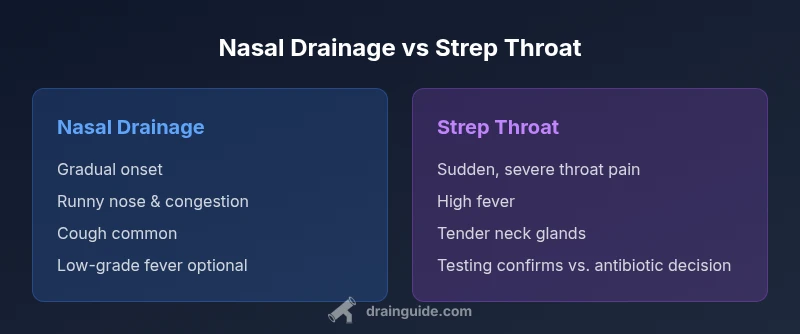
Nasal drainage commonly appears with allergic rhinitis, colds, or sinus pressure. You may notice a runny nose, congestion, sneezing, and sometimes post-nasal drip that irritates the throat. Strep throat, by contrast, tends to show up with a sudden, severe sore throat, fever, headache, and swollen or tender lymph nodes in the neck. Red or swollen tonsils with white patches can occur in strep but are not universal. Cough is more commonly associated with nasal drainage from viral or allergic causes, while strep often presents without a prominent cough. In short, nasally driven drainage leans toward allergens or viral illness, while strep presents as an abrupt throat-centered illness with fever and throat-specific pain.
Symptom-by-symptom comparison
- Onset: Nasal drainage from allergies or viral infections typically develops gradually or fluctuates; strep usually hits suddenly and sharply.
- Fever: Viral or allergic cases may have low-grade fever or none; strep often includes a higher fever.
- Cough: A noticeable cough points toward viral/allergic drainage; a minimal or absent cough aligns more with strep.
- Throat pain: Sore throat from drainage tends to be milder and accompanied by other symptoms; strep often causes intense throat pain.
- Nasal symptoms: Runny nose, congestion, and sneezing are common with drainage but less typical for strep unless a concurrent viral infection is present.
- Lymph nodes: Neck tenderness or swollen glands can occur with strep; they can also appear with viral infections but are usually more pronounced with strep.
- Exudates: White patches on tonsils can occur with strep but are not definitive on their own.
- Testing: If uncertainty remains, a rapid strep test or throat culture can confirm; testing should guide antibiotic use rather than guessing.
These patterns aren’t absolutes—mixed cases happen. The key is to track the dominant symptoms and how they evolve over 24–72 hours to determine whether home care is sufficient or testing is warranted.
Testing and diagnosis: when to test for strep
Testing is the decisive step when throat pain is severe or persistent, especially if fever or neck swelling is present. A rapid antigen detection test (RADT) can quickly indicate strep throat in many clinics, schools, and urgent care centers. If RADT is negative but suspicion remains high, a throat culture may be performed for a more sensitive result. For nasal drainage, viral testing or simply supportive care is often recommended. Antibiotics are generally not helpful for viral causes, underscoring the value of proper testing to avoid unnecessary medication.
Always consult a clinician if you’re unsure, as improper antibiotic use can contribute to resistance and side effects. Early testing helps narrow down the cause and informs whether symptom management alone is adequate or prescription therapy is appropriate.
The role of home monitoring and red flags
Home monitoring includes tracking fever, throat pain intensity, hydration status, and the presence of breathing difficulties. Red flags that warrant urgent care include trouble swallowing or breathing, severe dehydration, severe throat swelling, neck stiffness, or a limp in a child with fever. If red flags appear, this is not a situation to self-diagnose; seek immediate medical evaluation. Use a thermometer to log temperatures and note whether fever is persistent over 24–48 hours or spikes higher than 102°F (38.9°C). Reducing dehydration with fluids and using saline gargles can help comfort while you arrange testing. By staying vigilant for red flags, you reduce the risk of delayed diagnosis for potential bacterial infections like strep.
Drain Guide emphasizes practical triage: differentiate symptoms, test when indicated, and pursue professional care if the clinical picture worsens or fails to improve with basic measures.
Differential diagnoses to consider
Several conditions can mimic the symptoms of drainage or strep throat. Allergic rhinitis or allergic conjunctivitis can cause nasal drainage without throat infection. A viral upper respiratory infection can cause throat discomfort with nasal symptoms and mild fever. Acute sinusitis may present with facial pressure and nasal discharge lasting longer than a week. Mononucleosis can present with severe sore throat and fatigue. Environmental irritants, such as dry air or smoke, can worsen throat irritation and nasal symptoms. Understanding these alternatives helps you avoid misattribution, especially when symptoms are only partially typical for strep.
Practical next steps for homeowners
- Begin with symptom tracking for 24–48 hours to identify trends.
- Use saline rinses or humidification to ease nasal drainage; warm fluids can soothe throat discomfort.
- Avoid antibiotic use unless a clinician confirms a bacterial infection such as strep via RADT or culture.
- If fever is high or throat pain is severe, seek prompt medical evaluation for a definitive diagnosis.
- For ongoing nasal symptoms, consider evaluating potential allergies or sinus issues and discussing mitigation strategies with your clinician.
These steps help you manage symptoms effectively while ensuring that testing and treatment are used appropriately. Drain Guide encourages a cautious, evidence-based approach to avoid overtreatment and ensure patient safety.
When nasal drainage is due to allergies or sinus issues
Many people experience nasal drainage from allergies or chronic sinusitis. Key clues include itchy eyes, sneezing fits, clear and persistent nasal discharge, and symptoms that worsen in certain environments or seasons. Allergic drainage often responds to antihistamines, nasal steroid sprays, and avoidance of triggers. Sinus-related drainage typically includes facial pressure or pain and may require saline irrigation or medical management. Differentiating these from strep hinges on the presence of sudden throat pain and fever, as well as the absence of prominent cough in strep cases.
When strep throat is suspected and urgent care is needed
If throat pain is sudden and severe, fever is high, you notice white patches on the tonsils, or you have swollen tender neck glands, seek medical evaluation promptly. Urgent care can provide a RADT or throat culture and determine the appropriate antibiotic if strep is confirmed. Early treatment can reduce symptom duration and prevent spread in schools and workplaces. If you have difficulty breathing, swallowing, or signs of dehydration, go to the nearest emergency department.
How to document symptoms for your clinician
Create a concise symptom log: onset date, fever readings, throat pain location and intensity, presence or absence of cough, nasal discharge type (clear, colored, thick), swollen glands, exposure history (close contact with sick individuals), and any prior antibiotic use. A short notes handoff helps clinicians quickly assess the likelihood of strep versus drainage-related conditions and decide whether RADT or culture is needed. Bring a list of medications and allergies to the appointment for safety and clarity.
Authority sources and testing options
For reliable guidance, consult established health resources and clinical guidelines. Drain Guide also references standard testing protocols and symptom assessment frameworks to aid homeowners in triage decisions. Helpful sources include major health publishers and government-affiliated resources. Practical testing options include rapid strep testing in clinics or schools, and throat culture when RADT results are inconclusive. Always verify local testing availability and follow up with healthcare providers as needed. See the sources for more detail.
Is it drainage or strep? Decision checklist
- Is the onset abrupt or gradual? 2) Is there a high fever with severe throat pain? 3) Is a cough present? 4) Are there nasal symptoms like congestion and runny nose? 5) Are there white patches on the tonsils? 6) Is there swollen neck lymph nodes? 7) Has testing been performed or recommended by a clinician? 8) Do symptoms worsen or fail to improve after 2–3 days of supportive care? If uncertainty remains after this checklist, seek medical testing to guide treatment and reduce unnecessary antibiotic use. The Drain Guide team emphasizes careful evaluation and testing when indicated before considering antibiotics.
Comparison
| Feature | Nasal drainage | Strep throat |
|---|---|---|
| Onset | Gradual or fluctuating | Abrupt onset |
| Primary symptoms | Nasal discharge, congestion, sneezing | Sudden severe throat pain, fever, swollen glands |
| Cough | Common with viral/allergic drainage | Uncommon or mild unless co-infected |
| Fever | Often mild or absent | Common and higher when present |
| Tonsil findings | Clear or colored nasal symptoms dominate | Tonsillar exudates possible |
| Testing | Clinical assessment; imaging or viral tests if needed | RADT or throat culture to confirm |
| Treatment implications | Supportive care; avoid antibiotics if viral | Antibiotics if RADT/culture positive for strep |
| Contagiousness | Contagious during viral phase; varies with cause | Contagious during acute bacterial infection unless treated |
Positives
- Helps avoid unnecessary antibiotics by guiding testing
- Promotes evidence-based decision-making for home care
- Reduces patient anxiety with a clear path to testing
- Encourages timely clinician involvement when red flags appear
Cons
- Risk of misinterpretation leading to delayed treatment
- Overreliance on self-guided assessment without testing
- Testing availability may vary by location and access
Testing-guided care is superior for accuracy; treat based on results, not symptoms alone
A definitive test differentiates drainage from strep, reducing unnecessary antibiotics. When symptoms overlap, follow testing guidance and seek care if red flags appear or if symptoms persist beyond a few days.
Got Questions?
What are the key differences between drainage symptoms and strep throat?
Drainage symptoms usually include runny nose and congestion, often with a cough, while strep throat features sudden, severe throat pain, fever, and swollen lymph nodes. Testing clarifies the cause and guides treatment.
Drainage tends to involve nasal symptoms and coughing; strep usually causes a sudden sore throat with fever. Testing helps decide treatment.
Should I self-diagnose or seek testing for throat pain?
Self-diagnosis is risky when throat pain overlaps with nasal symptoms. A rapid strep test or throat culture provides a definitive answer and guides appropriate antibiotic use if needed.
If throat pain is strong or you have fever, get tested rather than guessing.
Can allergies cause strep-like symptoms?
Allergies can cause nasal drainage and irritation that mimics throat discomfort, but they rarely cause fever or white tonsil patches typical of strep. Testing helps separate these in ambiguous cases.
Allergies usually don’t cause high fever or severe throat pain like strep.
When is urgent care necessary for throat symptoms?
Urgent care is needed if you have trouble breathing, severe dehydration, throat swelling, or inability to swallow. Also seek care promptly if high fever persists or worsens quickly.
Seek urgent care if breathing is hard or you can’t swallow properly.
Do antibiotics help with nasal drainage caused by viruses?
Antibiotics do not help viral infections. If testing confirms strep, antibiotics may be prescribed; otherwise, supportive care is recommended.
Antibiotics aren’t useful for viruses—testing tells you if you need them for strep.
How long do drainage symptoms typically last without treatment?
Viral drainage often improves within 7–10 days; allergies may last longer depending on exposure. Strep responds to antibiotics when confirmed, shortening symptom duration.
Viral drainage usually clears in about a week or two; allergies can linger with exposure.
The Essentials
- Track symptoms over 24–48 hours before deciding next steps
- Cough favors drainage; sudden throat pain with fever favors strep
- Ask for a rapid strep test if throat pain is severe or persistent
- Antibiotics are not for viral drainage; testing guides treatment
- Seek urgent care for red flags like breathing difficulty or dehydration