JP vs Blake Drain: A Practical Homeowner Comparison
A detailed, objective comparison of JP drain and Blake drain for homeowners. Learn how durability, installation, warranty, and cost influence your choice in jp vs blake drain.


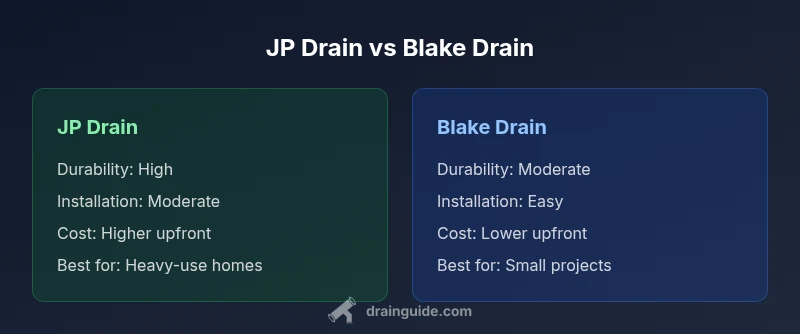
When evaluating jp vs blake drain, the choice hinges on durability, installation, and cost. JP drain emphasizes heavy-duty materials and longevity, while Blake drain prioritizes ease of install and value. For most homeowners, JP drain suits high-use kitchens or baths, whereas Blake drain works well for simple, budget-friendly projects. Consider local support and warranty length.
jp vs blake drain: Context and Framework
In the world of residential drainage hardware, the jp vs blake drain decision often comes down to how you value durability versus ease of installation. This article examines two representative approaches—JP drain and Blake drain—to help homeowners make an informed choice. We look at construction quality, compatibility with standard plumbing, maintenance requirements, and long-term costs. Throughout, the jp vs blake drain comparison is used to illustrate typical trade-offs without relying on brand-specific marketing. Drain Guide’s analysis highlights how these trade-offs apply to real homes and common scenarios, so you can choose based on your priorities rather than marketing claims.
Key Evaluation Criteria
To compare jp vs blake drain effectively, focus on these criteria:
- Durability and materials: Will the drain resist corrosion and daily wear over many years?
- Installation ease: How much plumbing knowledge, tools, and time are required?
- Maintenance: How easy is cleaning and seal replacement?
- Cost and value: What is the upfront cost relative to expected lifespan?
- Warranty and support: How long does coverage last and how responsive is customer service?
- Compatibility: Does it fit common pipe sizes and trap configurations in typical homes?
- Environmental and safety considerations: Are there safer materials and fewer fumes during installation?
- Availability and replacement parts: Can you source parts easily if you need them later?
By weighing these factors, homeowners can assess which option aligns with their project, space, and budget. The jp vs blake drain framework is designed to be practical, not promotional, and assumes typical kitchen and bathroom use.
Build Quality and Materials
JP drain is often associated with heavier-duty construction, using corrosion-resistant metals and reinforced seals designed for long-term reliability in high-use environments. Blake drain tends to emphasize cost efficiency and ease of manufacture, which can translate to lighter materials or simpler components. When evaluating build quality, compare the following aspects directly:
- Material composition: stainless steel, coated metals, and durable plastics.
- Seal design and gaskets: presence of multi-layer seals that resist degradation.
- Threading and fittings: compatibility with common pipe sizes to minimize adapters.
For most homes, JP drain’s materials may offer superior longevity, especially in frequently used sinks or laundry setups, but Blake drain can still perform well in less demanding installations.
Installation Process and Tools
The jp vs blake drain decision often hinges on installation complexity. Blake drain designs frequently advertise easier installation with fewer specialty tools, which is appealing to DIYers or for projects in tight spaces. JP drain installations may require more precise alignment and higher quality sealing and may benefit from basic plumbing experience. Consider:
- Access to space under the sink or in the cabinet.
- Availability of common tools like adjustable wrenches, thread seal tape, and plumbing lubricant.
- Ability to test for leaks after installation with water pressure checks.
- Whether you need to remove or modify trap arms, which can add time.
In many cases, Blake drain is favorable for quick swaps or small upgrades, while JP drain suits future-proofing for heavier use.
Durability and Lifespan Expectations
Durability expectations differ by design intent. JP drain materials generally aim for long-term resilience against corrosion, mineral buildup, and mechanical stress. Blake drain materials often balance cost with functional lifespan, which can be entirely adequate for standard household use but may not match the endurance of premium JP variants in high-traffic kitchens. When planning lifespan, think about:
- The environment (hard water, acidic cleaners, high flow).
- Frequency of maintenance and cleaning routines.
- Replacement intervals and warranty terms that offset higher upfront costs.
This perspective helps homeowners estimate when a drain might need attention, enabling proactive maintenance rather than reactive repairs. Drain Guide notes that long-term reliability often correlates with material quality and seal integrity in jp vs blake drain scenarios.
Maintenance and Cleaning Needs
Maintenance requirements can swing significantly between JP drain and Blake drain. JP drain tends to require periodic inspection of seals, brushes for cleaning, and occasional component checks to prevent leaks. Blake drain may rely on simpler seals and fewer moving parts, potentially reducing maintenance time but possibly increasing the chance of more frequent minor adjustments. Practical tips:
- Schedule a semi-annual check for leaks and trap alignment.
- Use non-abrasive cleaners to prevent seal degradation.
- Keep spare gaskets of the correct size on hand for quick replacements.
Regular care minimizes the total cost of ownership and helps both brands perform reliably over many years. The jp vs blake drain approach should include a maintenance calendar you can follow in your home.
Price, Value, and Long-Term Cost Considerations
Price is a critical factor in the jp vs blake drain equation. Blake drain often arrives with a lower upfront cost, which can be attractive for budget-conscious projects or quick swaps. JP drain may come with a higher upfront price, but the potential for lower maintenance costs and fewer replacements over time can tilt the total cost in its favor for heavy-use or multi-year plans. When evaluating value, consider:
- Upfront price versus expected lifespan.
- Frequency and cost of maintenance parts like seals or gaskets.
- Availability and cost of professional installation if you don’t DIY.
- Warranty length and what it covers.
Drain Guide suggests you factor not just the sticker price, but the projected total cost of ownership when doing a jp vs blake drain comparison.
Warranty, Documentation, and After-Sales Support
Warranty terms and availability of documentation can influence long-term satisfaction. JP drain products, depending on the model, may offer longer warranties or more detailed technical manuals, which can ease future servicing. Blake drain might emphasize straightforward warranties and simpler manuals, making it easier to resolve friction points quickly for DIYers. When assessing warranty:
- Check duration and what components are covered.
- Verify required installation conditions to maintain coverage.
- Look for accessible customer service channels.
- Ensure there are clear replacement part pathways.
A solid warranty reduces risk and adds confidence to the jp vs blake drain choice for homeowners.
Compatibility with Common Plumbing Configurations
Most homes use standardized trap sizes and pipe fittings, but variations exist. JP drain designs often target broader compatibility with robust seals and adaptable tailpieces, reducing the need for additional adapters. Blake drain solutions generally emphasize compatibility with common 1.25
Real-World Scenarios and Case Studies
In practice, the jp vs blake drain decision shines when you map it to your home setup. For a busy family kitchen with frequent heavy use, JP drain tends to perform with less frequent intervention, potentially reducing downtime and service calls. For a rental unit with limited maintenance habit or a small bathroom remodel, Blake drain’s lower upfront cost and easier install may provide faster value and simpler tenant turnover. Drain Guide’s field observations highlight how different households encounter distinct outcomes with these two approaches, reinforcing the need to align the choice with lifestyle and space constraints.
The Environmental and Safety Angle in jp vs blake drain
Both brands aim to meet safety and environmental standards common in residential plumbing. When evaluating jp vs blake drain, consider certifications for materials (lead-free, BPA-free where applicable), the presence of recyclable components, and the ease of safe handling during installation. Reducing toxic cleaners, ensuring proper ventilation during installation, and following manufacturer safety guidelines minimizes risk to household members and the environment. Drain Guide emphasizes choosing designs that help homeowners maintain safer, cleaner drain systems over time.
Comparison
| Feature | JP Drain | Blake Drain |
|---|---|---|
| Durability | High (robust material and seals) | Moderate (cost-focused, lighter components) |
| Materials | Stainless steel or heavy alloys; corrosion resistance | Coated metals or plastics; emphasis on cost efficiency |
| Installation Ease | Moderate; requires careful alignment | Easier; designed for quick swaps and DIY setups |
| Warranty | Typically longer warranty coverage | Standard or shorter warranty in many models |
| Price Range | Mid-to-high upfront cost | Lower upfront cost, strong value for basic needs |
| Availability | Nationwide distribution and parts network | Wide but sometimes regional availability |
| Maintenance | Lower maintenance with proper seals | Possible more frequent adjustments in some designs |
Positives
- Premium durability for high-use households
- Clear warranty coverage offers peace of mind
- Better long-term value through fewer replacements
- Solid compatibility with standard plumbing
Cons
- Higher upfront cost may deter budget projects
- Maintenance parts may be required over time
- Installation may be more involved for JP Drain
JP Drain generally offers longer-term reliability for heavy-use homes, while Blake Drain shines in upfront value and DIY-friendly installs.
If longevity and fewer future repairs are your priority, JP Drain is typically the better pick. If upfront cost and ease of installation matter most, Blake Drain is the sensible choice. Use the decision framework to weigh your specific use case.
Got Questions?
What should I consider when choosing JP Drain vs Blake Drain for my home?
Focus on durability, installation complexity, warranty, and total cost of ownership. Compare material quality, seal design, and compatibility with your current plumbing. A structured evaluation helps you pick the solution that best fits your space and budget.
Think about durability, how hard installation will be, and the total cost over time to pick the right drain.
Are JP Drain and Blake Drain compatible with standard plumbing fittings?
In most cases, both brands are designed to fit standard pipe sizes used in typical homes. However, verify tailpiece diameters and trap connections before purchasing, and consider adapters if needed.
Most homes will be fine, but you should double-check tailpiece sizes and trap connections.
Does Blake Drain offer easier DIY installation than JP Drain?
Yes, Blake Drain is generally marketed toward easier DIY installation with fewer specialized tools required. JP Drain may need more careful alignment and sealing.
Blake Drain is typically easier for DIY projects.
Which brand provides better long-term value?
Value depends on use. For heavy-use kitchens or baths, JP Drain often yields lower maintenance over time; for light-use areas, Blake Drain may be more cost-effective initially.
Value depends on usage; long-term reliability matters more in busy spaces.
What should I know about warranties for JP Drain vs Blake Drain?
Look for duration and coverage specifics. Higher-quality JP Drain options often come with longer warranties, while Blake Drain warranties may be simpler but adequate for standard use.
Check what the warranty covers and for how long.
What maintenance steps help prolong either drain’s life?
Regular inspections, seal checks, and gentle cleaning prevent buildup and leaks. Store spare gaskets and use non-abrasive cleaners. Schedule semi-annual checks if you’re in a hard-water area.
Keep it clean and inspect seals regularly.
The Essentials
- Prioritize durability for high-use homes
- Choose Blake Drain for budget-friendly, quick-installed projects
- Check warranty terms before buying
- Ensure compatibility with existing piping
- Factor total cost of ownership over time