Snake Toilet Drain: Clear a Clogged Toilet with a Toilet Snake
Learn how to safely use a toilet snake to clear a clogged toilet, including tool selection, step-by-step technique, safety tips, and maintenance to prevent future issues. Drain Guide’s practical, DIY-focused instructions help homeowners tackle toilet drain clogs confidently.


With this guide, you will learn how to safely use a toilet snake (drain auger) to clear a clogged toilet. You’ll learn when to use it, how to choose the right tool, proper insertion and rotation techniques, and how to avoid overflow and damage. Drain Guide recommends a cautious, step-by-step approach.
What is a toilet drain snake and when to use it
A toilet drain snake, also called a toilet auger, is a flexible, coil-shaped tool designed to reach and break up clogs in toilet bowls and drain lines. It works by rotating the auger head into the obstruction and applying controlled pressure to dislodge hair, toilet paper, or mineral buildup. Use a toilet snake when plunging fails or when you suspect a deeper blockage in the trap or drain line. According to Drain Guide, attempting to force a clog with excessive force can damage the porcelain and push debris further into the pipe, making the situation worse. This method is most effective for minor to moderate toilet clogs rather than solid, large obstructions.
Before you start, acknowledge that a clogged toilet can overflow if overflow protection isn’t in place. Have towels, a bucket, and protective gloves ready. If you notice sewage backing up or a strong sewer odor, stop and call a licensed plumber. The drain snake is a practical, cost-effective DIY solution when used with care and patience. Drain Guide emphasizes that proper prep reduces mess and risk.
How a toilet snake works and when it’s the right tool
Toilet snakes come in lengths that typically range from 3 to 6 feet, with a rigid tip that anchors into clogs. As you rotate the handle, the tip advances into the blockage, breaking it up or snagging the material so you can pull it back out. When used correctly, the snake minimizes destructive forces inside the drain. It’s particularly useful for hair clogs, paper products, and mineral buildup near the trap.
If your toilet is severely clogged or the drain line is partially sealed by a hard obstruction (e.g., a concrete-like buildup or a foreign object), a snake may still help, but it may require persistence or professional assistance. Drain Guide’s team notes that you should avoid forcing the auger past a point where it won’t move easily, as resistance can indicate a fragile pipe or a more complex blockage.
Safety considerations you should not skip
Wearing gloves, eye protection, and using a towel to catch splashes helps prevent contact with contaminated water. Never mix chemical drain cleaners with a snake, as chemical reactions can splash and create fumes or reactions that damage the tool or pipe. Keep pets and kids away from the work area, and unplug or set aside any electrical devices nearby. Drain Guide warns that improper use can lead to sewer backups or property damage, so take your time and work methodically.
Choosing the right toilet snake (drain auger) for your job
To minimize frustration, pick a snake length appropriate for your toilet and drain configuration. Shorter models (around 3 feet) are adequate for standard toilets with reachable clogs, while longer snakes (4-6 feet) are better for deeper blockages or if you’re dealing with a septic system where the line runs a longer distance. The auger’s flexibility matters; too stiff a model can scratch the bowl, while too flexible a model may not reach the clog. Always inspect the coil for rust and ensure the handle rotates smoothly. Drain Guide reminds homeowners to choose a model with a durable tip that’s safe for porcelain.
Finally, prepare a dedicated work area and protective gear: a disposable or old towel to encase the bowl rim, rubber gloves, and a bucket for any standing water. A flashlight can help you monitor the auger’s progress, especially if the clog is at the trap or near the rim.
Getting started: prep steps you should follow
Before inserting the snake, turn off the toilet’s water supply to prevent overflow. Remove the tank lid only if you’re comfortable and know how to reseal it properly; otherwise, leave the lid in place and work at the bowl level. Place a towel or absorbent cloth around the base and below the overflow tube to catch any splashes. Lubricate the auger head with a little water or a drop of dish soap to reduce friction, but avoid slippery surfaces that could slip from your grip. Drain Guide stresses the importance of patience: the penultimate step is to rotate the handle slowly, feel for resistance, and allow the head to work progressively without forcing it.
Common mistakes to avoid when using a toilet snake
Rushing the insertion, forcing the auger through a stubborn bend, or yanking the handle can damage the toilet trap and the flange. Do not attempt to pull material that’s deeply lodged with excessive force; instead, retract gradually and reattempt with a slightly different angle. If the clog recurs quickly after attempting to clear it, recheck the trap and consider a longer snake or professional help. Drain Guide notes that most home clogs are manageable with patience and the right technique, but persistent issues may indicate a structural problem.
Pro tips for a cleaner experience
- Use a dry towel to cover the bowl rim before starting for easier cleanup.
- Work in a well-lit area and keep a trash bag handy for debris removal.
- Take short, measured turns with the auger; this helps you feel where the clog is and reduces the risk of damage.
Where to go from here if the clog remains
If you’ve cleared the clog but still notice slow draining or gurgling, there may be a broader issue such as a partial blockage in the main line or a venting problem. In such cases, you may need to use a longer snake through the toilet or call a pro. Drain Guide suggests documenting your attempts and the auger’s position to share with a plumber if needed.
Authority sources
- https://www.epa.gov/sustainability
- https://www.extension.illinois.edu/homeowners/drain-care
- https://www.mass.gov/service-details/plumbing-taqs-and-safety
Tools & Materials
- Toilet auger (snake) with rotating handle(3-6 ft lengths are common; choose based on toilet depth and clog type)
- Rubber gloves(Waterproof and disposable if possible)
- Towels or absorbent rags(Catch splashes around the bowl and overflow pipe)
- Bucket for water and debris(Have ready for damp debris and disposal)
- Flashlight(Inspect the clog area and guide the auger)
- Old clothing or a dedicated apron(Containment in case of splashes)
- Dish soap or water-based lubricant(Minimize friction on the auger head)
- Pliers or utility tool(For snagging visible debris on the auger head)
Steps
Estimated time: 20-40 minutes
- 1
Prepare the area and tools
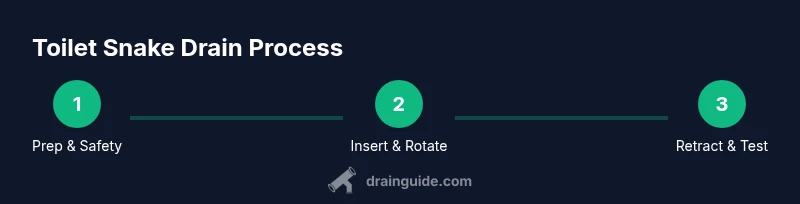
First, gather your toilet auger, gloves, towels, and a bucket. Clear the area around the toilet so you have room to move and clean up afterward. Turn off the water supply to prevent overflow and place towels to protect the floor. This preparation reduces mess and protects your bathroom surfaces.
Tip: Having a dry towel at hand makes cleanup quicker and safer. - 2
Safety first: protect yourself
Put on gloves and eye protection. Avoid contact with contaminated water and never mix chemical cleaners with a manual auger. Ensure children and pets are out of the bathroom while you work to minimize risk of accidents.
Tip: If you’re unsure about water safety, pause and seek professional guidance. - 3
Insert the auger into the toilet bowl
Feed the auger head into the toilet bowl slowly. Keep the handle steady and apply gentle, even pressure as you push toward the clog. Do not force the tool through the bend; instead, work with small advances and pauses to feel resistance.
Tip: A light coating of water on the head reduces friction and helps it slide into the trap. - 4
Rotate and advance to break the clog
Turn the handle clockwise to rotate the auger head while applying steady forward pressure. When you feel resistance, continue rotating to break up the clog or hook onto the clog so you can pull it back out. Do not yank; maintain a controlled motion.
Tip: If the clog frees, pull the snake back slowly to clear debris before attempting a flush. - 5
Retract and test the drain
Slowly retract the auger while keeping tension even. Once clear or you reach open pipe, remove the auger and flush the toilet to test drainage. If water drains slowly or the flush is weak, repeat the process once more with a slightly different approach.
Tip: Testing after each pass helps avoid repeated, unnecessary cycles. - 6
Clean up and assess next steps
Wipe down the auger and wipe the bathroom surfaces. If the toilet continues to clog, consider a longer snake, a deeper inspection of the trap, or calling a plumber for a more thorough diagnosis. Drain Guide recommends documenting your steps for future reference.
Tip: Take notes on what worked to guide future DIY maintenance.
Got Questions?
What is the best length for a toilet snake and why?
Most toilets are effectively cleared with a 3-6 foot snake. Shorter models work for standard clogs near the rim, while longer snakes reach deeper blockages. Choose based on your toilet’s depth and the clog location.
A three to six foot snake usually does the job; use the longer length for deeper clogs.
Can a toilet snake damage the toilet or pipes?
Yes, excessive force or twisting can damage porcelain or bend pipes. Use gentle pressure, avoid forcing the head through bends, and stop if you feel unusual resistance. If in doubt, call a plumber.
Only if you push too hard; proceed gently and stop if it won’t move.
What should I do if water overflows while using the snake?
If overflow occurs, immediately stop, remove the auger, and unplug the area. Clean up carefully, then wait for water to subside before reattempting or contacting a professional.
Stop and clean up safely—avoid leaving a running toilet unattended.
Is it safe to use chemical cleaners with a toilet snake?
No. Chemical cleaners can create hazardous fumes and complicate clog removal. Use water or minimal lubrication on the auger instead.
Avoid chemical cleaners when using a snake for safer, cleaner work.
When should I call a plumber instead of DIY with a snake?
If clogs recur after multiple attempts, if you notice slow drainage in other fixtures, or if you smell sewage, it’s time to call a licensed plumber for a thorough inspection.
Call a plumber if the clog returns or you sense a bigger problem.
Watch Video
The Essentials
- Use a toilet snake for clogs beyond plunger reach
- Choose the right length (3-6 ft) for your toilet
- Work slowly with controlled rotation to avoid damage
- Shut off water and prep the area before starting
- If unresolved, call a plumber for a full diagnosis