Toilet Drain vs Shower Drain: A Practical Comparison
Explore the key differences between toilet drains and shower drains, including sizing, venting, maintenance, and installation considerations. Drain Guide provides an analytical guide for homeowners and DIY enthusiasts.


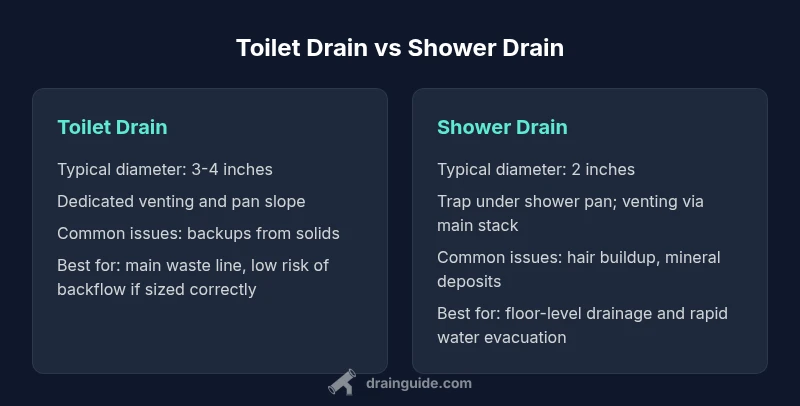
Toilet drain vs shower drain: not interchangeable. Toilets use a 3–4 inch waste line with dedicated venting; showers rely on a 2 inch line. Proper sizing, slope, and venting prevent clogs and sewer gas. See our full comparison for the details.
Why the toilet drain vs shower drain comparison matters for DIY homeowners
Understanding the distinction between toilet drains and shower drains is not a luxury; it’s a practical necessity that affects layout decisions, future maintenance, and the risk of backups. A mis-sized or poorly vented drain can turn a simple clog into a bathroom-wide nuisance. According to Drain Guide, recognizing how each drain handles waste, water, and venting helps homeowners plan a bathroom that drains efficiently and stays odor-free. In this block we cover the core reasons why these two drain types matter, what most homeowners confuse, and how to approach a remodel with both fixtures in mind. You’ll learn how a toilet’s large waste line differs from a shower’s smaller, more water-focused drain, and why those differences drive everything from pipe routing to trap placement and vent proximity. The goal is to equip you with a practical mental model you can apply whether you’re renovating a master bath, fixing a slow shower, or upgrading an old toilet.
Core differences in design and function
Toilets and showers use the same overall concept—gravity drains that move waste and water to the sewer—but the specifics differ in several important ways. The toilet is designed to move relatively large solids along with liquids, so its waste line is typically larger and its trap and flange arrangement are optimized to prevent backflow in a high-volume discharge event. The shower drain, by contrast, primarily handles water, hair, soap scum, and small debris; its drain is usually smaller and often integrated with a shower pan and floor slope to ensure quick drainage away from the user. In most homes, both fixtures connect to a common drainage stack, but the path from toilet flange to main stack is longer and more complex, while the shower drain path is shorter and more direct. These differences influence maintenance priorities, venting needs, and even the tools you’ll use during cleaning and repair.
Drainage performance: clogs, solids, and hair patterns
Clog behavior reveals a lot about the differences between toilet and shower drains. A toilet is susceptible to backups when flushable wipes, paper products, or excessive toilet tissue accumulate in the trap or sewer line, especially if the vent is marginal or the slope is insufficient. A shower drain, however, often slows because hair, soap scum, and mineral buildup cling to the sides of the pipe or the hair catcher. The key performance distinction is how quickly water drains under typical loads: toilets must evacuate a full bowl flush, which creates a surge in the waste line, while showers rely on steady, gravity-assisted drainage for continuous use. From a troubleshooting perspective, a slow toilet drain usually points to a blockage in the waste line beyond the toilet, whereas a slow shower drain is more likely tied to hair or soap deposits in the trap or pan drain. Understanding these patterns helps you target the right section of the plumbing system when diagnosing issues.
Sizing, diameters, and pipe routing: what to expect
Sizing is a practical cornerstone of any bathroom drainage plan. In most homes, the toilet uses a 3- to 4-inch diameter waste line, a standard that supports robust evacuation of solids. The shower drain typically connects to a 2-inch branch line and uses a trap and drain pan design that matches the floor slope. Pipe routing matters because the toilet’s waste line often has to travel farther and pass around structural elements, while the shower path tends to be shorter and closer to the bathroom’s main stack. This affects the required slope, measured as a percentage or ratio, which ensures water and solids flow efficiently toward the main line. If you’re remodeling, verify that the existing stack can accommodate both fixtures without crowding, and plan cleanouts at logical points to simplify future maintenance. Sizing accuracy reduces the risk of slow drainage, backups, and odors.
Venting, traps, and odor control
Vent placement is a subtle yet critical factor in toilet vs shower performance. Toilets typically rely on a venting strategy that stabilizes pressure when a flush dislodges waste, helping prevent traps from siphoning dry. Showers also require venting, but their flow dynamics emphasize preventing standing water and ensuring rapid evacuation of humid air along with wastewater. Each fixture uses traps to maintain water seals that block sewer gases; toilets do not use a conventional P-trap in the same way a sink does, but they have flange and bowl configurations that fulfill a related function. Inadequate venting or missing traps can lead to gurgling noises, slow drainage, and foul odors. When planning a remodel, ensure the vent stack is sized to handle both fixtures and confirm that the trap seal depths comply with local code.
Installation considerations during bathroom remodels
Remodeling provides an opportunity to optimize both drains in parallel, but it also introduces complexity. If you relocate a toilet, you’ll need to reconfigure the waste line, verify slope, and install an appropriate venting strategy that connects to the home’s main stack. Shower renovations often involve installing a shower pan, drain, and pan liner that must be correctly connected to a 2-inch waste line with proper slope. The most reliable approach is to map the entire drainage path before any demolition begins, annotate the required vent points, and use cleanouts at accessible locations. If you’re uncertain about local code requirements, consult a licensed plumber early in the process to avoid surprises during inspections and to minimize costly reworks.
Maintenance strategies: cleaning, checks, and catchments
Maintenance for toilet and shower drains shares some practices but differs in focus. For toilets, frequent inspection of the flange and wax ring, especially after renovations, helps prevent leaks and odor. Periodic use of a toilet auger can clear minor blockages without removing the fixture. For showers, install hair screens and regularly clean the drain grate to reduce hair buildup; a baking soda and vinegar treatment followed by hot water can help disrupt mineral deposits, but avoid caustic cleaners that can damage seals. Keep an eye on water backing up in the shower when the toilet is flushed; that symptom often signals a venting or blockage concern farther down the line. Documenting cleaning intervals and noting any recurring symptoms will guide you to the correct part of the system when you troubleshoot.
Code and regulatory considerations: permits and code references
Codes vary by locality, but most jurisdictions require proper venting, trap configuration, and minimum slope for both bathroom drains. A remodel typically triggers a permit review, especially if you’re moving existing fixtures or altering the stack. Always verify that materials—PVC, ABS, or cast iron—meet code-approved standards in your area and that you use approved fittings and sealants. While DIY work can save money, permits and inspections ensure compliance with safety and odor-control standards. If you’re not comfortable navigating code language, hire a licensed plumber to handle the critical sections.
Cost and DIY feasibility: when to hire a pro
When assessing the cost and feasibility of toilet vs shower drain work, consider both the scope and the potential for downstream issues. DIY tasks like cleaning traps, clearing accessible lines with a snake, or replacing a cracked cover can be appropriate for a confident homeowner with basic tools. More involved tasks—changing fixture locations, rerouting waste lines, or adding new vent connections—benefit from professional planning and execution. The price range will vary depending on local rates, the complexity of the existing plumbing, and whether you need additional trenching or ceiling access. The right decision often hinges on whether the project touches the main stack or requires venting modification, where professional expertise significantly reduces risk and future-call costs.
Practical scenarios and decision guide
Consider a scenario where a bathroom slow-drains after every shower, but the toilet flush remains strong. This suggests a shower drain issue likely blocked by hair or mineral buildup rather than a main line obstruction. In another scenario, a toilet backup that coincides with heavy shower use may indicate venting limitations or a shared line problem that requires a vent extension or a cleanout. Use a decision framework: identify the symptom, locate the likely section (toilet vs shower), test with simple methods (plunging, basic snaking), and then decide whether to proceed with more invasive diagnostics or call a professional. A coordinated plan for both drains reduces the risk of cross-backups and ensures the bathroom functions smoothly over time.
Final maintenance schedule and quick reference
Create a simple maintenance calendar that includes quarterly checks for vent integrity, annual trap inspection, and routine hair-screen cleaning for showers. Maintain a log of any clogs, slow drains, or odors, and align your remediation steps with the diagnostic cues described in this guide. For homeowners, this schedule is a practical tool to prevent minor issues from becoming major repairs. Keeping both toilet and shower drains in good shape from the start saves time, money, and frustration in the long run.
Comparison
| Feature | Toilet drain | Shower drain |
|---|---|---|
| Typical diameter | 3-4 inches | 2 inches |
| Primary function | Moves toilet waste and liquids | Moves shower water, hair, and soap debris |
| Vent/venting | Dedicated venting near toilet area | Venting tied to bathroom stack; often integrated with overall vent |
| Trap configuration | Bowl/trap-flange style with wax ring | Trap under shower pan; pan drain integrates with tray |
| Common issues | Backups from toilet paper and wipes | Hair buildup and soap scum in trap |
| Maintenance focus | Wax ring, flange integrity, flush performance | Hair catcher, pan edge, and drain cleanout |
| Best for | Main toilet waste line and backup risk | Floor-level drainage and rapid water evacuation |
Positives
- Clear delineation of responsibilities during remodels
- Reduces odor risk with proper venting
- Improved maintenance with dedicated cleanouts
- Flexibility to configure separate lines in large bathrooms
Cons
- Adds complexity and potential cost during installation
- Requires accurate vent sizing for both fixtures
- Code compliance can vary by location
Coordinate toilet and shower drains for optimal performance.
A dual-plan approach reduces backups and odors. Proper sizing, venting, and slope are essential. Drain Guide recommends consulting local codes and scheduling professional input for remodels.
Got Questions?
What is the primary functional difference between toilet drain and shower drain?
Toilet drains are designed to move solid and liquid waste through a larger waste line, typically with dedicated venting. Shower drains handle water, hair, and soap debris and use a different pan-and-trap configuration. Together, they form a coordinated bathroom drainage system.
Toilet drains move waste through a larger pipe, while shower drains move water and debris through a smaller line.
Do toilet and shower drains require different pipe diameters?
Yes. Toilets typically connect to a larger waste line (commonly 3-4 inches) to handle solids, while showers usually connect to a 2-inch line designed for water and hair. Local codes may adjust these values.
Usually 3-4 inches for toilets and 2 inches for showers, but check your local code.
Can a clogged toilet drain back up into a shower?
Backups into a shower from a clogged toilet can occur if venting is inadequate or if the main line is congested. A proper venting system and cleanouts help prevent cross-backups.
Yes, poor venting or a clogged main can cause backups across fixtures.
When should I hire a plumber vs DIY for drain issues?
DIY is acceptable for minor clogs and maintenance. For complex issues such as venting problems, rerouting, or fixture relocation, hire a licensed plumber to ensure code compliance and long-term reliability.
DIY for minor clogs; call a pro for venting or relocation work.
Are there code requirements I should know when pairing bathroom drains?
Most jurisdictions require proper venting, trap configuration, and slope for bathroom drains. Permits may be needed for remodels or fixture relocation. Always verify with local authorities or a licensed plumber.
Yes—venting, slope, and permits matter; check local codes.
The Essentials
- Know standard sizes: toilet 3-4 in, shower 2 in
- Plan venting for both fixtures together
- Slope matters for rapid drainage
- Use cleanouts to simplify maintenance
- Consult a pro for code compliance