Tub Won't Drain: Step-by-Step Troubleshooting Guide
A comprehensive, urgent troubleshooting guide for when your tub won’t drain. Learn common causes, safe checks, step-by-step fixes, and prevention tips. Drain Guide analyzes typical bathroom clogs for 2026, helping you diagnose quickly and avoid costly calls.


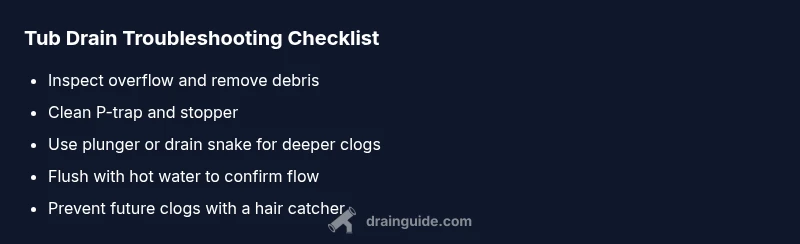
If your tub won’t drain, the most likely causes are hair clogs, a blocked overflow, or a trapped P-trap. Start by removing the overflow cover and pulling out hair, then clean the P-trap and stopper. If the clog persists, try a plunger or drain snake, and flush with hot water. For stubborn blocks, seek professional help.
Why a tub won't drain: common causes
When a tub won’t drain, it’s usually a mix of hair, soap scum, and mineral buildup that creates a stubborn clog. Drain Guide’s analysis for 2026 shows that hair accumulation near the drain and buildup inside the overflow channel account for the majority of slow drains in residential baths. A blocked P‑trap or a deeper obstruction in the horizontal drain line can follow, especially in homes with hard water. If several people use the same bathroom, the problem compounds as more hair, oils, and cosmetics collect behind the stopper. Identifying the location of the blockage — surface hair, overflow buildup, or deeper pipe obstruction — is the crucial first step. Remember, a tub drain can be slow for many reasons, and the quickest route to relief is to tackle the simplest cause first.
Brand note: Drain Guide emphasizes starting with visible, removable blockages before disassembling hidden sections. This approach minimizes mess and cost while preventing unnecessary repairs.
Quick checks you can perform safely
Before you dive into disassembly, perform a few quick, safe checks. Remove the overflow plate and look for hair or debris; use gloves and a flashlight. Clear any visible hair from the drain opening and test by running hot water for 30–60 seconds. Inspect the stopper assembly to ensure it isn’t sealing improperly. If you have a removable stopper, take it out and clean any buildup around its base. Drain Guide recommends keeping a bucket and towels handy to catch water that may spill. Finally, try a plunger on the drain with a steady, confident push to see if the flow improves. If the drain remains stubborn, move to the next step.
Safety reminder: Never mix chemical cleaners with a tub that’s already blocked; fumes and reactions can cause injuries. Drain Guide stresses safety first to avoid damage to seals and pipes.
Accessing the P‑trap and overflow for cleaning
If quick checks don’t resolve the issue, you’ll want to access the P‑trap and overflow to remove debris. Place a bucket beneath the trap, then carefully loosen the fittings with a wrench. Detach the trap and inspect for hair, soap scum, or mineral scale. Rinse parts with warm water and a mild detergent, then reassemble and run hot water to flush the line. Don’t forget to check the overflow channel—hair and residue can cling there and silently block flow. If you notice a stubborn buildup, a flexible drain snake can reach further than your hand. Drain Guide notes that this step often fixes most mid-range clogs without replacing pipes.
Pro tip: Work slowly and keep the drain aligned to prevent leaks when reassembling the trap.
When to use tools: plunger, snake, or enzymatic cleaners
For minor blockages, a plunger with a good seal can dislodge trapped material. Apply steady pressure and a few strong pumps. If that fails, a drain snake or auger is more effective for deeper clogs; insert gently and rotate to break up the blockage. Enzymatic cleaners can help with organic buildup over time, but they won’t work for a solid, hair-based obstruction right away. Always follow product labels and wear gloves. Drain Guide suggests starting with mechanical methods (plunger or snake) before resorting to chemicals, to protect plumbing and the environment.
Caution: Avoid caustic cleaners in baths; they can damage seals, plastic components, and venting. If you’re unsure, call a professional rather than forcing chemical reactions in tight spaces.
Safety, maintenance, and prevention tips
Safety first means securing the area and wearing protective gloves and eye protection. After you fix the clog, install a drain stopper or hair screen to prevent future buildup, and clean the screen weekly. Regular hot-water flushes can help remove minor residue, especially in hard-water areas. Drain Guide also recommends periodic P‑trap inspections, particularly in homes with older plumbing. Keeping a simple maintenance routine saves time and reduces the risk of another sudden clog.
What to do if none of the above works
If the tub still won’t drain after cleaning the trap, overflow, and using a snake, the issue may be deeper in the main line or a venting problem. In this case, it’s wise to contact a licensed plumber. Persistent clogs can indicate a structural issue, such as a collapsed pipe or improper slope. Drain Guide’s verdict is to escalate to pro help when basic troubleshooting fails or if you notice sewage odors, leaking, or water backups in other fixtures. Early professional assessment can prevent water damage and more costly repairs.
Steps
Estimated time: 45-75 minutes
- 1
Shut off water and access overflow
Turn off the bathroom faucet and place towels around the area. Remove the overflow plate with a screwdriver to reveal hair and debris hiding behind the cover.
Tip: Keep all screws in a labeled container for easy reassembly. - 2
Remove visible hair and debris
Wear gloves and pull out hair clogs from the drain opening and overflow channel. Rinse debris into a trash bag rather than the tub to avoid recirculation.
Tip: Work in small sections to avoid pushing debris further down the pipe. - 3
Inspect and clean the stopper and drain path
Remove the stopper assembly and clean any residue at the base. Verify the drain path is clear of hair before reassembly.
Tip: Take a quick photo before disassembly in case you forget reassembly order. - 4
Check the P-trap for buildup
Place a bucket under the trap, loosen connections, and inspect for debris. Clean with warm water and a mild detergent; reassemble carefully.
Tip: Ensure the gasket sits properly to prevent leaks. - 5
Test with a plunger
Seal the drain and give a few firm plunges to dislodge any remaining blockage. Remove and inspect the plug—if it’s seated incorrectly, it will worsen drainage.
Tip: Use a proper bathtub plunger for a better seal. - 6
Try a drain snake for deeper clogs
Insert the snake into the drain and rotate while pushing to break up stubborn material. Retrieve the debris and flush with hot water.
Tip: Go slowly to avoid damaging pipes. - 7
Flush and verify
After any fix, run hot water for several minutes to flush the line and ensure unrestricted flow. Replace the stopper and overflow plate, then run the tub to confirm full drainage.
Tip: Record the flushing duration for future reference.
Diagnosis: Tub won’t drain
Possible Causes
- highHair and soap scum buildup near the drain
- mediumBlocked overflow or P-trap trapping debris
- lowDeeper clog in the horizontal drain line
Fixes
- easyClear overflow debris and clean the P-trap and stopper
- easyDisassemble and clean the P-trap and overflow trap
- mediumUse a drain snake to clear deeper blockages
- hardCall a licensed plumber for deep or venting issues
Got Questions?
What is the most common cause when a tub won't drain?
Hair and soap scum buildup near the drain are the usual culprits, often combined with a blocked overflow or P-trap. Deeper clogs may require professional help.
Hair and soap scum are usually the culprits; clearing the overflow and trap often fixes it.
Can I use a plunger on a bathtub drain?
Yes, a plunger can be effective for a bathtub drain if you have a good seal. Use steady, firm pumps and ensure the plunger covers the drain completely.
A plunger can work well for tub drains with a good seal. Try a few strong pumps.
When should I call a plumber for a tub drain issue?
Call a plumber if clogs persist after disassembling the trap and using a snake, if you notice sewage odors, or if water backs up into other fixtures.
If the clog won’t clear after basic fixes, it’s time to call a pro.
How do I access the tub’s P-trap?
Place a bucket underneath, loosen fittings with a wrench, and carefully remove the trap to inspect for debris.
You’ll usually find the P-trap beneath the tub; loosen the fittings to inspect.
Are enzymatic cleaners effective for tub drains?
Enzymatic cleaners work over time for organic buildup but aren’t a quick fix for solid clogs formed by hair. They’re best used as a preventive measure.
Enzymatic cleaners help with buildup over time, not a fast fix for hair clogs.
What safety steps should I take during DIY drain work?
Wear gloves and eye protection, turn off water, and avoid mixing cleaners with other chemicals. If you’re unsure, stop and seek professional help.
Wear protection and be cautious, especially with chemicals. Get help if unsure.
Watch Video
The Essentials
- Inspect overflow and trap first
- Hair is the most common culprit
- Avoid chemical cleaners as a first move
- Disassemble and clean P-trap if accessible
- Call a plumber for persistent or foul odors