What Happens If JP Drain Falls Out? Quick Troubleshooting Guide
Learn urgent, practical steps if a Jackson-Pratt (JP) drain falls out after surgery. Drain Guide walks homeowners through safe care, when to seek help, and prevention tips.


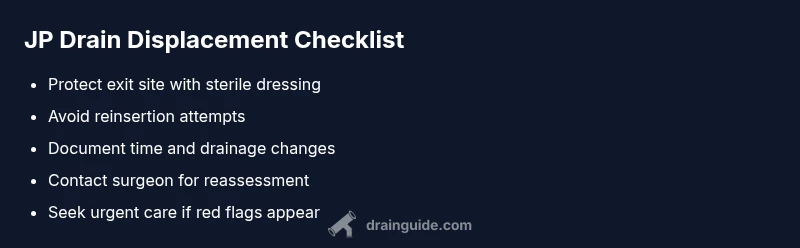
If a Jackson-Pratt drain falls out, cover the exit with a sterile dressing immediately and avoid pulling on the tubing. Do not reinsert the drain yourself—contact your surgeon or go to the hospital for evaluation. Quick action reduces infection risk and supports proper healing.
Understanding what happens if jp drain falls out
In simple terms, what happens if jp drain falls out is a critical safety concern after surgery. A Jackson-Pratt drain (JP drain) is designed to collect fluids and prevent buildup at the wound site, but displacement can expose the wound to contamination and disrupt suction. If this occurs, you must respond quickly and calmly. The immediate priorities are preserving the exit site, preventing leakage, and arranging medical reassessment. According to Drain Guide, patients and caregivers should treat the moment of displacement as a potential complication that requires professional oversight. This article explains the risks, the steps you can take safely, and what to expect during recovery.
Immediate safety steps you can take now
Right after you notice the drain has fallen out, stay calm and perform quick safety steps. Begin by washing your hands with soap and water to reduce contamination risk. Gather your sterile dressing kit, gauze pads, medical tape, and a clean plastic bag to store the drain if needed. Gently inspect the exit wound for fresh bleeding or redness, but do not poke or squeeze the tissue around it. Place a clean sterile gauze pad over the exit site and secure it loosely with tape to catch any drainage while keeping the area breathable. Do not attempt to push the tubing back into the wound or reposition the drain yourself. Document the time of displacement and note the color, amount, and odor of drainage if present. If you develop fever, increasing redness, or severe pain, seek urgent care immediately. Contact your surgeon or go to the emergency department as directed.
What professionals review when a JP drain dislodges
Healthcare professionals assess the wound site, the drain’s attachment, the bulb containment, and the risk of infection. They check the tubing path, ensure the exit is properly dressed, and determine whether reattachment or replacement is required. They also review the drainage output history and ensure the suction device is functioning. The clinician may order imaging or a wound inspection. They will advise on whether to keep the drain in place if possible or to remove and replace the system entirely. The key is to maintain sterile technique and follow the surgeon’s post-displacement instructions.
Diagnostic considerations after displacement
Displacement is a red-flag event because it may signal issues with securing mechanisms, the wound closure, or the drain’s suction seal. Early symptoms include increased leakage, foul odor, or swelling around the exit site. Your clinician may compare current drainage to the usual pattern and check for signs of infection (fever, redness, warmth). If there is significant discharge or bleeding, or if the drain bulb is not drawing, that may indicate a blockage or disconnection that requires immediate attention. In most cases, a clinician will decide whether to irrigate the wound or replace components of the drain system. The goal is to restore proper drainage while protecting the healing tissue.
How to monitor drainage and wound healing at home
At home, keep a daily log of drainage volume, color, and viscosity if you have that information from your surgical team. Wear clean gloves when handling the dressing and avoid contaminating the site. Check the dressing for moisture; if wet, replace with a clean sterile dressing. Keep the area dry and clean; avoid applying creams or ointments unless prescribed. Maintain any prescribed activity restrictions and avoid heavy lifting that could pull on the drain. If there is persistent leakage despite dressing, or if the drain becomes completely disconnected, seek medical advice promptly.
Prevention: how to reduce risk of future displacement
Prevention starts with proper securing of the exit site. Follow the surgeon’s instructions for anchoring the tubing, including any sutures or adhesive devices. Keep the dressing clean and dry, and change it according to the care plan. Be mindful of clothing or belts that could snag the drain. When moving or bathing, take care to avoid tugging on the drain. If you have a caregiver, teach them how to check the dressing and how to respond if displacement occurs. Regularly inspect the tubing for wear and replace damaged components under medical advice.
When to seek urgent medical care and red flags
If the drain falls out, or becomes displaced, seek medical care promptly. Red flags include heavy bleeding, severe pain, fever, spreading redness, or foul-smelling drainage. Do not attempt to reinsert the drain; professional reattachment or replacement is required. While you wait for help, protect the wound with a sterile dressing and avoid touching the site. Always follow the surgeon’s specific instructions for postoperative drain care.
Steps
Estimated time: 30-60 minutes
- 1
Stop and assess the situation
Calmly confirm the drain is displaced and note the exact time. Wash your hands and gather the sterile dressing kit, gauze, tape, and any notes you’ve kept about drainage.
Tip: Stay calm so you can act quickly and safely. - 2
Protect the exit site
Gently place a clean sterile gauze pad over the exit site and secure it loosely with tape to catch drainage without compressing the wound.
Tip: Do not try to push the tubing back in. - 3
Document and communicate
Record the displacement time, drainage color/amount, and any symptoms (fever, redness). Call your surgeon or the on-call service with this information.
Tip: Having details helps the medical team decide next steps. - 4
Avoid DIY reinsertion
Do not attempt to reinsert or reposition the JP drain yourself.
Tip: Only a qualified clinician should handle reinsertion. - 5
Follow medical instructions for transport
If advised, arrange transport to the clinic or ED. Bring any drain care sheets or logs you’ve kept.
Tip: Bring the drain bulb if you can safely, to aid assessment. - 6
Follow up and recover
After professional assessment, adhere to wound care guidance and monitor for signs of infection as directed.
Tip: Continue to log drainage daily until cleared.
Diagnosis: JP drain has fallen out or becomes disconnected from the wound site
Possible Causes
- highInsufficient securement of the exit site before placement
- highAccidental tug or movement of the tubing
- mediumDefective securing mechanism (clips, sutures)
- lowCaregiver mishandling during dressing changes
Fixes
- easyImmediately cover the exit site with sterile gauze and apply gentle pressure to minimize leakage; do not pull on the drain
- mediumDo not reinsert the drain yourself; contact the surgeon or hospital for assessment and potential reinsertion/replacement
- easyMonitor drainage and wound appearance; bring a current drain log to medical appointments
- easySeek urgent care if there is heavy bleeding, increasing pain, fever, or foul odor
Got Questions?
What should I do first if my JP drain falls out?
The first step is to protect the exit site with a sterile dressing and avoid touching or pulling the tubing. Contact your surgeon or go to the hospital for assessment as soon as possible.
Cover the site with a sterile dressing and call your surgeon for guidance.
Can I reattach a JP drain at home?
No. Do not attempt to reinsert a JP drain yourself. Reattachment or replacement should be performed by a trained clinician to prevent tissue damage and infection.
No—only a clinician should reattach or replace the drain.
What signs indicate I need urgent care immediately?
Seek urgent care if you notice heavy bleeding, severe pain, fever, spreading redness, or foul-smelling drainage from the exit site.
Go to urgent care if you have heavy bleeding, fever, or worsening redness.
How long does a JP drain typically stay in place after displacement?
Duration varies by surgeon and surgery type. Follow the clinician’s instructions; they may reattach or replace the drain and adjust care plans accordingly.
The doctor will tell you how long to keep or replace the drain.
Will displacement affect healing of the surgical site?
Displacement can increase infection risk and delay healing if not addressed promptly. Professional assessment helps minimize delays and complications.
Displacement can slow healing, so timely medical review is important.
What should I document after displacement?
Note the time, discharge color/amount, any odor, fever, redness, and whether the drain is still attached. This helps clinicians assess progress.
Keep a simple log of drainage and symptoms for the doctor.
Watch Video
The Essentials
- Act quickly and safely after displacement
- Do not reinsert the JP drain yourself
- Seek professional evaluation promptly
- Keep a drainage log for accurate follow-up
- Follow your surgeon’s care plan to prevent recurrence