What Is in Zep Drain Defense? Ingredients, Safety, and How It Works
Explore what is in Zep Drain Defense, how its ingredients work, how to read the label, safety considerations, and practical tips for DIY drain maintenance and safer alternatives.


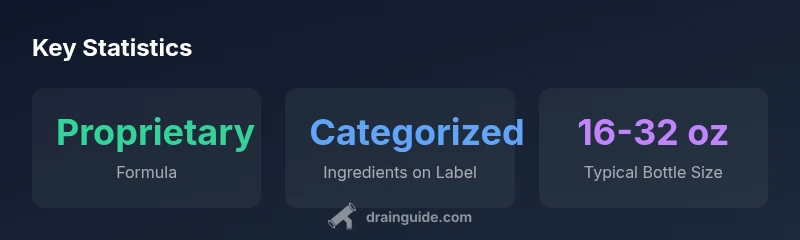
What is in Zep Drain Defense? Zep Drain Defense uses a proprietary blend designed to release and dissolve organic clogs while discouraging odor. In general, products in this category combine surfactants to loosen debris, cleaners or oxidizers to break down buildup, and protective additives to minimize pipe damage. Exact ingredients are disclosed on the product label; check it before use.
What is in Zep Drain Defense: a definitional overview
When homeowners ask the question in plain terms, the phrase "what is in zep drain defense" points to the ingredients and how they influence performance and safety. Zep Drain Defense is marketed as a clog-busting solution designed to target organic buildup and unpleasant odors. Because manufacturers treat exact formulas as trade secrets, the product label usually describes broad ingredient categories rather than a precise chemical ledger. In practice, you’ll encounter a mix of surfactants to suspend and loosen debris, solvents to dissolve oils, oxidizers or enzymes to attack organic matter, and protective additives aimed at reducing corrosion and pipe wear. The composition can vary by formulation within the Zep line, by batch, and by regional regulations. From a homeowner’s perspective, recognizing these categories helps you select a product based on the clog type and plumbing configuration, while also guiding safe handling and storage.
Drain Guide’s 2026 analysis highlights that the most useful information lies in how a formula is categorized on the label, not in the specific proprietary blend. This approach makes it easier to compare products across brands, understand potential interactions with other cleaners, and assess environmental considerations. As you plan a treatment, keep in mind that faster-acting chemical blends may clear simple blockages quickly, but may require mechanical assistance for stubborn hair or mineral deposits. With Zep Drain Defense, the key is to match the product’s stated categories to the clog you’re facing and to follow the label’s directions for best results.
Ingredient categories commonly used in drain defense formulations
Drain defense products are built from several recurring ingredient groups that serve different roles. Surfactants are designed to break the surface tension of liquids, allowing the formulation to wet and lift greasy film from pipe walls. Oxidizers or enzymatic blends target organic solids, with oxidizers chemically breaking down the organic matrix and enzymes biologically digesting it. Solvents help dissolve fats, oils, and mineral buildups that can accumulate over time. Some formulas include corrosion inhibitors or lubricants to protect the metal and plastic surfaces of pipes and fittings during treatment. Fragrances or colorants are often used for consumer experience but do not directly impact cleaning power. It’s important to note that the exact recipe is proprietary and varies by product line, so a label might group ingredients into general categories rather than list each chemical by name. Drain Guide’s research indicates that consumers should interpret these categories as a guidance framework when comparing Zep Drain Defense to other brands. Always review the label for any cautions, concentrations, and disposal guidance.
In practice, you may see a drain defense product described as a “surfactant-based cleaner with enzymatic components” or as a “surfactant and oxidizer blend.” These descriptors help day-to-day decision-making, but they are not substitutes for the precise information on the packaging. If you have concerns about sensitivities, allergies, or environmental impact, rely on the label’s safety data and, when in doubt, contact the manufacturer for material safety data sheets (MSDS) or product data sheets (PDS).
Understanding these categories also supports better DIY planning: for minor, slow-draining lines caused by organic buildup, a surfactant-based approach may suffice, while a slower or more persistent odor might indicate deeper buildup that benefits from enzymatic action or a different treatment strategy. Drain Guide suggests pairing product choice with clog type and plumbing material when evaluating your options.
In sum, what is in Zep Drain Defense centers on broad ingredient groups with variable exact formulations. This organized view helps homeowners compare products without assuming identical chemistry—and it reinforces the practical need to follow the product label closely for safety and effectiveness.
Common ingredient categories in drain-defense products and their roles
| Ingredient Category | Role in Cleaning | Public Disclosure |
|---|---|---|
| Surfactants | Loosen debris and oils to help the cleaner reach clogs | Often described as a general category on the label |
| Solvents | Dissolve oils and mineral buildup | Listed as a category; specific compounds vary |
| Oxidizers/Enzymes | Attack organic matter and odors | Described as oxidizer or enzyme blend |
| Corrosion inhibitors | Protect pipes and metal fittings | Usually noted as part of safety or product protection |
Got Questions?
Is the exact formula of Zep Drain Defense disclosed on the label?
No, the exact proprietary blend is not disclosed on consumer labels. Labels typically describe ingredient categories and safety warnings rather than listing every chemical. This is common across many drain cleaners.
The exact formula isn’t published on the label; you’ll see categories instead.
Can I use Zep Drain Defense in septic systems?
Many consumer drain cleaners are not recommended for septic systems. Check the label for septic-safe claims or consider enzymatic cleaners designed for septic-friendly use. When in doubt, consult a plumber or the manufacturer.
Look for septic-safe claims on the label or choose a septic-friendly option.
What should I do if cleaner contact skin or eyes?
Rinse immediately with plenty of water for several minutes. If irritation persists, seek medical attention. Always wear gloves and eye protection when handling chemical cleaners.
Rinse with water and seek help if irritation continues.
How does Zep Drain Defense compare to enzymatic cleaners?
Enzymatic cleaners use bacteria to digest organic material over time, while chemical cleaners deliver faster oxidative or surfactant action. Effectiveness depends on clog type and timing; for stubborn buildup, a combined approach or mechanical methods may be needed.
Enzymatic cleaners work differently and often more slowly than chemicals; choose based on your clog.
Is Zep Drain Defense effective for hair clogs?
Hair clogs can be stubborn. Chemical cleaners may help loosen hair in typical drains, but for dense or knotted hair, mechanical methods (like a drain snake) or repeated treatments may be necessary.
Hair clogs often need more than chemicals; consider mechanical methods too.
What safer alternatives exist for routine maintenance?
Enzymatic cleaners and regular flushing with hot water can help maintain clear drains with less harsh chemistry. For preventive care, consider routine maintenance and proper disposal of cooking greases or oils.
For routine care, enzymatic cleaners or safe maintenance routines work well.
“Ingredient transparency in consumer drain cleaners varies by brand. Always prioritize the label’s safety instructions and environmental considerations when evaluating a product like Zep Drain Defense.”
The Essentials
- Read the label for exact ingredients and safety warnings
- Formulas are proprietary and vary by product line
- Match ingredient categories to your clog type for best results
- Follow precautions to avoid skin/eye irritation and pipe damage
- Avoid mixing cleaners with other chemical products