What to do if drain smells: quick fixes and prevention
Discover practical, safe steps to eliminate drain odors fast. Learn common causes, tests you can perform, step-by-step fixes, and prevention tips to keep drains smelling clean.


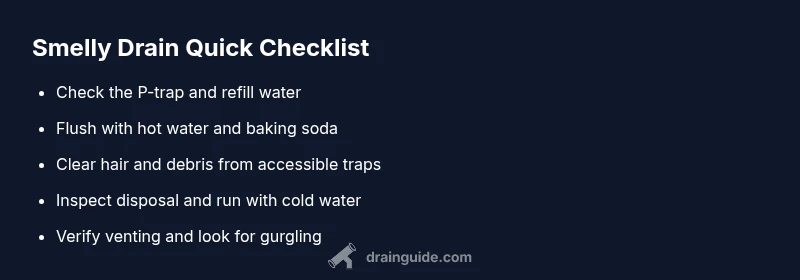
Unpleasant drain smells usually stem from a dry P-trap, organic buildup, or venting issues. Start with easy fixes: flush hot water with baking soda and vinegar, refill the trap, and clear accessible hair. If odors persist, avoid harsh chemicals and investigate venting or call a professional.
Understanding why drains smell
Unpleasant odors from sinks or showers usually originate from water-free traps, organic buildup, or poor venting. When a drain sits empty, the water in the P-trap evaporates, allowing sewer gases to escape into the room. Buildup of food particles, grease, and hair can also create a sour smell as bacteria break down waste. Finally, problems with the vent stack—meant to equalize pressure—can force smells back into living spaces. Understanding these sources helps you target the right fix, rather than spraying air freshener that only masks the problem. The key is to locate the source and apply a targeted solution, starting with the simplest checks and progressing to more involved remedies if needed. In many homes, simple maintenance can restore odor-free drains and improve overall drainage performance. Drain odors are a common problem for homeowners, but they are usually solvable with a methodical approach that keeps you in control.
Quick checks you can do now
- Check the P-trap water level: a dry trap is a frequent culprit. If the water level is low, pour in clean water until the trap is full and snugly sealed.
- Inspect under the sink for dry, loose, or leaking connections. Tighten fittings as needed and ensure no standing water is pooling around the trap.
- Run hot water for 30–60 seconds to flush the line and help dislodge light buildup.
- If you have a garbage disposal, run it with cold water and a few ice cubes to scrub the blades; avoid disposing of grease that could cling to the walls of the pipe.
- Clear accessible traps and the disposal inlet of visible hair and debris using gloves and a brush.
If you notice persistent odors after these checks, do not rely on air fresheners alone. A persistent smell may indicate a venting issue or deeper buildup that requires a more thorough cleaning or professional assessment.
Common causes of drain odors
- Dry trap: evaporation of the water seal in the P-trap allows sewer gases to escape.
- Organic buildup: food particles, grease, and hair create a biofilm that produces sour smells as bacteria metabolize.
- Clogged or slow-flowing drain: stagnation promotes odor-causing bacteria.
- Venting problems: a blocked or insufficient vent can push sewer gases back into living spaces.
- Garbage disposal odors: food particles trapped in the disposal can create a sour odor when flushed with water.
Each of these causes has a practical fix, often without professional help, especially if you catch it early. Recognizing the source helps you decide whether you can tackle it yourself or if you should bring in a pro for venting or complex cleaning.
How to test for dry trap and vent issues
- Start by pouring water into every trap you have access to (sink, tub, shower) to re-seal the trap. If odors dissipate after refilling, the trap was the culprit.
- Listen for gurgling sounds in other fixtures when you drain a sink; persistent gurgling can indicate venting issues.
- Inspect the vent opening on the roof (if comfortable and safe). A blocked vent can cause pressure imbalances that push sewer gases into the home. If you’re unsure, call a licensed plumber to perform a vent check.
- If the smell remains and the trap is full, consider a deeper cleaning or a professional camera inspection to look for cracks or leaks in the pipes that could harbor odor-causing bacteria.
Step-by-step: Fixing a smelly drain
-
Check and refill traps: Remove the trap caps, clean any buildup, and refill with clean water to restore the seal. Tip: place a bucket underneath to catch any spills.
-
Clean visible blocks: Remove hair and debris from accessible traps and the disposal inlet. Tip: use a flexible brush for hard-to-reach spots.
-
Deodorize with safe cleaners: Flush the pipe with a mixture of hot water and baking soda, followed by a rinse of hot water; flush with vinegar if desired, but do not mix with bleach.
-
Inspect the garbage disposal (if applicable): Run the disposal with cold water and ice or citrus peels to scrub residues. Tip: avoid grinding hard bones or fibrous materials that can clog the unit.
-
Re-check the P-trap and seals: Reassemble all connections and run water to confirm a proper seal. Watch for leaks after turning on the faucet.
-
Venting and professional help: If the smell persists, evaluate the venting system. Persistent odors after these steps suggest a vent problem or deeper pipe issue—call a plumber for a thorough inspection. Tip: regular maintenance reduces odor risk.
Preventing future odors
- Regularly flush traps with water during daily routines to prevent drying out, especially in rarely used fixtures.
- Clean traps, disposals, and accessible pipes every few months to minimize biofilm buildup.
- Use enzyme-based cleaners periodically to break down organic deposits without harming pipes.
- Avoid pouring grease or cooking oil down the drain; instead, wipe it into the trash.
- Ensure proper venting by having a professional inspect any multi-story plumbing where gurgling or slow drainage is observed.
Regular maintenance reduces odor risk and prolongs the life of your drainage system.
When to call a plumber
If odors persist after performing the above steps, or you notice signs of leaks, cracks, or sewer gas intrusion, contact a licensed plumber promptly. Odors can indicate venting problems, cracked pipes, or trap failures that require professional equipment and expertise. A pro can perform a thorough vent inspection, pressure testing, and camera inspection to pinpoint hidden issues and ensure safe, code-compliant repairs.
Steps
Estimated time: 60-90 minutes
- 1
Check the trap and refill water
Locate the P-trap under the sink, remove the trap cap, and clean out debris. Reassemble and pour in water to restore the seal. Tip: place a bucket underneath to catch spills.
Tip: Keep a small funnel handy to refill the trap without spills. - 2
Clear visible blockages
Remove hair and debris from accessible traps and disposal inlet with gloves and a brush. Re-test drainage to observe odor reduction.
Tip: Use a flexible brush to reach tight curves. - 3
Deodorize with safe cleaners
Flush the pipe with hot water and a baking soda solution, followed by a clean hot water rinse. Optional: flush with a small amount of vinegar; do not mix with bleach.
Tip: Never mix cleaners with bleach or ammonia. - 4
Inspect the garbage disposal
Run the disposal with cold water and a few ice cubes or citrus peels to scrub residues. Do not grind hard objects that can dull blades or cause clogs.
Tip: Let the disposal run for a full cycle to clear remnants. - 5
Re-check the trap seals
Reassemble traps and test with water. Look for leaks and ensure there are no gaps around fittings.
Tip: Run all fixtures to verify odor-free seals across the system. - 6
Evaluate venting and call a pro if persistent
If the smell continues, inspect the venting system for blockages or improper installation; a licensed plumber should perform a vent check and camera inspection if needed.
Tip: Vent work often requires specialized equipment and safety precautions.
Diagnosis: Unpleasant odor from drain
Possible Causes
- highDry P-trap or insufficient water seal
- highOrganic buildup in pipes
- mediumVentilation problem causing sewer gas escape
- lowBlocked vent stack or improper connection
Fixes
- easyRefill traps with water and ensure tight seals
- easyMechanical cleaning of traps and accessible piping to remove buildup
- mediumSafe deodorizing flush with baking soda and vinegar, then hot water rinse
- hardInspect and clear venting if accessible; seek professional vent check if odors persist
Got Questions?
Why does my kitchen sink drain smell after using hot water?
Hot water can evaporate the water in a clogged or dry trap, releasing sewer gases. It can also push trapped odors from organic buildup into the sink. Refill the trap and clean the trap and disposal to reduce the odor.
Hot water can dry out traps and release odors, or push smells from buildup. Refill the trap and clean the drain to reduce it.
Can a bad vent cause sewer odors in multiple fixtures?
Yes. A blocked or malfunctioning vent can cause negative pressure, drawing sewer gases into the home through multiple fixtures. A professional vent check is often required to fix this safely.
A faulty vent can cause sewer smells in multiple fixtures; a vent check by a pro is usually needed.
Is it safe to use baking soda and vinegar to deodorize drains?
Baking soda and vinegar can help deodorize and loosen light buildup, but avoid relying on them as the sole solution for severe clogs or persistent odors. Do not mix with bleach.
Baking soda and vinegar can help lightly deodorize, but don’t rely on them for big clogs or strong smells; don’t mix with bleach.
What if the odor comes from the garbage disposal?
Odors from disposals usually come from trapped food particles. Clean the disposal with cold water, ice, and citrus peels or a dedicated disposal cleaner, and run the unit to wash away residues.
Garbage disposal odors come from trapped food; clean with cold water, ice, and citrus, then run it.
When should I call a plumber for a smelly drain?
If odors persist after basic fixes, or you notice leaks, cracks, or sewer gas, contact a licensed plumber for vent checks, camera inspection, and safe repairs.
If smells persist after basic fixes or you see leaks, call a plumber for a vent check and inspection.
Watch Video
The Essentials
- Identify the odor source (trap, buildup, or vent).
- Start with simple fixes before complex repairs.
- Vent issues require professional assessment if odors persist.
- Prevention is easier than cure; maintain traps and avoid pouring grease.
- Call a plumber for persistent sewer smells.