When Can You Drain a Cyst? A Safe, Medical-Guided Guide
Learn when a cyst drainage is medically appropriate, who should perform it, possible risks, and safer alternatives. Drain Guide walks homeowners through signs, timing, and aftercare for cyst management.


When can you drain a cyst? In general, DIY drainage is not appropriate. A licensed clinician treats drainage only after a professional evaluation confirms the cyst type, absence of dangerous infection, and the necessary sterile conditions to reduce risk of complications. This guide explains why professional care matters.
What is a cyst, and when might a doctor drain it?
A cyst is a closed sac or pocket that can be filled with fluid, semisolid material, or air. Cysts can form in the skin (such as sebaceous or pilar cysts) or deeper in soft tissue. Draining a cyst is not universally required or even advisable; the decision depends on the cyst’s type, size, location, and whether it is inflamed or infected. If a clinician determines that drainage could relieve pain, reduce pressure, or decrease pus buildup, they may perform it under sterile conditions. The question you may be asking aloud is, when can you drain a cyst? The answer is: only after a formal medical assessment and with proper technique. Drain Guide’s analysis emphasizes that self-drainage can spread infection, worsen inflammation, or cause scarring. Always seek professional care rather than attempting drainage at home.
In clinical practice, several cyst categories influence the drainage decision. Abscesses, which are infected collections of pus, are frequently drained in urgent care or dermatology settings. Non-infected cysts that are asymptomatic may be observed rather than drained. Understanding these distinctions helps homeowners know what to expect and when professional care is necessary.
To set expectations, most health systems require a clinician to confirm the cyst type (skin, sebaceous, or ganglion), assess for infection, and determine the safest drainage approach before any procedure takes place. This careful evaluation reduces the risk of introducing additional bacteria and minimizes scarring or recurrence.
Why DIY drainage is unsafe and not recommended
Self-draining a cyst is risky for several reasons. Bacteria on the skin can enter the wound, triggering or worsening infection. Using non-sterile tools or non-sterile techniques can spread infection to surrounding tissue and even into the bloodstream in rare cases. Puncturing or squeezing a cyst may cause content to burst into adjacent tissues, potentially leading to inflammation or scarring. In some cysts, contents are thick or infected, and attempting to drain them without proper anesthesia and sterile instruments can be painful and damaging. Moreover, a clinician may need to examine the cyst to rule out underlying conditions that could mimic a simple cyst but require different treatment. For these reasons, Drain Guide advises avoiding at-home drainage and instead pursuing a professional assessment, especially if the cyst is enlarging, painful, or shows signs of infection.
If you’re experiencing fever, spreading redness, or increasing swelling around the cyst, these are red flags that require urgent medical attention. Even without fever, signs of systemic infection or compromised healing warrant prompt evaluation by a clinician.
The clinical drainage decision: criteria and assessment
Clinicians consider several factors before draining a cyst. First, they evaluate whether the cyst is likely benign and whether drainage will actually help symptoms or cosmetic concerns. They check for signs of infection: redness, warmth, pus, foul odor, and worsening pain. If infection is suspected or confirmed, antibiotics may be prescribed in addition to or instead of drainage, depending on severity. The clinician also determines the safest drainage method, which may involve local anesthesia and sterile technique in an office or minor procedure room. Imaging or additional testing may be used if the cyst is deep or located near sensitive structures.
The goal is to minimize pain, reduce the risk of recurrence, and avoid complications such as scarring or wound breakdown. In many cases, an alternative approach—such as complete surgical removal of the cyst—may be chosen if drainage alone is unlikely to provide lasting relief or if recurrence is common.
What happens during a clinic drainage procedure (high-level overview)
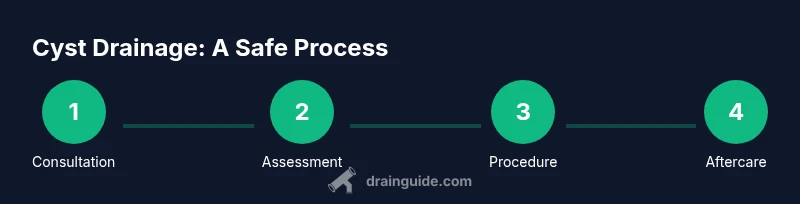
In a clinical setting, a healthcare professional will first clean the area with an antiseptic and administer local anesthesia to minimize discomfort. They will then make a small incision to allow the cyst’s contents to drain, remove any remaining debris or capsule if necessary, and flush the area with sterile fluid. After drainage, the wound is usually dressed with sterile gauze or a thin adhesive bandage. Depending on the cyst and infection status, a clinician might prescribe antibiotics, provide wound-care instructions, and schedule a follow-up visit to monitor healing and check for recurrence. The exact steps vary by cyst type, depth, and location, but all such procedures prioritize sterility and patient safety.
Aftercare, risks, and signs to watch for after drainage
Post-procedure care includes keeping the area clean and dry, following wound-care instructions, and watching for signs of infection or complications. Common recommendations include gentle cleansing, applying prescribed ointment if indicated, and changing dressings as directed. Potential risks after drainage include infection, recurrence of the cyst, scarring, or skin numbness if nerves are affected. Seek medical attention if you notice increasing redness, swelling, fever, severe pain, or drainage that worsens after the procedure. Early communication with your clinician improves healing outcomes and helps address any concerns promptly.
Alternatives and long-term management
While drainage is a common approach for certain cysts, it is not the only option. Some cysts are managed with observation and conservative care if they are not causing symptoms. For recurrent or cosmetically undesirable cysts, surgical removal of the cyst wall (cyst excision) might be recommended to reduce the likelihood of regrowth. In cases where drainage is contraindicated or insufficient, your clinician may discuss alternative interventions, including laser or minor surgical procedures. Drain Guide emphasizes that the best plan is tailored to the specific cyst type, location, patient health, and goals, with safety as the top priority.
Authority sources
- https://www.cdc.gov
- https://www.nih.gov
- https://www.mayoclinic.org
This section provides general medical references and is not a substitute for professional medical advice. Always consult your clinician for guidance on cyst management.
Tools & Materials
- Appointment with licensed clinician(In-person or telemedicine consult to evaluate the cyst)
- Medical history and current medications(Bring a list of meds, allergies, and prior cyst history)
- Post-procedure wound care supplies(Sterile gauze, antibiotic ointment if prescribed, and proper dressings)
- Insurance and identification(Carry information for scheduling and billing)
- Notebook or device for symptom tracking(Useful for documenting changes and questions for the clinician)
Steps
Estimated time: 1-2 weeks
- 1
Schedule a clinical evaluation
Contact a licensed clinician (primary care, dermatology, or urgent care) to assess the cyst. Clearly describe symptoms, duration, and any signs of infection. The goal is to determine whether drainage is medically appropriate and what technique is safest.
Tip: Bring a list of current medications and recent changes in symptoms to aid the clinician’s assessment. - 2
Provide a detailed symptom history
Explain whether the cyst has grown, become painful, or drained spontaneously. Mention redness, warmth, fever, or streaking around the area, which could indicate infection requiring antibiotics or urgent care.
Tip: Note the onset, recent injuries, and any previous cyst treatments. - 3
Let the clinician decide on the treatment plan
The clinician will examine the cyst and decide if drainage, excision, antibiotics, or observation is appropriate. They will discuss risks, benefits, and expected healing with you before any procedure.
Tip: Ask about anesthesia options and expected recovery time. - 4
Undergo a sterile drainage or alternative treatment if indicated
If drainage is chosen, it will be performed under sterile conditions with local anesthesia. A small incision allows contents to drain, followed by wound care and possible removal of the cyst lining for longer-term relief.
Tip: Do not rush recovery; follow wound-care instructions to minimize recurrence. - 5
Follow aftercare and schedule a follow-up
Keep the area clean and dry, follow any prescribed ointments, and return for a follow-up check to ensure healing and evaluate for recurrence.
Tip: Contact the clinician promptly if you notice fever, spreading redness, or increasing pain.
Got Questions?
Can I drain a cyst at home?
No. Draining a cyst at home carries a high risk of infection, scarring, and incomplete treatment. It should only be performed by a licensed clinician under sterile conditions.
Draining a cyst at home is not safe. Seek professional care for evaluation and appropriate treatment.
What signs indicate a cyst needs urgent care?
Urgent care is needed if the area is red, hot, increasingly painful, draining pus, or if you have fever, red streaks, or general malaise.
Look for fever, spreading redness, or severe pain—these require urgent evaluation.
What does a clinician do to drain a cyst?
A clinician uses sterile technique, often with local anesthesia, makes a small incision, drains the contents, and may remove the cyst lining or perform excision to reduce recurrence.
Doctors drain cysts under sterile conditions and discuss the exact steps with you beforehand.
Are antibiotics always needed after drainage?
Antibiotics may be prescribed if infection is present or suspected. If there is no infection, antibiotics might not be necessary. Follow the clinician’s guidance.
Antibiotics aren’t always required—only when infection is suspected or confirmed.
What are common risks after drainage?
Risks include infection, recurrence of the cyst, scarring, and wound healing issues. Your clinician will discuss specific risks based on your case.
Possible risks are infection, scarring, or recurrence; discuss these with your clinician.
What long-term options exist beyond drainage?
For recurrent cysts, surgical removal of the cyst wall may be recommended to reduce recurrence. Observation is another option if symptoms are minimal.
If cysts keep coming back, excision might be suggested after evaluation.
Watch Video
The Essentials
- Avoid DIY drainage and seek professional care for most cysts.
- Drainage decisions hinge on infection status, cyst type, and location.
- Clinicians use sterile technique and may require anesthesia for safety.
- Follow aftercare and watch for signs of infection or recurrence.
- Surgical removal may be an option for recurrent cysts.