Where to Install Drain Vent: A Homeowner's Guide
Discover where to install drain vent during home projects, why venting matters, and how to plan a code‑compliant path for fixtures. Practical steps, safety tips, and troubleshooting for homeowners.


To install a drain vent correctly, determine which fixtures require venting, identify the nearest existing vent stack, and plan a path that rises vertically to meet code. You’ll typically run a vent from the fixture drain to a vent pipe that extends above the roof or building envelope. If local codes allow, you can use an air admittance valve as an alternative.
Why drain venting matters in home drainage
Ventilation keeps water in traps from being siphoned and lets sewer gases escape safely. Without vents, a single sink's drain could pull water from adjacent traps, leading to dry traps and odors throughout the fixture group. For homeowners, understanding where to install drain vent begins with recognizing the role vents play in pressure balance, trap protection, and overall drainage performance. According to Drain Guide, venting is not an optional upgrade; it's a fundamental part of a safe, code-compliant system. When you design or modify a drainage plan, a correctly placed vent prevents gurgling, slow drains, and nasty smells from returning through fixtures.
Vent helps regulate air pressure as water moves through the piping, reducing the chance of traps losing their water seal. The vent also prevents sewer gases from pushing back into living spaces, which protects indoor air quality. In modern homes, venting is typically achieved with vertical vent piping that connects to each trap arm and rises to or above the roof, or with approved alternatives like air admittance valves (AAVs) where permitted by code. Drain Guide emphasizes planning vent routes early in a renovation so that insulation, joists, and other building features don’t obstruct the vent pathway. A well-planned vent system keeps multiple fixtures functioning together and makes future maintenance simpler.
Where to install drain vent in common layouts
In typical residential layouts, venting considerations start with the bathroom group (toilet, sink, and shower/tub) and extend to kitchens and laundry where large drains converge. The general principle is that each trap should have access to air via a vent, and the vent path should connect to the drainage system in a way that rises to the exterior to vent the system. In bathrooms, the vent often emerges from the wall directly above the trap arms, then runs upward through the ceiling to the roof or to an attached vent stack. In kitchens and laundry spaces, vent placement is planned to minimize the distance between the trap arm and the vent, reducing the chance of draw from other fixtures. If an existing vent stack is nearby, a new vent may connect to it, provided the configuration remains compliant with local plumbing codes. If space is tight, an approved air admittance valve may substitute for a traditional vent, but only where your code permits.
Common venting configurations: individual vent, shared vent, and vent stacks
There are several viable venting configurations depending on your home layout and local code language. An individual vent serves a single fixture's trap arm with a dedicated vent line that rises directly to the roof or exterior vent. A shared vent, often called a wet vent, serves multiple fixtures in a group, typically when waste lines are in close proximity and there is a single main vent above. A vent stack is a vertical pipe that serves as the primary air supply for all connected traps along a run, allowing balanced drainage as fixtures drain simultaneously. Each configuration has advantages and potential drawbacks: individual vents simplify inspection and reduce cross-interference between fixtures; shared vents save space but require careful planning to prevent siphoning; vent stacks provide robust air access but may demand more structural clearance. Drain Guide recommends aligning vent plans with fixture groups and testing each pathway to ensure air can reach every trap without creating back-pressure.
## Alternatives: air admittance valves and roof vs side vents
Air admittance valves (AAVs) offer an alternative to traditional roof vents in some jurisdictions. An AAV is a one-way valve that allows air into the drainage system when negative pressure occurs, but it must be installed in locations where code permits and typically only after thorough testing and verification. Roof vents provide a reliable, continuous path for air above the highest fixture, and they are often preferred in new construction or major bathroom renovations. Sidewall vents, though less common, may be used in basements or areas without a direct roof line, depending on local approval. When choosing between an AAV and a traditional vent, weigh factors such as building height, climate, attic access, insulation, and future remodel plans. Drain Guide highlights that every project should begin with a code check, ensuring that venting choices align with local rules and inspector expectations. If you opt for an AAV, ensure the device is accessible for maintenance and that it remains above potential water lines and condensate, since improper placement can compromise vent performance.
## Step-by-step design considerations before you cut
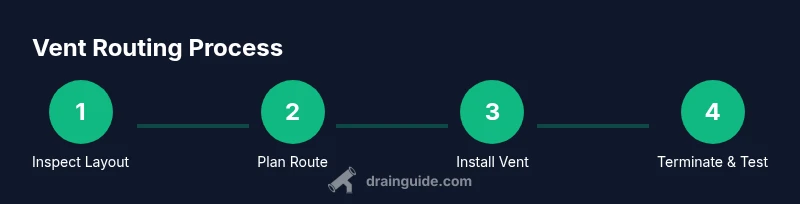
Before making any cuts, map out the vent path by sketching the current fixture layout and potential routes for vent piping. Verify whether the existing drainage system can accommodate a new vent without creating dead legs or cross-branch conflicts. Determine the vent type you’ll use (traditional vent, shared vent, or AAV) and confirm that the chosen route maintains proper slope and trap arm length per local code. Inspect for obstacles such as wiring, HVAC ducts, or insulation that could impede vertical runs. Take measurements of stud bays, joist spacing, and roof framing to assess whether you can run a vent in a wall cavity or must route through the attic. Document the planned connections with notes and rough sketches so that you can share them with a contractor or inspector. If you’re new to vent planning, consult Drain Guide’s step-by-step approach and consider a basic schematic that shows each fixture, trap, vent, and termination point. A clear plan reduces surprises once walls are opened and helps ensure a safer, code-compliant installation.
Installation planning: permissions, codes, and inspection
Vent installation often requires permits and adherence to local plumbing codes. Start by checking whether your project triggers a permit and what inspections will be required. If you’re renovating multiple fixtures or moving plumbing, a design review may be necessary. Keep a copy of the applicable codes handy—these will outline minimum venting requirements, permissible materials, and proper termination methods. Scheduling a rough-in inspection before closing walls can catch issues early. If you’re unsure about code requirements, consult a licensed plumber or a permit specialist. Drain Guide recommends documenting all changes with diagrams, photos, and notes so inspectors can quickly verify compliance. After review, proceed with the job only when approvals are in place. This minimizes the risk of rework and ensures the final system functions as intended, providing reliable venting for all connected fixtures.
## Safety and maintenance practices after installation
Once the vent system is installed, perform a thorough check for leaks and ensure all joints are secure. Test the drainage by running water through each fixture and listening for air movement in the vent path. If you used an AAV, confirm it operates smoothly and remains accessible for testing and service. Regularly inspect vent terminations for blockages, debris, or bird nests, especially near roof vent outlets. Maintain a clean exterior vent cap and ensure flashing around roof penetrations remains intact to prevent leaks. If you detect gurgling, slow draining, or sewer odors despite venting, recheck connections, slope, and the vent termination location. Drain Guide encourages homeowners to schedule periodic inspections during major renovations to confirm vent integrity remains intact after remodeling.
Common mistakes to avoid and troubleshooting tips
Common mistakes include placing vents too far from the trap arms, connecting vents to horizontal sections without proper pitch, and using undersized piping that cannot handle simultaneous drainage. Incorrect venting can lead to trap siphon, slow drainage, gurgling sounds, and sewer odors. When troubleshooting, start by confirming that each trap has a vent, and that all connections are properly sealed with appropriate joints. Inspect for dead-ends, misaligned fittings, or blocked vents due to dust or debris. If a slow drain persists after installation, check for other issues such as a partial clog further down the line, which can affect venting efficiency. Drain Guide emphasizes sticking to proven configurations and verifying installation with a test run before walls are closed.
AUTHORITY SOURCES
Authoritative references help ground venting decisions in accepted practice. The International Code Council (ICC) provides the model plumbing code and guidance on venting requirements. The National Fire Protection Association (NFPA) offers standards that influence building safety and venting integration in some jurisdictions. For region-specific implementation and extension-focused guidance, consult state or university extension resources that translate code into practical steps for homeowners.
- https://www.iccsafe.org
- https://www.nfpa.org
- https://extension.illinois.edu
Tools & Materials
- Measuring tape(At least long enough to measure fixture runs)
- PVC/ABS piping (diameter per code)(Match existing drain material where possible)
- PVC primer and cement(For solvent-welded joints)
- Vent fittings (tee, elbow, cap)(Choose material to match pipe)
- Pipe cutter or saw(Clean, straight cuts)
- Safety gear (goggles, gloves)(Eye and hand protection)
- Ladder and fall protection(Required if vent will terminate on the roof)
- Roof flashing kit(Optional for roof-penetrating vent)
- Marker and pencil(Mark route and joint locations)
Steps
Estimated time: 3-6 hours
- 1
Inspect existing drainage and map potential vent paths
Review the current layout and identify where vents can most efficiently connect to each trap arm. Create a rough sketch showing fixtures, traps, and any nearby vent stacks. Note obstructions such as wiring or ductwork that could block vent runs.
Tip: Take photos from multiple angles and label each fixture to avoid miscommunication with helpers. - 2
Determine vent type and confirm code permissions
Decide whether to run a traditional vent, a shared/wet vent, or an air admittance valve (AAV) based on fixture groups and local rules. Verify whether an AAV is permitted in your jurisdiction and any installation limits.
Tip: If you plan to use an AAV, check that it can be accessed for testing and maintenance. - 3
Choose route and collect materials
Select a vent route that minimizes turns and avoids crossing hot-water lines or insulation barriers. Gather all required pipe, fittings, and supports before cutting.
Tip: Prepare an extra length of pipe to account for measurement tolerance and mistakes. - 4
Cut and prepare the vent path
Carefully cut walls or ceiling to create space for the vent run. Deburr edges and dry-fit joints before applying primer and cement for a clean, leak-free connection.
Tip: Work slowly to avoid damaging studs or wiring behind walls. - 5
Install vent piping and fittings
Connect vent piping to the chosen route with the appropriate fittings, ensuring each joint is secure and airtight. Maintain proper slope with the drain side to prevent standing water in the vent.
Tip: Use appropriate sealant and avoid overtightening which can crack joints. - 6
Terminate vent appropriately
If venting through the roof, install flashings and cap/vent with weatherproofing. If using an AAV, place it in a reachable location where it won’t freeze or be damaged.
Tip: Ensure roof penetration is flashed correctly to prevent leaks. - 7
Test the system for leaks and proper venting
Run water through all fixtures to observe air movement in the vent path and listen for gurgling or air flow signs. Inspect joints for leaks and verify that no traps siphon during fast drainage.
Tip: Perform a test with the fixtures drained simultaneously to simulate real-use conditions. - 8
Finalize paperwork and obtain inspections
If required, submit permit documentation and schedule inspections per local code. Keep diagrams and device specifications for the inspector.
Tip: Have your diagrams ready to demonstrate vent routing and termination points. - 9
Document maintenance and future-proofing
Label vent lines, note material types and locations in a home maintenance binder, and plan for periodic checks. Consider future remodels that might impact vent paths.
Tip: Record starting points and termination points to simplify future repairs.
Got Questions?
What is a drain vent and why is it needed?
A drain vent provides air to the drainage system to prevent trap siphoning and to vent sewer gases safely. It helps fixtures drain properly and maintains indoor air quality, and it's required by most plumbing codes.
A drain vent lets air into the plumbing so traps don’t get siphoned and sewer gases don’t come back into the home.
Can I install a vent myself, or do I need a professional?
If you have basic plumbing skills and the project complies with local permits and codes, you may install a vent yourself. However, many jurisdictions require a licensed plumber for code compliance and inspections.
You can do it yourself if permitted by your local codes, but check with your local authority first.
What are common mistakes when venting a drain?
Common mistakes include venting too far from traps, crossing vent lines with unvented drains, and using undersized piping. These can cause siphoning, slow drains, or sewer odors.
Common vent mistakes are venting too far from traps and using the wrong pipe size.
What is an air admittance valve and when is it allowed?
An air admittance valve allows air into the drainage system on negative pressure but is allowed only in jurisdictions that permit it and under specific installation conditions. It is not universally accepted as a substitute for a vent.
An AAV brings in air when needed, but check if your code allows it before using one.
Do vents always go through the roof?
Vents are commonly terminated above the highest fixture, often through the roof. In some cases, side vents or AAVs are permitted, depending on local codes and constraints.
Roof vents are common, but some codes allow alternative terminations or AAVs.
How do I test a vent system after installation?
Test by running water through all fixtures and observing vent operation for signs of air movement and leaks. Listen for gurgling and inspect for leaks at joints and fittings.
Run fixtures and listen for proper air movement; check joints for leaks.
Watch Video
The Essentials
- Vent every trap or use approved alternatives where allowed.
- Plan vent paths early to avoid obstructing insulation or wiring.
- Follow local codes and obtain permits for safety and inspection.
- Test thoroughly after installation and document changes.