Why Do My Drains Keep Blocking? A Practical Troubleshooting Guide
Discover why drains keep blocking and follow a step-by-step approach to diagnose, clear, and prevent clogs safely at home with Drain Guide.


According to Drain Guide, the most likely culprits are hair, soap scum, and grease that accumulate in the trap and pipes, slowing drainage. Start with a safe, quick fix: remove and clean the P-trap, flush with hot water, and use a plunger or hand auger if needed. If the flow remains slow, avoid harsh chemicals and call a plumber for deeper blockages.
Causes Behind Recurrent Blockages
Clogs aren’t random; they form when everyday waste accumulates in the drainage system over weeks or months. The most common culprits in homes are hair strands and soap scum that collect in the P-trap and curves of the pipe, creating a web-like blockage. Fats and grease from cooking solidify on cooler surfaces, trapping debris. Small objects like utensils or receipts accidentally flushed can also contribute.
Other factors: mineral buildup from hard water can narrow pipes, while soap residues can form a sticky film. In bathrooms, mineral scale and mineral salts, combined with mineralization from hard water, can cause slow drainage. In kitchens, grease and food particles combine to form dense plugs. If you have older plumbing or clay/iron pipes, roots and joints can loosen and intrude, causing intermittent backups. Venting problems in the drainage system can also lead to slow draining; if air cannot escape properly, water flows slower. Drain Guide's team notes that many blockages are preventable with simple maintenance and mindful usage. Regularly cleaning traps, using drain screens, and avoiding flushing non-dissolving objects reduces risk. The Drain Guide team emphasizes prevention as a cornerstone of long-term reliability.
Safe, Quick Checks You Can Do Right Now
If you’re facing a slow drain, start with the simplest checks before pulling apart pipes. First, identify which fixture is affected and whether the problem is localized to one drain or affects several. Put on gloves and lay towels around the area. Place a bucket under the P-trap, then carefully loosen the nuts and remove the trap. Clean out all debris, rinse the trap with hot water, and reassemble. Run water to see if flow improves. If it doesn’t, try a plunger designed for sink drains, ensuring a good seal and steady push. If plunging fails to clear the clog, a hand auger (drain snake) can reach deeper. After each method, flush with hot water and a mild dish soap solution. If you notice gurgling sounds or slow drainage persists, the issue may be further down the line or in the vent stack, which may require professional attention. For safety, never mix chemical cleaners with other cleaners and avoid forcing pipes beyond their tolerance. Drain Guide recommends documenting what you try so you can share details with a pro if needed.
Tools, Techniques, and Safe Handling
Clearing a clog effectively relies on choosing the right tools and using them safely. A plunger provides a quick, non-invasive fix for many blockages at the fixture level, while a hand auger reaches deeper into the pipe without harsh chemicals. For stubborn clogs in kitchen or bathroom drains, a drain snake with a curved head helps break up hair and grease. Enzymatic cleaners can be helpful for routine maintenance but are not a substitute for physical removal when a solid blockage exists. Always wear gloves and eye protection, disconnect power to nearby appliances if feasible, and keep a bucket and rags handy to catch spills. If you encounter a clog that won’t budge after multiple attempts, consider professional assistance. Drain Guide highlights that patience and proper technique reduce the risk of pipe damage and future clogs more effectively than aggressive methods. Remember to keep the area well-ventilated and avoid mixing cleaners, as fumes can be hazardous. Safety first, then methodical progress.
Prevention: Simple Habits to Keep Drains Clear
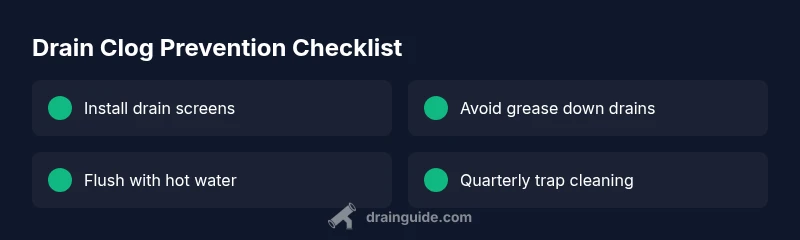
Prevention is the best cure for recurring clogs. Start by installing drain screens on all sinks and tubs to catch hair and food debris. Avoid pouring grease or oil down the drain; instead, collect it in a container and dispose it in the trash. Run hot water for 20–30 seconds after heavy use to dissolve soap scum and carry away small particles. Schedule a quarterly trap cleaning and annual professional inspection if you have older plumbing. Use enzyme-based cleaners periodically to help break down organic buildup without harsh chemicals. Keep a disposal routine for foreign objects—papers, wipes, and dental floss should never go down the drain. Drain Guide’s approach centers on consistent maintenance, thoughtful disposal habits, and timely checks to keep your drainage system flowing freely.
Steps
Estimated time: 45-60 minutes
- 1
Gather tools and prep area
Assemble a plunger, hand auger, bucket, towels, and protective gloves. Clear the area so you can work comfortably and avoid spills. This prep reduces surprises later and keeps you safe.
Tip: Lay towels and a tray to catch drips; organization saves time. - 2
Shut off water supply to the fixture
Turn off the water supply to the sink or fixture you’re working on to prevent fresh water from adding to the clog. If there’s no dedicated shutoff, you can shut off the main valve. This prevents accidental splashes while you work.
Tip: Open the faucet to relieve pressure after shutting off. - 3
Place a bucket and protect the area
Position a bucket under the P-trap to catch water and debris. Use rags to block any splashback and protect the cabinet. This keeps cleanup minimal and makes the task less messy.
Tip: Wear eye protection if you expect splash. - 4
Remove and clean the P-trap
Loosen the nuts on the P-trap, carefully detach it, and clear out hair, soap scum, and gunk. Rinse thoroughly with hot water before reattaching. Check the washer and seals for wear and replace if necessary.
Tip: Inspect both ends for cracks; replace if damaged. - 5
Reassemble and test drainage
Reassemble the P-trap, ensure all connections are tight but not overtightened, and run water to test. If water still backs up, proceed to the next step rather than forcing a cure.
Tip: Check for leaks around joints after running water. - 6
Use a plunger or hand auger for deeper clogs
If the trap is clear but flow remains slow, use a plunger with a good seal or a hand auger to push through the obstruction. Work slowly and steadily to avoid damaging pipes.
Tip: Keep a consistent, gentle rhythm rather than hard jerks. - 7
Flush and observe flow
Run hot water for several minutes to wash away loosened debris. Observe the drainage for improvement. If flow remains sluggish, don’t force more aggressive methods.
Tip: Consider a baking-soda and vinegar flush as a maintenance step. - 8
Check the vent and downstream lines
If multiple fixtures back up, inspect the vent stack or downstream lines. Blockages in vents require roof access and caution. This is often beyond DIY for safety and code reasons.
Tip: Avoid attempting vent work if you’re uncomfortable with heights. - 9
Decision point: DIY vs. pro
If the clog persists after all steps or if you notice repeated backups, schedule a professional inspection. A licensed plumber can safely diagnose main-line or vent issues and prevent recurring damage.
Tip: Document what you tried and timing to help the pro diagnose faster.
Diagnosis: Slow draining or repeated backups across fixtures
Possible Causes
- highHair and soap scum buildup in the P-trap
- mediumGrease and food particles in kitchen drains
- mediumMineral buildup from hard water narrowing pipes
- lowForeign objects flushed down drains
- lowVent blockage causing poor drainage
Fixes
- easyDisassemble and clean the P-trap
- easyUse a plumber's snake to clear the line
- easyFlush lines with hot water and enzymatic cleaner
- hardInspect and clear the vent stack or main line
- mediumCall a licensed plumber for main-line or vent issues
Got Questions?
What is the most common cause of a blocked drain?
Hair and soap scum are frequent culprits in bathroom drains, while grease dominates kitchen clogs. Regular trap cleaning helps prevent these buildup issues.
Hair and soap scum are the usual culprits; regular trap cleaning helps prevent buildup.
Can chemical drain cleaners be used safely?
Chemical cleaners can damage pipes or fixtures and aren’t effective for stubborn clogs. Prefer mechanical methods like plungers or snakes, and only use chemicals as a last resort if advised.
Chemical cleaners can damage pipes; use mechanical methods first and only as a last resort.
Should I remove the P-trap myself?
Yes, removing and cleaning the P-trap is a common first DIY step if you’re comfortable. Ensure the water supply is shut off and you’re prepared to catch spills.
Yes, you can remove and clean the P-trap if you’re comfortable, after turning off the water.
How often should drains be cleaned to prevent clogs?
Perform simple checks and trap cleanings every few months, and consider a light maintenance flush quarterly to reduce buildup.
Do regular checks every few months with a quarterly maintenance flush.
What if multiple fixtures back up at once?
Backups across fixtures suggest a main-line or vent issue. A licensed plumber should diagnose and address the underlying problem.
Multiple backups likely mean a main-line or vent problem—call a plumber.
Is plunging safe for plastic pipes?
Plunging is generally safe for most metal and plastic pipes if done gently and with a proper seal. Avoid forcing the tool too hard.
Plunge gently and avoid forcing; it’s usually safe for most pipes.
Watch Video
The Essentials
- Start with the P-trap; it’s the common chokepoint.
- Mechanical clearing is safer than chemical cleaners.
- Maintain drains with screens and regular cleanings.
- Call a pro for main-line or vent issues.