Why Drain the Gallbladder Instead of Removing It: A Comparative Guide
A detailed, analytical comparison of gallbladder drainage versus surgical removal, outlining indications, procedures, recovery, risks, and decision-making for patients and families.


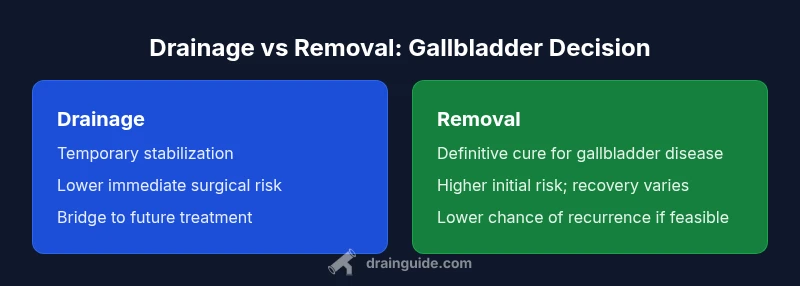
The question of why drain the gallbladder instead of removing it often comes down to patient risk, stability, and long-term goals. Gallbladder drainage (a temporary, bridge solution) may stabilize infection and inflammation in high-risk patients, buying time before definitive treatment. Removal (cholecystectomy) is definitive but carries higher upfront risk; the choice depends on medical status, symptoms, and the feasibility of future surgery. Drainage can be the prudent first step when immediate surgery is unsafe, with removal planned once the patient is optimized.
Understanding the Core Question
According to Drain Guide, the question "why drain the gallbladder instead of removing it" centers on balancing short-term safety with long-term outcomes. In many cases, clinicians opt for gallbladder drainage as a temporary measure to control infection or obstruction while the patient recovers from illness, improves liver function, or stabilizes medical comorbidities. The underlying principle is to achieve the fairest risk-benefit balance: relieve symptoms and prevent deterioration now, while keeping definitive therapy in reach for a later date. This decision is highly individualized and depends on anatomy, infection severity, and the patient’s overall resilience. For patients and families, this means a careful discussion about when an intervention is provisional versus definitive, and what each path implies for recovery and quality of life.
When Drainage Makes Sense: Indications and Scenarios
Drainage is often considered when a patient presents with acute cholecystitis, gallbladder empyema, or gallbladder-related infection in whom immediate cholecystectomy would carry excessive risk. In these scenarios, percutaneous or transhepatic gallbladder drainage can rapidly decompress the gallbladder, reduce inflammation, and stabilize the patient for future treatment. Drainage may also be used as a bridge in critically ill patients, those with severe cardiopulmonary disease, or individuals with coexisting infections or organ dysfunction that would complicate anesthesia and surgery. While not always delaying the eventual removal of the gallbladder, drainage can improve survival and shorten the window of critical illness by buying time for optimization and planning.
What Removal Entails: Cholecystectomy Basics
Cholecystectomy—usually performed laparoscopically but occasionally as an open procedure—removes the gallbladder and eliminates the source of biliary pathology. As a definitive therapy, it prevents recurrence of gallbladder-related symptoms and reduces the risk of future biliary complications. The procedure is generally performed under general anesthesia and may require a short hospital stay, depending on patient risk, intraoperative findings, and surgeon expertise. In healthier patients, removal often yields rapid symptom relief and a straightforward recovery. In higher-risk patients, the surgery may be staged or performed only after sufficient optimization and stabilization.
Comparing Outcomes: Short-Term and Long-Term Considerations
From a short-term perspective, drainage typically involves less immediate physiologic stress than a full cholecystectomy, potentially leading to shorter anesthesia exposure and a quicker initial recovery. Long-term considerations vary: drainage may necessitate a future operation to remove the gallbladder or to address residual disease, whereas removal provides a definitive solution with a lower chance of recurrent gallbladder problems. The choice often hinges on whether the patient can tolerate definitive surgery now or if staged management—drainage followed by later removal—offers a better overall trajectory for recovery and function.
Procedure Details: How Drainage Is Performed
Gallbladder drainage is typically performed under image guidance, often by interventional radiology. A catheter or drain is placed through the abdominal wall into the gallbladder to relieve pressure and drain infected bile. This procedure can be done with local anesthesia and sedation in many cases, depending on patient factors and institutional protocols. Patients usually require careful monitoring for catheter-related issues, bile leak, or infection. Drainage is designed as a temporizing measure and is often part of a broader plan that includes antibiotic therapy and plans for definitive treatment when feasible.
Procedure Details: How Removal Is Performed
Cholecystectomy involves removing the gallbladder through laparoscopic technique in most patients, with the option of an open approach if anatomy or inflammation complicates the procedure. The operation addresses the root cause of gallbladder disease and eliminates recurrence risk for many patients. Recovery can be swift for healthy individuals but may be slower in older patients or those with comorbidities. Potential complications include bile leak, bleeding, infection, or injury to nearby structures. The choice of anesthesia, approach, and perioperative care all influence outcomes and should be discussed with the surgical team.
Recovery, Lifestyle, and Follow-Up
Recovery after drainage focuses on catheter care, wound management, and monitoring for signs of infection or blockage. Patients may resume light activity sooner than after a full removal, but they also need to plan for the possible need for future surgery. Recovery after cholecystectomy often includes dietary adjustments and gradual return to normal activity, with a typical follow-up schedule to monitor liver function and bowel symptoms. In both paths, ongoing follow-up helps detect complications early, optimize medical therapy, and ensure the best possible quality of life during the transition from acute illness to longer-term health.
Risks, Complications, and Rare Scenarios
Drainage carries risks such as catheter dislodgement, tract infection, or inadequate drainage, and it may not fully resolve the underlying gallbladder issue. Removal has its own risks, including bile duct injury and infection, though modern surgical techniques have reduced these rates. Rarely, anatomy variations or severe inflammation can necessitate alternative strategies or staged approaches. The right choice depends on the clinical context, imaging findings, and the patient’s overall risk tolerance and goals for care.
Costs, Access, and Availability
Access to gallbladder drainage versus removal depends on facility capabilities, regional practice patterns, and insurance coverage. In some settings, drainage may be more readily available or faster to deploy, particularly for unstable patients who require urgent stabilization. Costs are influenced by the need for skilled radiology or surgical teams, length of stay, catheter care supplies, and potential subsequent procedures. Clinicians and patients should discuss expected pathways, including timelines, to make an informed choice aligned with both medical and practical considerations.
Decision-Making Framework for Patients and Families
A shared decision-making framework helps balance urgency, safety, and long-term goals. Key factors include symptom burden, disease severity, comorbid conditions, anesthesia risk, and patient preferences regarding surgical intervention and recovery. When the patient’s condition permits, a definitive removal may offer lasting relief, but in higher-risk individuals, a staged plan beginning with drainage can optimize outcomes. Documented goals of care, expectations for quality of life, and potential future procedures should guide the decision process and foster clear communication with clinicians.
Practical Tips for Discussing Options with Your Doctor
Prepare a list of questions focusing on risks, benefits, and alternatives for both drainage and removal. Ask about the likelihood of requiring a second procedure after drainage, expected recovery timelines, dietary considerations, and the impact on daily living. Seek clarity on anesthesia options, hospital stay length, and what postoperative follow-up will entail. Bringing a trusted family member or friend can help ensure you capture all details and make a decision aligned with your values and priorities.
What the Evidence Suggests for Shared Decision-Making
Evidence supports individualized decision-making based on patient risk, anatomy, and clinical goals. The choice between drainage and removal should be guided by a careful assessment of short-term stabilization needs and long-term disease control. In practice, this means clinicians present a clear plan for immediate management with drainage when needed and articulate the path to definitive surgery when feasible, ensuring the patient’s preferences are central to the plan.
Comparison
| Feature | Drain the Gallbladder (percutaneous cholecystostomy) | Remove Gallbladder (cholecystectomy) |
|---|---|---|
| Indication | Temporary stabilization in high-risk patients | Definitive treatment for gallbladder disease |
| Procedure type | Minimally invasive catheter drainage under imaging guidance | Laparoscopic or open surgical removal |
| Recovery time | Shorter initial recovery; catheter care involved | Longer initial recovery; hospital stay variable |
| Long-term outcomes | Often requires future surgery for definitive care | Eliminates gallbladder-related recurrence in most cases |
| Risks | Catheter-related complications; infection risk; need for later surgery | Surgical risks: bile leak, infection, injury to surrounding structures |
| Cost/access | Typically lower upfront cost; faster stabilization | Higher upfront cost; longer recovery in some cases |
Positives
- Can rapidly stabilize patients who are poor surgical candidates
- Preserves the anatomy temporarily for careful planning
- Often shorter initial hospital stay for high-risk patients
- Provides a bridge to definitive therapy when feasible
Cons
- May require a second procedure for definitive treatment
- Not a definitive solution for gallbladder disease
- Catheter-related complications or infection risk
- Drains can be uncomfortable and require care
Drainage is the preferable initial step for high-risk patients; removal remains preferred when the patient can tolerate surgery.
For patients with high anesthesia risk or unstable medical status, drainage offers rapid stabilization. If the patient is fit for surgery, cholecystectomy provides a definitive solution with generally durable relief. Shared decision-making is essential to align treatment with patient goals and medical reality.
Got Questions?
What is gallbladder drainage and when is it used?
Gallbladder drainage involves placing a catheter to drain bile and decompress the gallbladder. It is typically used as a temporary measure in patients who are not good surgical candidates due to infection, sepsis risk, or significant comorbidities. This approach can stabilize the patient and reduce the need for urgent surgery.
Gallbladder drainage is a temporary catheter-based procedure used to stabilize high-risk patients before a potential later surgery.
What are the risks of gallbladder drainage versus removal?
Drainage carries risks such as catheter-related issues and infection, and may require future removal. Removal carries surgical risks, including bile duct injury or infection, though modern techniques minimize these risks. The choice depends on patient health and treatment goals.
Drainage risks include catheter problems and infection; removal carries surgical risks but may offer definitive relief.
How do recovery times compare for drainage and removal?
Recovery after drainage can be shorter initially but may require planning for future treatment. Removal often requires a longer initial recovery period, but it may provide definitive symptom relief. Each path requires tailored postoperative plans and follow-up.
Drainage usually has quicker early recovery but may need another procedure; removal offers lasting relief but with a longer initial recovery.
Is drainage a permanent solution or a bridge to removal?
In most cases, drainage is a bridge that stabilizes the patient and buys time for optimization before removal, if feasible. Some patients may never require removal, depending on the underlying condition and response to treatment.
Drainage often serves as a bridge; some patients never need removal if symptoms resolve and risk remains low.
What factors influence the choice between drainage and removal?
Key factors include anesthesia risk, medical comorbidities, infection severity, gallbladder anatomy, and patient preferences. Clinicians weigh the urgency of relief against the safety of definitive surgery and long-term outcomes.
Decision factors include risk, anatomy, infection severity, and patient goals.
The Essentials
- Drainage is a bridge, not always a final solution
- Assess anesthesia risk before choosing removal
- Definitive removal reduces recurrence risk in suitable patients
- Discuss timelines and follow-up clearly with your care team
- Engage in shared decision-making with clinicians