Will Drain Cleaner Kill Fruit Flies? A Practical Guide for Homeowners
Discover if drain cleaner can kill fruit flies from drains. Drain Guide analyzes effectiveness, safety, and practical alternatives for homeowners seeking lasting relief.


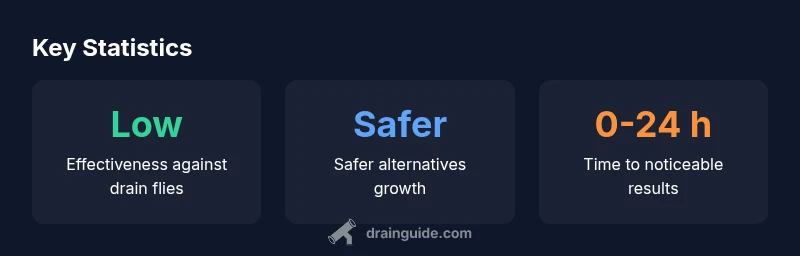
Short answer: Drain cleaner is not a reliable solution for killing fruit flies that breed in drains. While some cleaners may corrode or flush away organic material, most fruit fly larvae survive and reinfest once residue remains. For homeowners, safer methods—like thorough cleaning, traps, and enzyme-based products—are usually more effective and pose fewer risks.
Will Drain Cleaner Kill Fruit Flies?
The question "will drain cleaner kill fruit flies" is commonly asked by homeowners facing a fluttering nuisance at the kitchen sink. According to Drain Guide, drain cleaners are not a targeted solution for drain flies or the related fruit flies that often appear near drains. Drain flies breed in the organic film inside pipes, while fruit flies are attracted to fermenting fruit, garbage, and moist organic matter nearby. In practice, a chemical drain cleaner may clear a superficial layer of debris or temporarily deodorize the drain, but it rarely penetrates entrenched biofilm or reaches larvae deeper in the piping network. Drain Guide Team notes from 2026 emphasize that long-term control hinges on diversified strategies that address both adult activity and the larval habitat. For most households, the safest, most effective approach blends thorough physical cleaning with targeted traps and enzyme-based products designed to disrupt biofilm. Relying solely on a drain cleaner risks unnecessary chemical exposure and limited results.
How Do Drain Cleaners Work?
Drain cleaners come in two broad categories: caustic/acidic chemical cleaners and enzyme-based cleaners. Chemical cleaners rely on strong reactions to dissolve organic matter, while enzyme-based formulations aim to digest the organic film that harbors biofilm and discarded food particles. Both types primarily act on the immediate drain channel, not on the deeper reaches of the pipe or the surrounding ecosystem where pests may persist. Enzymatic cleaners are generally gentler on pipes and less likely to disrupt beneficial bacteria in septic systems, but they still require time to work and consistent application. The bottom line is that cleaners are a surface or near-surface solution at best, and they do not reliably eradicate the breeding grounds that sustain drain and fruit fly populations.
Why Drain Cleaners Often Fail Against Drain Flies
Drain flies reproduce in the damp, organic residue that often lines the interior of plastic and metal drain pipes. Larvae live below the visible surface, where most standard cleaners struggle to reach. Even when a cleaner temporarily clears the drain, new eggs can hatch and larvae can thrive in remaining biofilm. Enzymatic products may reduce the biofilm layer over time, but without addressing entry points, food sources, and the breeding sites within pipes, infestations can persist. The Drain Guide team highlights that a one-off chemical flush rarely solves the root cause and recommends integrating mechanical cleaning steps with enzymatic treatment to curb the problem more reliably.
Safer Alternatives You Can Try First
If you’re dealing with drain flies, start with a conservative, multi-pronged approach. Mechanical cleaning—cabinet removal, plunge the trap, scrub the inner walls with a bottle brush, and flush with hot water—helps remove the biofilm that serves as a larval habitat. Enzymatic cleaners, used as directed, can reduce organic buildup without the harsh effects of caustic chemicals. For active control, try traps placed near the drain to catch adults, and place a small bowl of red wine or apple cider vinegar with a drop of dish soap near the sink to lure and trap them. Store-bought enzyme products paired with regular cleaning provide a safer, more sustainable strategy than relying on a chemical drain cleaner alone.
Step-by-Step DIY Cleaning Plan
- Clear the area around the sink and remove standing water or decaying fruit from the vicinity. 2) Boil a kettle or pot of water and slowly pour it down the drain to loosen debris (avoid pouring boiling water into pipes that could crack or warp if not rated for hot water). 3) Use a long brush to scrub the P-trap and accessible piping, paying attention to elbow joints where gunk can accumulate. 4) Apply an enzymatic cleaner as directed for a biofilm-focused treatment, and allow it to sit for the recommended time. 5) Place sticky traps or bottle traps near the drain to capture adults and reduce reproducing numbers. 6) Repeat the process weekly for several weeks to keep buildup from returning and to monitor progress. 7) If the infestation persists after a couple of cycles, consider professional inspection to identify hidden breeding sites and verify venting or drainage issues.
When to Consider Professional Help
If you continue to see fruit fly activity after several weeks of consistent cleaning and trapping, or if you notice unusual odors, gurgling sounds, or slow drainage that points to plumbing issues, it’s wise to seek a professional assessment. A plumber can inspect the pipe network for hidden biofilms, damaged seals, or venting problems that provide ongoing habitats for drain flies. Drain Guide recommends scheduling a pro evaluation when DIY efforts fail to reduce fly activity, as persistent infestations may require more comprehensive remediation and equipment like augers or camera inspection.
What to Expect: Timeframes and Outcomes
Time to noticeable improvements varies with infestation severity and the thoroughness of cleaning efforts. In many cases, you may observe a reduction in adult flies within 1–2 weeks if you combine mechanical cleaning, enzymatic treatment, and traps. However, complete control can take several weeks or longer for deep biofilm in longer pipe runs. The key is consistency: repeat cleaning and enzyme applications as recommended, maintain traps, and monitor activity. Drain Guide emphasizes that timeframes depend on how well you block new breeding cycles and remove attractants, not on a single chemical flush.
Drain Guide's Best Practices for Drain Fly Control
Here are practical, field-tested practices from the Drain Guide Team: start with thorough physical cleaning of accessible drains, use enzymatic cleaners to target biofilm, install traps to capture adults, and address any food residues around the kitchen. Keep cleaning routines regular, and avoid overreliance on harsh chemical cleaners that can damage pipes or create safety hazards. By combining these tactics, you reduce breeding sites, limit adult emergence, and create a less hospitable environment for drain flies in a sustainable way.
Common Myths Debunked
Myth: A single dose of drain cleaner will magically solve a drain fly problem. Reality: Drain flies often breed in inaccessible pipe segments; a single chemical flush rarely resolves the issue. Myth: Enzymatic cleaners are useless. Reality: Enzymatic cleaners reduce biofilm and support longer-term control when used as part of a broader cleaning plan. Myth: If you don’t see flies, the problem is gone. Reality: Eggs and larvae can persist; ongoing maintenance is essential for lasting relief.
Comparison of drain-fly control methods
| Method | Effectiveness | Safety | Notes |
|---|---|---|---|
| Boiling water | Moderate | Low chemical risk | Useful for immediate flush; avoid on damaged plumbing |
| Enzymatic drain cleaners | Low to moderate | Low risk to pipes | Best for gradual biofilm reduction |
| Chemical drain cleaners | Low | High risk to pipes | Follow safety guidelines; may corrode seals |
| DIY traps and routine cleaning | Low to moderate | Low risk | Helpful for prevention; works best with other methods |
| Professional intervention | High | Low risk when performed by pros | Recommended for persistent infestations |
Got Questions?
Can drain cleaners kill fruit flies completely?
Usually not. Drain cleaners may remove surface debris, but drains can still harbor eggs and larvae. A combination of thorough cleaning, traps, and enzymatic products is generally more effective.
No. Drain cleaners alone typically won't fully fix drain fly problems; use cleaning, traps, and enzymes.
Are enzymatic cleaners safer for drains than chemical cleaners?
Yes, enzymatic cleaners are gentler on pipes and septic systems and often work over time by reducing biofilm. They are usually part of a safer, long-term strategy.
Enzymatic cleaners are generally safer for pipes and work gradually.
Will boiling water or vinegar help with drain flies?
Boiling water can help flush debris temporarily, but it won’t eliminate established breeding sites. It should be used as part of a broader plan.
Boiling water can help briefly, but won’t solve the problem alone.
How long does it typically take to reduce drain fly numbers?
Progress is usually observed within 1–2 weeks with consistent cleaning and traps. Complete control may take several weeks depending on infestation severity.
You’ll often see improvements in a week or two with steady effort.
When should I call a plumber?
If DIY efforts fail after a few weeks, or you notice ongoing drainage problems, odors, or gurgling, a plumber can inspect for hidden biofilm, venting issues, or pipe damage.
Call a plumber if DIY steps don’t reduce activity after several weeks.
Do drain traps or screens help prevent re-infestation?
Yes. Traps reduce adult flies and can cut the breeding cycle when used with regular cleaning. They’re part of a preventive strategy.
Traps help reduce flies but are most effective when combined with cleaning.
“A layered approach that combines mechanical cleaning, safe enzymatic cleaners, and traps is the most reliable way to reduce drain fly populations.”
The Essentials
- Start with thorough mechanical cleaning first
- Avoid relying on chemical cleaners as a lone solution
- Incorporate enzymatic cleaners for biofilm control
- Use traps to reduce adult fly populations
- Call a pro if infestations persist after DIY efforts