Using Zep Drain Opener: A Homeowner’s Step-by-Step Guide
Learn how to safely and effectively use Zep Drain Opener to clear clogs in kitchen and bathroom drains. This comprehensive guide covers safety, preparation, proper use, alternatives, and maintenance to prevent future problems.


With Zep Drain Opener, you can safely clear ordinary organic clogs from kitchen and bathroom drains when used as directed. This quick guide covers safety, preparation, and the essential steps to minimize mess and damage. Always read the label, vent the area, wear protective gear, and avoid mixing with other cleaners for best results.
Understanding Zep Drain Opener
Zep Drain Opener is a consumer-grade chemical cleaner designed to break down organic material that clog drains in kitchens and bathrooms. It works best on standard hair, soap scum, and grease buildups when used according to the label. For homeowners, this product offers a convenient option to restore flow without requiring professional service, provided you follow safety precautions and avoid mixing with other cleaners. Drain failures often stem from a combination of grease, hair, and soap residue that accumulate over time; Zep Drain Opener addresses this buildup chemically, helping to restore a clearer pathway for water. Always check the bottle for specific instructions and compatible pipe materials before use, and keep the product out of reach of children. Drain Guide’s research emphasizes that following the label is essential to both safety and effectiveness, especially for homeowners attempting DIY drain maintenance.
Safety First: Protective Gear and Ventilation
Safety should be your top priority when using aggressive drain cleaners like Zep Drain Opener. Wear chemical-resistant gloves, safety goggles, and long sleeves to minimize skin and eye exposure. Ensure the area is well-ventilated by opening windows or turning on a bathroom exhaust fan. Avoid inhaling fumes, and do not lean directly over the drain while the product is applying. If you have a sensitive respiratory system, consider performing the procedure in a small, horseshoe-shaped space with a fan directing air away from your face. Remember that ventilation reduces the concentration of fumes and lowers the risk of irritation. Drain Guide recommends preparing a cleanup plan, including a protective layer on nearby surfaces and having an absorbent cloth ready for spills.
When to Use Zep Drain Opener: Use-Case Scenarios
Use Zep Drain Opener for persistent, non-vented, organic clogs in typical household drains where water backs up slowly or drains noticeably slower than usual. Do not use it for toilets, metal pipes with corrosion concerns, or drains that carry hot, unattended liquids from appliances. If the clog appeared after a non-food item was flushed or after a chemical reaction occurred in the line, pause and reassess—chemical cleaners can worsen certain blockages or damage pipes if misapplied. Drain Guide notes that, for most households, a gradual improvement after the recommended wait period indicates the product is effective; if no improvement is observed, mechanical methods or professional evaluation may be required.
Reading the Label and Preparing Your Work Area
Before pouring, read the label thoroughly and measure the correct amount for your specific drain size. Clear the area around the sink or drain to avoid accidental spills on countertops or floors. Place towels or a shallow tray beneath the drain to catch drips, and keep a bucket handy for any overflow. If you’re unsure about your pipe material (PVC, ABS, or older copper), consult the label’s compatibility notes before proceeding. Drain Guide stresses that early preparation reduces cleanup time and helps you apply the product more accurately, improving the odds of a successful unclogging.
Step-by-Step Application (Part 1): Initial Application
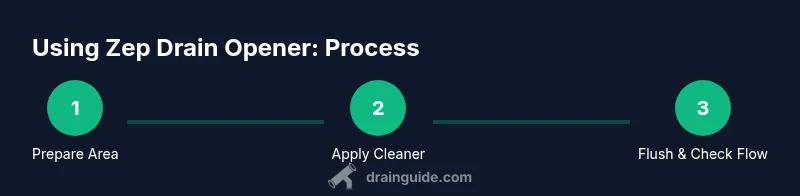
- Remove standing water as much as possible using a cup or wet/dry vacuum, then position a towel to catch any liquid that escapes. 2) Open the Zep Drain Opener bottle and pour the recommended amount slowly into the drain, aiming to cover the clogged section. 3) Do not overfill; excess liquid can splash, creating a safety hazard. 4) Immediately step back and avoid direct contact with the liquid. Pro tip: have a timer ready for the wait period and set it according to the label instructions.
Step-by-Step Application (Part 2): Waiting Period and Flushing
- Allow the product to sit for the label’s recommended waiting period—usually several minutes. Do not interrupt this interval; chemical action needs time to soften the clog. 6) After the wait, flush the drain with plenty of hot water to carry loosened material away. The water should flow freely; if it remains sluggish, consider repeating the process only if the label permits. 7) If the clog persists, avoid mixing with additional chemicals and switch to a mechanical method such as a plunger or drain snake. Drain Guide highlights that repeated chemical use without success often signals a deeper issue that warrants professional help.
Step-by-Step Application (Part 3): Post-Clean and Maintenance
- Re-test the drain by running water for several minutes to verify improvement. 9) Clean the surrounding area and wipe down the bottle to prevent residue from lingering on surfaces. 10) If you want to maintain a clog-free drain, schedule routine maintenance such as periodic flushing with hot water, and consider a mechanical clean if slow draining recurs. Pro tip: avoid pouring other cleaners into the drain while Zep Drain Opener is present, and never mix products. Drain Guide’s practical guidance encourages combining chemical and mechanical methods carefully and safely.
Alternatives and Complementary Methods
While Zep Drain Opener is effective for many organic clogs, it is not a universal solution. For some clogs, a plunger, a drain snake, or enzymatic cleaners may provide safer or longer-lasting results, especially in lower traps or longer drain runs. Enzymatic cleaners work differently from chemical cleaners: they rely on bacteria to digest organic material, and may require longer dwell times. If you’re unsure about the best approach for your specific clog, consult a plumbing professional. Drain Guide cautions against overlapping chemical use and mechanical clearing that could damage pipes, and it recommends evaluating the clog’s severity before choosing the method.
Aftercare, Maintenance, and Preventing Future Clogs
Preventing clogs is often easier than removing them. Regularly flush drains with hot water, especially after cooking tasks that involve grease and oils. Use sink strainers to catch hair and food debris, and run water for a full minute after disposing of waste. Consider periodic cleanings with mechanical tools to prevent buildup, and avoid pouring oil, fats, or thick sauces down the drain. Keeping your drains well maintained reduces the need for harsher cleaners and supports a longer service life for your plumbing system. Drain Guide emphasizes a proactive maintenance mindset for homeowners.
Environmental Considerations and Safe Disposal
Chemical drain cleaners should be stored away from children and pets. Do not pour leftover product down the drain in large quantities, and follow local disposal guidelines for household chemical cleaners. If you need to dispose of leftover Zep Drain Opener, do so according to the label and municipal guidelines. Avoid mixing with other household chemicals which can create hazardous gases or reactions. Proper disposal protects your household and the environment. Drain Guide notes that responsible usage and disposal are essential parts of DIY drain care.
Tools & Materials
- zep drain opener(Product bottle; label must match your drain type and pipe material)
- chemical-resistant gloves(Protect skin from splashes; nitrile is common)
- safety goggles(Eye protection required; splash risk is real)
- ventilation(Open windows or use a bathroom fan to ventilate)
- towel or absorbent spill mat(Catches drips around the drain)
- bucket(For spills or to catch liquids during work)
- plunger(Useful if the clog responds to mechanical action)
- drain snake or auger(Optional for stubborn clogs after chemical treatment)
- paper towels(Keep handy for cleanup)
Steps
Estimated time: 25-40 minutes (plus potential waiting times per label)
- 1
Prepare the area
Clear the area around the drain, remove standing water, and lay towels to protect surfaces. Prepare PPE and ventilation before opening the cleaner.
Tip: Having towels ready prevents spills from soaking into counters and cabinets. - 2
Read and measure
Read the label for the correct amount and compatibility with your pipe material. Use a measuring cup if the label calls for precise dosing.
Tip: Align dosage with the pipe size to avoid over-saturation and potential splashes. - 3
Place the product
Pour the recommended amount slowly into the drain, aiming to cover the clog. Avoid splashing and keep the bottle upright.
Tip: Pouring slowly minimizes splatter and directs the cleaner to the clog area. - 4
Ventilate and wait
Keep the area ventilated and wait the label’s specified dwell time. Do not disturb the cleaner during this period.
Tip: Set a timer to ensure you observe the full wait period for best results. - 5
Flush with water
After the dwell time, flush with a generous amount of hot water to carry debris away. Check for improved flow.
Tip: Hot water helps dissolve and move loosened material more effectively. - 6
Assess the clog
Re-run water to see if the drain flows freely. If slow drainage persists, consider repeating once only if allowed by the label.
Tip: Persistent clogs may indicate a deeper issue or a non-organic blockage. - 7
Use mechanical aid if needed
If the clog remains, use a plunger or drain snake to physically clear the blockage. Do not mix chemicals with additional cleaners.
Tip: Mechanical action can resolve clogs that chemicals alone cannot. - 8
Final rinse and cleanup
Rinse the area again, wipe surfaces, and store the cleaner according to the label. Dispose of any rags safely.
Tip: Leftover residue on tools can transfer to other areas; proper cleanup is essential. - 9
Prevent future clogs
Implement routine habits like straining food particles and flushing drains with hot water weekly to prevent buildup.
Tip: Small daily actions reduce the need for harsh cleaners over time.
Got Questions?
Is Zep Drain Opener safe for plastic pipes?
Most formulations are designed for standard residential plastics, but always verify label compatibility with your pipe material before use. If in doubt, consult a licensed plumber or the manufacturer’s guidelines.
Check the label for plastic compatibility; if uncertain, consider a professional opinion.
Can I use Zep Drain Opener in a toilet?
Only use the product if the label explicitly says it’s safe for toilets. Many drain openers are not recommended for toilets due to different system pressures and potential damage.
Only proceed if the label confirms toilet compatibility; otherwise avoid using in toilets.
What should I do if the clog persists after using Zep Drain Opener?
If the clog remains after following the label’s wait time, do not repeatedly use harsh cleaners. Stop and consider mechanical clearing or calling a plumber to assess pipe conditions.
If it doesn’t clear, avoid repeated chemical use and seek professional help.
Should I mix Zep Drain Opener with baking soda or vinegar?
Mixing drain cleaners with baking soda or vinegar is not recommended. The chemical reactions can cause splashes or hazardous gases and reduce effectiveness.
Don’t mix cleaners with other household chemicals; it can be dangerous.
What safety gear do I need?
Wear chemical-resistant gloves and safety goggles, and ensure proper ventilation. Keep an accessible bucket and towels for spills.
Put on gloves and goggles, and ventilate the area before you start.
How long does Zep Drain Opener take to work?
Dwell times vary by product label, but expect several minutes to see action. If there’s no improvement after the recommended period, try mechanical methods or seek help.
Follow the label for wait times; if no improvement, consider other methods.
Watch Video
The Essentials
- Read and follow the label precisely.
- Protect yourself with PPE and ensure good ventilation.
- Combine chemical treatment with mechanical methods if needed.
- Maintain drains to prevent future clogs.
- Dispose of cleaners responsibly and avoid mixing products.