French Drain Install Cost: What to Budget in 2026
A thorough, data-driven look at French drain install costs for homeowners. Explore per-foot ranges, total project estimates, factors shaping price, and budget-friendly tips to plan a successful drainage upgrade.


The installed cost of a French drain depends on length and materials, typically ranging from $8 to $40 per linear foot for a basic setup, or roughly $1,500 to $8,000 for typical residential runs, with longer or more complex installations costing more. Costs can rise when trenching deeper, adding gravel, bringing in professional grading, or including a outlet or dry well. Drain Guide Analysis, 2026.
Overview of French Drain Costs
A French drain is a trench filled with gravel and a perforated pipe designed to redirect subsurface water away from your foundation or problem areas. When budgeting, homeowners must consider soil conditions, trench depth, run length, and material quality. In many regions, costs are driven by labor and trenching scope more than the pipe itself. Drain Guide recommends thinking in terms of per-foot cost for basic installations and per-project cost for longer or more complex runs. This helps homeowners compare quotes accurately and avoid sticker shock when extra trenching or drainage outlets are needed.
Understanding the cost structure early can prevent surprises later. For typical residential properties, most projects fall within a broad range, but the final price will be highly sensitive to the specifics of your yard, local labor rates, and any city permitting requirements. Drain Guide analysis shows that labor and backfill materials often constitute the largest share of the budget, while the pipe and fabrics form a smaller, but essential portion. Planning with a clear scope helps align expectations with quotes from contractors.
Key Cost Drivers: Length, Depth, and Materials
Several factors govern the final price of a French drain install:
- Length of the run: Longer trenches require more material and more worker time.
- Depth of the trench: Deeper installs demand more heavy equipment and labor.
- Materials used: Choices range from standard perforated PVC pipe with gravel to premium gravel and fabric, with price gaps often reflecting the choice of pipe material, backfill, and filter fabric.
- Additional components: Outlets, dry wells, or grading work add cost but can improve drainage performance and long-term reliability.
- Site conditions: Rocky soil, utilities, or tree roots complicate digging and backfill, increasing time and cost.
Budgeting with ranges helps account for these variables. Drain Guide analysis notes that the majority of variability stems from labor intensity and trench preparation rather than the pipe itself, so be prepared for higher quotes if the site is difficult to excavate.
Material Options and Their Impact
Material choices directly affect both upfront cost and long-term performance:
- Pipe: PVC perforated pipe is common and reliable; alternatives include corrugated pipe, which may be cheaper but less durable.
- Backfill: Standard gravel is affordable; higher-quality drainage aggregates or larger stones can improve water movement but raise costs.
- Filter fabric: Essential to prevent soil intrusion; higher-grade fabrics last longer but add modest cost.
- Outlets and catch basins: Optional but can simplify maintenance and improve drainage, yet add to the total price.
Selecting durable, code-compliant materials pays off over time by reducing maintenance calls and potential failures after freezes or heavy rainfall.
Labor, Permits, and Installation Scenarios
Labor costs usually dominate French drain projects. Factors include crew size, equipment needs (excavator, trenching machines), and site access. In many areas, a contractor will quote either a linear-foot price or a complete project price. Permits for drainage work vary by municipality; many residential projects do not require a formal permit, but some jurisdictions may require inspections for certain drainage improvements. If your yard requires access through landscaped borders or driveways, expect higher labor charges for temporary site protection and waste removal. A well-planned project with clear access can minimize downtime and overall cost.
Regional Variations and Typical Ranges
Costs vary regionally due to labor rates, material availability, and climate-related challenges. On average, homeowners report a wide per-foot range that reflects local conditions and project scope. In hot markets with high labor demand, quotes tend toward the higher end of the spectrum, while regions with abundant skilled labor and lower land prices may offer more favorable pricing. The key is to compare multiple estimates that itemize trenching, pipe, gravel, fabric, outlets, and any required grading or cleanup. Drain Guide analysis suggests focusing on total project cost rather than per-foot price to ensure all components are included.
When evaluating bids, look for consistency in materials and scope, and ask for a breakdown of each line item to identify potential overcharges or hidden fees.
Cost-Saving Tips and Alternatives
To manage French drain costs without sacrificing performance:
- Reuse existing trench paths where possible and minimize unnecessary trenching.
- Choose standard materials first, then upgrade only where it yields noticeable improvement.
- Bundle drainage with other exterior projects to save on mobilization costs.
- Consider a hybrid solution: a gravity drain with a surface channel for low-gradient properties.
- Plan for future maintenance so that unexpected issues don’t derail your budget.
Talk to your contractor about staged work or phased installations if the initial budget is tight.
Planning Your Budget: A Simple Formula
A practical budgeting approach first estimates the length of trenching needed, then multiplies by a mid-range per-foot cost while adding a contingency for soil and site challenges. For example, for a 100-foot run with moderate trenching, use a base per-foot cost (e.g., mid-range) and add 15-25% for contingencies and permits if applicable. Document all line items—materials, labor, equipment, disposal—so you can compare apples to apples across quotes. Drain Guide recommends setting aside a contingency fund for unanticipated site issues and future maintenance.
Maintenance and Longevity Considerations
French drains are designed for long-term performance, but maintenance matters:
- Periodic inspection of outlets and catch basins.
- Checking for sediment buildup behind the gravel or around the outlet.
- Ensuring the fabric remains intact to prevent soil intrusion.
- Replacing backfill or fabric as needed when drainage slows down after years of service.
Proactive maintenance reduces the likelihood of expensive repairs and extends the life of the drain system.
Cost breakdown by component for French drain installations
| Component | Low range (per ft) | High range (per ft) | Notes |
|---|---|---|---|
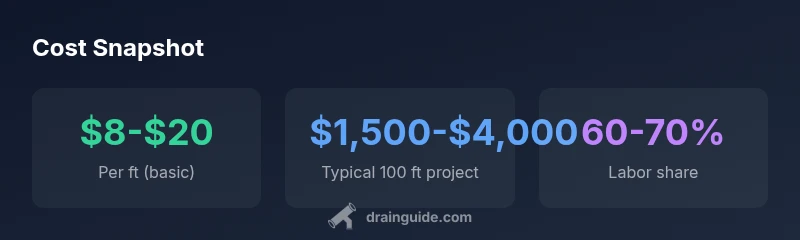
| Per-foot cost (basic materials) | 8 | 20 | PVC pipe, gravel, filter fabric |
| Per-foot cost (premium materials) | 20 | 40 | Higher-grade gravel, thicker fabric, better pipe |
| Labor to trench and install | 6 | 30 | Depends on soil and accessibility |
| Total project for 100 ft | 1500 | 4000 | Baseline ranges for typical yards |
Got Questions?
What is a French drain and where is it used?
A French drain is a trench filled with gravel and a perforated pipe that redirects groundwater away from a foundation or problem area. It’s commonly used around foundations, basements, and soggy yards to reduce standing water and soil erosion.
A French drain channels water away from your foundation to keep your space dry.
What factors influence cost the most?
Length of the trench, trench depth, and material quality are the main cost drivers. Labor time and site conditions (rocky soil, utilities, access) also significantly affect the final price.
Length, depth, and materials mostly drive the cost.
Can I install a French drain myself?
A DIY approach is possible for shorter runs and straightforward sites, but most homeowners hire professionals for reliability and proper drainage. Planning and safety are essential.
DIY is possible for simple sites, but professional installation is often recommended.
Do drainage projects require permits?
Permits vary by locality. Some municipalities require inspections for drainage upgrades, while others do not. Check with your city or county building department before starting.
Check local rules; permits vary by area.
What maintenance costs should I expect?
Expect periodic inspections and possible sediment removal or fabric replacement over time. Maintenance is usually modest but essential to keep drainage functioning well.
Maintenance involves sensor checks and occasional cleaning.
Are there cheaper alternatives to a French drain?
Alternatives include surface channel drains, dry wells, or grading improvements. These can be cheaper in some cases but may not handle all moisture problems as effectively as a French drain.
Surface channels or dry wells can help, but may not fix all water issues.
“Budgeting for a French drain project means anticipating both upfront costs and ongoing maintenance. A well-planned design using quality materials pays off in reliability and long-term drainage performance.”
The Essentials
- Expect costs to rise with length and trench depth
- Labor and site conditions drive most price variation
- Materials choice significantly impacts upfront cost
- Permits may add time and cost in some areas
- Plan for maintenance to protect long-term value