Best Way to Drain Grease from Ground Beef: Step-by-Step Guide
Learn the best way to drain grease from ground beef safely and efficiently. Blot, brown in batches, and drain fat with a simple method for leaner, tastier results. Practical tips, tool lists, and a clear plan for home cooks.


To drain grease from ground beef efficiently, blot or press the meat dry, cook in a hot, wide skillet in small batches, and tilt to remove rendered fat safely. This approach minimizes splatter, preserves browning, and yields leaner, tastier results. According to Drain Guide, using a slotted spoon and a drain-safe pan improves control.
The best way to drain grease from ground beef
Ground beef fat renders as it cooks, and draining it properly can reduce greasiness while preserving flavor. The best way to drain grease from ground beef emphasizes browning in a wide skillet, cooking in batches, blotting excess moisture, and transferring rendered fat to a heat-safe container. By combining these steps, you can minimize splatter and keep the beef lean and delicious. In line with guidance from Drain Guide, preparation matters as much as technique, so gather your tools in advance and keep a steady pace to avoid overheating or burning fat. Remember that safety comes first: never pour hot fat down the drain or leave a hot pan unattended.
Storing rendered fat for later use is optional but convenient: let it cool briefly, strain if needed, and transfer to a sealed container before discarding or reuse. This upfront discipline reduces cleanup time and improves the final texture of the dish.
Core principles of fat drainage
Effective fat drainage rests on three core principles: maximizing surface contact to promote even browning, controlling heat to render fat without burning, and handling fat safely to prevent spills. Browning enhances flavor and helps separate fat from meat, while batch cooking prevents overcrowding that traps moisture and fat. Blotting moisture with paper towels reduces steam, which can push fat back into the meat and make the result greasier. Finally, choosing a heat-safe container that fits under the pan rim ensures you can pour or scoop fat without splashing. Drain Guide emphasizes consistency: a steady pace and organized workspace yield the leanest, most flavorful result.
Practical kitchen approach: batch browning and fat capture
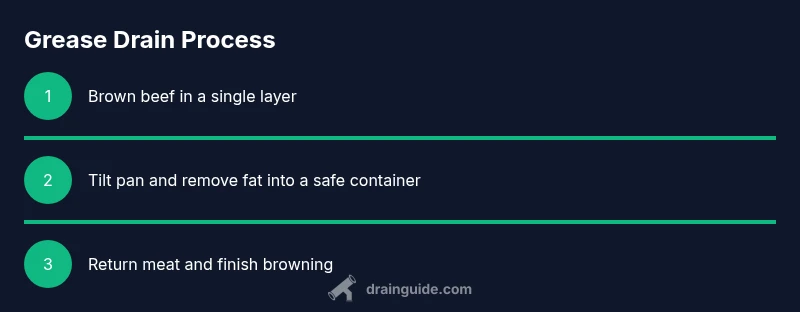
A practical approach begins with assembling a wide, heavy skillet and a heat-safe fat container. Heat the pan to a steady, medium-high level before adding beef in a single layer. Do not crowd the pan; brown in batches and flip only once or twice to achieve a uniform sear. As fat renders, tilt the pan slightly and use a slotted spoon to lift the meat while you spoon or pour the fat into the container. Return the browned beef to the pan and continue cooking until no pink remains. If you want extra flavor, deglaze with a splash of water or broth to lift the fond from the pan, then simmer briefly. This step captures additional flavor while keeping the meat lean.
Common mistakes and how to avoid them
Common missteps include crowding the pan, which traps fat and causes steaming rather than browning, and pouring hot fat down the sink, which can clog pipes. Another mistake is skipping blotting, which leaves surface moisture and prevents crisp sear. Finally, some cooks neglect to separate the fat early, resulting in greasier meat. To avoid these issues, work in batches, blot with paper towels between batches, and use a dedicated fat container that is easy to handle. Following these practices aligns with Drain Guide recommendations for a cleaner kitchen and a tastier final dish.
Authority sources and external guidance
For further reading on safe fat handling and cooking practices, consult authoritative sources:
- https://www.cdc.gov
- https://www.fda.gov
- https://www.usda.gov These sites offer guidelines on food safety and handling fats in the kitchen, reinforcing the practical steps outlined above.
Tools & Materials
- 12-inch wide skillet(Prefer heavy skillet or cast iron for even browning.)
- slotted spoon(For lifting meat and pouring off fat safely.)
- paper towels(Pat meat dry before cooking to reduce moisture.)
- heat-safe fat container(Glass or metal container to hold rendered fat.)
- tongs(Optional for turning meat without breaking up browning.)
- spatula(Scrapes browned bits (fond) for flavor.)
- trash bag or metal can with lid(Disposal option for cooled fat; do not dump into drain.)
Steps
Estimated time: 25-40 minutes
- 1
Prepare your station
Set out everything you need, pat dry the beef, and preheat a wide skillet to medium-high heat. Having tools within reach minimizes spills and keeps the cooking steady.
Tip: Having a tidy station reduces the chance of splatter and helps you stay organized. - 2
Brown beef in batches
Add beef in a single layer; avoid crowding. Break up clumps and let the meat form a dark, even crust before turning. Browning in batches yields more flavor and makes fat easier to drain.
Tip: A good sear locks in flavor and separates fat more clearly. - 3
Drain fat as you go
Tilt the pan slightly and spoon or pour rendered fat into the heat-safe container. Keep a towel handy to protect your hands from heat and splatter.
Tip: Go slowly to control splatter and avoid burns. - 4
Return meat and finish browning
Pour off most fat, return browned beef to the pan, and cook until no pink remains. This ensures safe consumption and a drier texture.
Tip: Finish with a quick toss to distribute heat evenly. - 5
Deglaze if desired
Add a splash of water or broth to lift the fond, then stir and reduce briefly. This step adds flavor without adding fat.
Tip: Deglazing recovers flavored bits for a richer dish. - 6
Cool and dispose of fat
Allow rendered fat to cool in the container, then trash it securely. Do not pour hot fat down the drain or into the garbage while it’s liquid.
Tip: Solidifying fat first makes disposal cleaner and safer. - 7
Cleanup
Wipe the pan, wash tools, and sanitize the workspace to prevent cross-contamination. Proper cleanup avoids lingering grease and odors.
Tip: Grease residue can spread if you skip cleaning thoroughly.
Got Questions?
What is the best way to drain grease from ground beef?
Cook the beef in a wide skillet in a single layer, brown thoroughly, then tilt the pan to drain rendered fat into a heat-safe container. Repeat in batches to avoid overcrowding.
Brown in batches, tilt to drain, and blot dry for best results.
Can I reuse the drained fat?
You can reuse rendered fat if it’s clean and you plan to reuse it within a short period. Strain and store it in a sealed container, and avoid reusing if the fat has burnt or smells off.
Rendered fat can be reused if fresh and properly stored.
Is draining grease healthier for a dish?
Yes, draining fat lowers overall fat content and can reduce calories in the finished dish, while preserving flavor from the browning.
Draining fat can reduce calories and grease in the final dish.
What if I don’t have a wide skillet?
Use the largest pan you have and cook in batches to avoid crowding. A slotted spoon helps remove fat, and you can finish browning in a separate pan if needed.
Batch cooking in the largest pan you have works well.
What’s the proper way to dispose of the fat?
Let the fat cool and solidify, then place it in a trash bag or metal can with a lid. Do not pour grease down the drain.
Cool and discard fat in a sealed container.
Why is blotting important?
Blotting removes surface moisture that can steam the meat and trap fat, helping you achieve better browning.
Blotting helps achieve browning and reduces moisture.
Watch Video
The Essentials
- Dry the meat before browning to reduce moisture and fat.
- Brown in batches for even searing and better fat drainage.
- Always dispose of rendered fat in a safe container, not the drain.