Gravity Drain vs Pump Ice Maker: A Practical Comparison
An analytical comparison of gravity drain and pump ice maker drainage options for kitchens. Explore installation, maintenance, performance factors, and practical guidance to choose the right system for your space.


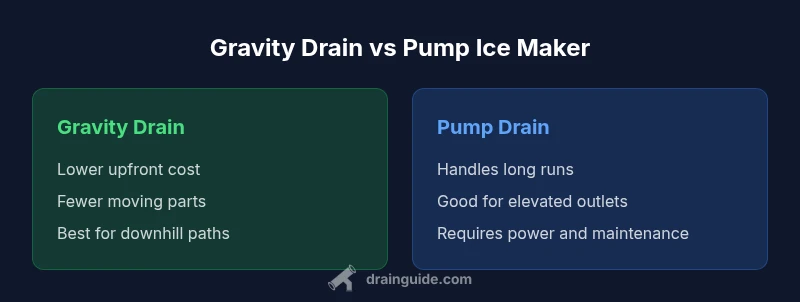
Gravity drain vs pump ice maker: The choice hinges on installation height, drainage distance, and maintenance. Gravity drainage relies on the meltwater flowing downhill to a nearby drain, while a pump-driven setup uses a small pump to move water to a distant outlet. For compact kitchens and low-height installs, gravity often wins; for long runs or raised outlets, a pump offers reliability.
Gravity Drain vs Pump Ice Maker: Core Concept
When you’re evaluating how a modern ice maker disposes of melt water, the core decision is how the drainage path is configured. Gravity drainage uses the natural slope of gravity to carry condensate and meltwater from the ice maker to a nearby drain. A pump-based system, by contrast, relies on a small inline pump to push water to a distant outlet, which can overcome height or distance limitations. Drainage architecture matters for kitchen layout, plumbing access, and future remodel plans. According to Drain Guide, the best solution often comes down to how the installation aligns with the existing drain path and the reliability you require in daily use. The gravity option tends to be simpler and cheaper upfront, while a pump approach adds capability for longer runs or higher outlets at the cost of additional components and maintenance. Understanding these fundamentals will help you map out what works for your space and how much flexibility you want as your kitchen evolves. In practical terms, this comparison centers on installation geometry, maintenance needs, and long-term performance under varying drain runs. The goal is to identify which method minimizes headaches while keeping ice-making operations smooth.
How Gravity Drain Systems Work
Gravity drain configurations rely on a gravity-fed path for melt water. The ice maker outlet connects to a dedicated condensate line that slopes gently toward the main drain. Key components include a drain trap to prevent sewer gases, a properly vented line to avoid siphoning, and a cleanout access point for debris. Because gravity-drain setups have fewer moving parts, they tend to require less routine maintenance and are cheaper upfront. Yet, the success of a gravity system depends on consistent slope and a drain that is physically reachable from the ice maker’s location. If the line runs uphill, or if there is a bend that disrupts flow, you can encounter slow drainage or backflow. Drain Guide notes that ensuring a clear, downhill path is essential for reliable operation, particularly in kitchen layouts where appliances sit far from the sink or main drain. A practical check is to verify that the condensate line remains unobstructed and that the run does not introduce standing water in the cabinet below the ice maker.
In summary, gravity drainage is a straightforward, low-cost approach that functions best when the ice maker sits close to a downhill drain path with minimal elevation changes. It also benefits from simplicity—no electrical components tied to the draining function. However, any install that requires rerouting or elevating the drain may challenge gravity-based drainage and push you toward a pumped solution. The Drain Guide perspective emphasizes evaluating the actual site conditions before committing.
How Pump-Driven Drainage Works
A pump-driven drainage system adds a small pump into the melt-water path to move water to a drain that is uphill or at a considerable distance. Pumps are commonly used where gravity alone cannot achieve reliable drainage, such as when the ice maker sits above the main drain or when the run is long. The pump is typically paired with an automatic float switch and a check valve to prevent backflow, and many kits incorporate an air-gap component to meet local plumbing codes. The presence of a pump introduces electrical considerations, an additional power source, and periodic maintenance for seals and impeller components. Pumps can be quieter than expected, but they require preventive maintenance to avoid failures that could leave meltwater backing up into the appliance or cabinet space. Drain Guide notes that pump-based drainage often provides the most flexibility for complex layouts, enabling installation in rooms where gravity would be impractical. The trade-off is cost and ongoing service needs, especially in homes with inconsistent power supplies or in climates where humidity and debris can affect pump operation. Overall, a pump-driven approach offers reliability in challenging drainage scenarios, at the expense of more equipment and potential maintenance tasks.
Key Differences in Installation and Maintenance
When choosing between gravity and pump drainage for an ice maker, installation complexity and ongoing maintenance are the main differentiators. Gravity drainage is typically simpler to install: just connect a condensate line to a downhill drain, ensure a consistent slope, and install a trap and venting per local codes. Maintenance tends to be lighter, with occasional cleaning of the line and trap. Pump-based drainage requires mounting and wiring for the pump, selecting an appropriate power source, and integrating a float switch and check valve. Maintenance includes periodic inspection of seals, impeller wear, and the power supply. In terms of reliability, gravity drains rarely fail because they have no moving parts; pumps can fail due to clogs, power interruptions, or sensor issues. Drain Guide emphasizes that the choice should reflect your kitchen’s layout, the distance to a drain, and how much you value low upfront costs versus long-term flexibility. If you expect remodels or a relocation of appliances, a pumped system may be easier to adapt than a gravity setup that cannot be easily re-routed.
In practice, plan for accessibility to cleanouts and ensure that any chosen approach complies with local plumbing codes. Consider whether you want a single, dedicated drain line or a shared path with other appliances. Each method has its own maintenance rhythm, and setting expectations early can prevent service calls and water-related issues down the road.
Performance Factors: Elevation, Run Length, and Slope
The performance of gravity drain systems hinges on elevation and slope. A consistent downhill run toward the main drain is essential; even small changes in height can drastically affect drainage speed. Shorter, downhill runs tend to perform best with gravity drainage, while longer or shallow slopes may slow flow or create backpressure. Pump systems counteract these physical limitations by actively moving water, which effectively expands where you can place the ice maker. The trade-off is power dependency and a greater likelihood of requiring routine checks for pump impellers and seals. Drainage slope quality also matters for pumps, as incorrect alignment can cause air pockets or clogging. Drain Guide recommends validating all connections and inspecting lines for kinks or pinches that could reduce flow. In both scenarios, evaluating the total drop from the ice maker to the drain and the total horizontal distance is a practical way to estimate performance and the likelihood of future maintenance needs. Ultimately, the decision should balance installation feasibility with long-term reliability.
Practical Install Scenarios: When to Choose Gravity Drain
For many kitchens, gravity drainage is the sensible first option because it leverages a simple, passive flow mechanism. If your ice maker sits near a downhill drain with a clear path for condensate, gravity drainage offers low upfront cost and minimal maintenance. It is especially advantageous when the cabinet space allows a direct run without substantial elevation changes or sharp turns. If your drain is located within a short distance and the run isn’t impeded by obstacles, gravity drainage often provides dependable performance with fewer parts that can fail. In contrast, if the ice maker must be placed far from a drain, or if the route requires lifting water uphill or through multiple floors, a pump-driven approach becomes more practical. Pumps tolerate longer runs and higher outlet placements, reducing the risk of clogs and backflow that can occur in gravity-only configurations. Drain Guide’s guidance here is pragmatic: map out your space, test the slope, and then decide whether a gravity line suffices or a pump is warranted for future-proofing. The goal is a clean, reliable drain path with minimal service calls.
Troubleshooting Common Issues for Each System
Gravity drain troubleshooting typically focuses on flow and slope. If water drains slowly or pools, inspect for kinks, blockages, or a misaligned drain. A clogged trap or vent can create pressure that disrupts flow, so cleaning or reconfiguring the trap can restore proper drainage. For pumped systems, check the pump for power supply issues, impeller wear, and the presence of debris in the intake. Verify that the float switch operates correctly and that the check valve is not stuck. Regular inspection helps prevent backflow and ensure the ice maker drains efficiently. Drain Guide suggests keeping the condensate line clean and free from food particles, grease, or soap buildup that can reduce flow. Being proactive about routine checks is especially important in busy kitchens where the drain line may accumulate contaminants from multiple uses.
Cost Considerations and Long-Term Value
From a financial perspective, gravity drainage typically offers the lowest upfront cost due to fewer components and simpler installation. Pumps introduce additional hardware, wiring, and potential maintenance costs, but they provide flexibility for challenging layouts and longer drainage runs. The long-term value of a pumped system is higher in installations where gravity would require expensive rework or where upgrades are planned that could relocate the ice maker. Drain Guide emphasizes evaluating total cost of ownership, including parts, labor, and potential retrofit expenses if you move or redesign the kitchen. If your goal is straightforward operation with minimal maintenance, gravity drainage can be the most economical choice. If your space constraints or future plans favor adaptability, a pump solution may deliver better long-term value despite higher initial costs.
Best Practices for Kitchen Drainage Planning
Effective planning starts before you install the ice maker. Measure the available drain path and visualize the route from the ice maker to the nearest drain. Check local codes for venting, traps, and air-gap requirements, and ensure easy access for future maintenance. Consider whether you prefer a gravity-only setup or want the flexibility provided by a pump system. Plan for cleanouts in accessible locations and choose materials that resist mineral buildup and corrosion. Finally, consult a professional if you are unsure about slope calculations, electrical requirements, or code compliance. A thoughtful plan reduces the risk of drainage problems and helps your ice maker operate smoothly for years.
Comparison
| Feature | Gravity Drain Ice Maker | Pump Drain Ice Maker |
|---|---|---|
| Installation height compatibility | Low-height/gravity path available | Can accommodate elevated outlets |
| Drainage distance | Best for short to moderate downhill runs | Handles long or uphill runs with pump assistance |
| Maintenance complexity | Fewer moving parts; simpler maintenance | Additional components; periodic pump checks |
| Reliability | Very reliable with proper slope | Consistent performance even when grade is challenging |
| Initial cost | Lower upfront cost | Higher upfront due to pump and controls |
| Best for | Kitchens near a downhill drain | Homes with remote or high-position drains |
Positives
- Lower upfront hardware cost for gravity-based drainage
- Fewer moving parts reduce failure risk
- Simplicity makes troubleshooting quick
- No power dependency for basic drainage path
- Quiet operation with minimal components
Cons
- Limited by elevation and downhill slope
- Not ideal for long or uphill runs without redesign
- Hardware changes can be costly if layout shifts
- Backups occur if slope is insufficient or line is blocked
Gravity drain is usually the simpler, cost-efficient choice when the ice maker sits along a downhill path; pump drainage offers versatility for longer or elevated runs.
Choose gravity drain for near-downhill installations with minimal layout changes. Opt for a pump system if your drain path is long, elevated, or otherwise not gravity-friendly to ensure reliable drainage and future flexibility.
Got Questions?
What is gravity drain ice maker drainage?
Gravity drain drainage uses the natural slope of gravity to carry melt water from the ice maker to a nearby drain without assisted pumping. It relies on a downward path and proper venting to prevent backflow and sewer gas issues. This approach is simple and cost-effective when geometry allows.
Gravity drainage relies on slope to move melt water to the drain. It’s simple and cost-effective when the kitchen layout supports a downhill path.
Can gravity drain handle long runs?
Gravity drainage can handle relatively long runs if the path remains downhill and free of sharp bends. When distances increase, the risk of slow drainage or standing water rises, which may prompt a shift to a pumped system. Always verify slope and line integrity.
Gravity can work for longer runs if the path stays downhill and straightforward; check slope and avoid sharp turns.
Do I need a pump if my drain is far away?
If the distance to the drain or the height difference is substantial, a pump offers reliable drainage where gravity would struggle. A pumped setup helps push condensate to the outlet, mitigating flow resistance and reducing the chance of backups.
For distant or high outlets, a pump can ensure reliable drainage where gravity struggles.
What maintenance does a pump drainage system require?
Pump systems require periodic checks of the impeller and seals, cleaning of intake screens, and verification that the float switch and check valve operate properly. Power availability and weather conditions can influence performance, so routine inspection is wise.
Pumps need occasional checks for wear, cleanouts, and ensuring electrical components work.
Is there a backflow risk with gravity drainage?
Backflow risk exists if the drain path is blocked or venting is inadequate. A properly installed gravity system uses a trap and vent to minimize this risk, but a clogged line or poor slope can create pressure that pushes wastewater back toward the ice maker.
Yes, backflow is possible if the line is blocked or venting is insufficient; proper traps and vents help reduce the risk.
How do installation costs compare between gravity and pump?
Gravity-based drainage typically costs less upfront due to simpler hardware, while pump-based installations incur additional components and wiring. Long-term costs vary with maintenance needs and potential future changes to the kitchen layout.
Gravity drains cost less upfront; pumps add hardware and maintenance costs but offer flexibility for layouts.
The Essentials
- Assess elevation and slope before choosing a method
- Gravity drain excels with close, downhill drain paths
- Pumps unlock long runs and high outlets but add cost and maintenance
- Plan for code compliance and accessible maintenance
- Consider future kitchen layouts when deciding