How to Unclog a Kitchen Sink Drain: Step-by-Step Guide
Learn safe, mechanical ways to unclog a kitchen sink drain. This Drain Guide tutorial covers traps, plungers, snakes, prevention, and when to call a pro.


Unclog a kitchen sink using mechanical methods: inspect and remove the P-trap, clear debris, plunge, then use a drain snake if needed. Avoid chemical cleaners initially. Get the full step-by-step guide for safe, effective relief.
Understanding kitchen sink clogs
Clogs in kitchen sinks typically form when grease, food scraps, soap scum, and coffee grounds accumulate over time. These materials cling to the walls of the drain and especially to the curves in the P-trap, creating a barrier that slows water flow or stops it altogether. The Drain Guide team emphasizes a methodical, mechanical approach first because it minimizes risk to pipes and disposals while keeping costs down. By understanding where clogs originate—usually at the trap, tailpiece, or downstream elbow—you can target your efforts more effectively and reduce future blockages. Regular maintenance, like preventing grease from going down the drain and periodically cleaning the trap, can dramatically reduce the frequency of clogs. Drain Guide Analysis, 2026, shows that a disciplined mechanical approach resolves the majority of kitchen sink clogs without resorting to harsh chemicals, especially in homes with standard copper or PVC plumbing.
Watch for warning signs such as slow draining, water backing up into the sink, or noises that indicate a gurgling drain. If you have a garbage disposal, the problem may be due to food particles jamming the grinding chamber or the discharge line. In such cases, you’ll want to isolate the disposal before probing the drain. This block lays the groundwork for safe, effective work and sets expectations for how long the process may take and what tools you’ll need.
Quick diagnostics and safety checks
Before you handle any pipes, perform a quick diagnostic to locate the clog and protect yourself and your home. Start by removing any standing water with a sponge or cup, then use a flashlight to examine the trap and accessible joints. If you have a garbage disposal, unplug its switch or disconnect power at the circuit to prevent accidental activation while you work. Check whether the water drains slowly even with the stopper open; this pattern usually indicates a downstream clog beyond the trap. If the trap is full of sludge or debris, that’s a strong signal you should start there. Drain Guide recommends prioritizing the trap and the immediate drain line rather than diving straight into the more complex pipe sections. After confirming the likely location, set up your workspace: lay towels, place a bucket under the trap, and prepare your tools. This upfront step minimizes cleanups and reduces water damage risk during the process.
Remove and inspect the P-trap
The P-trap is the most common site of kitchen sink clogs because it intentionally holds water to prevent sewer gases from entering your home. Start by placing a bucket under the trap to catch any remaining water. Use an adjustable wrench to loosen the slip nuts on each end of the trap, keeping the trap level as you work. Once loose, carefully detach the trap and inspect its interior for hair, grease, and food particles. Rinse the trap with warm water and a brush to remove stubborn buildup. While the trap is off, check the washers and gaskets for wear; worn seals can cause leaks after reassembly. If the trap looks corroded or cracked, replace it rather than attempting a quick fix. Reassemble the trap by tightening the slip nuts by hand first, then with the wrench—avoid overtightening to prevent cracking the plastic or metal parts. testing the trap is essential; run water and watch for slow drainage or leaks around the joints. Drain Guide emphasizes that a clean, well-sealed trap is often enough to restore normal flow without further troubleshooting.
- Why this matters: a clogged trap is easier to access and replace than a distant blockage, and a clean trap reduces the odds of re-clogs. - Pro tip: take a quick photo of how the trap is connected before disassembly so you can reattach it exactly the same way.
Plunging and snaking: when and how
If removing and cleaning the trap doesn’t fully restore flow, mechanical methods like plunging and using a drain snake are your next best options. Begin with the plunger: ensure the sink has enough water to cover the plunger cup, create a tight seal around the drain, and plunge with steady, vigorous strokes for 20-30 seconds. If the water clears, run hot water for a minute or two to flush remaining debris. If plunging fails to improve drainage, switch to a drain snake. Insert the snake into the drain, turning the handle clockwise to break through the obstruction. When you feel resistance, slowly retract the snake while continuing to rotate, removing any debris as you go. Coat the snake with a small amount of oil or dish soap to reduce sticking and ease withdrawal. Then flush with hot water to confirm the obstruction is cleared. If you have a garbage disposal, unplug it and avoid forcing the snake into the disposal unit’s grinding chamber; instead, feed the snake into the main drain line or the disposal outlet opening. Drain Guide notes that persistence with these methods is often enough to clear a typical kitchen clog without chemicals.
- Why it works: physical disruption of the blockage is safer for your pipes and more effective than chemical cleaners in many cases. - Pro tip: keep the snake clean and wipe off debris as you pull it back to prevent it from falling into the trap area. - Caution: never use a metal snake with a damaged or corroded pipe to avoid puncturing the wall or injuring yourself.
Alternative methods: plunger, auger, and safe cleaners
For stubborn clogs, you may need to combine methods. After initial trap removal and mechanical attempts, consider alternate approaches that remain gentle on plumbing. A cup plunger or flange plunger can be more effective on deep clogs than a standard sink plunger due to its seal and reach. A hand-crank drain auger (snake) of 3-6 feet length can break through deeper blockages; feed it slowly and rotate as you advance. If you decide to try a chemical cleaner, use one labeled safe for septic systems and follow the manufacturer’s directions precisely, but avoid using such cleaners in kitchens with disposals or metal pipes because of the risk of reactions and pipe damage. Always flush the system with hot water after any cleaner to clear residues. Drain Guide cautions that chemical cleaners are a last resort and can cause more harm than good in some configurations, especially with aluminum or copper pipes. In addition, never mix chemical cleaners with other cleaners as dangerous fumes can result. If you’re unsure about your pipes or the clog remains after these steps, it’s time to call a professional plumber.
- Why you’d switch methods: some clogs are multi-layered or located in bends that standard tools can’t reach. - Pro tip: label any removed components and keep track of their orientation for faster reassembly. - Warning: avoid combining chemical cleaners with a disposal or bleach, as chemical reactions can damage pipes and create hazardous fumes.
Aftercare, maintenance, and prevention
Once the drain runs freely again, perform a quick flush to clear lingering debris. Run hot water for 2-3 minutes and observe the flow to ensure there are no leaks at the joints. Clean the strainer and the top edge of the drain to prevent future buildup, and consider pouring a small amount of dish soap down the drain followed by hot water every few weeks to deter grease accumulation. Implement simple preventative habits: scrape plates before rinsing, avoid pouring grease or oil down the sink, and use a mesh strainer to catch solids. Periodically inspect the P-trap for wear and clean it as part of quarterly maintenance. If your home has a septic system, remember that clogs in kitchen lines can affect the entire system; practice conservative cleaning and avoid flushing non-degradables. Drain Guide recommends keeping a maintenance routine and addressing minor clogs early to prevent more serious issues later on. By adopting these habits, you’ll reduce the likelihood of repeated problems and extend the life of your drain system.
When to call a professional
Even with careful DIY, some situations require a plumber’s expertise. If you notice persistent backups after multiple attempts, leaks around the P-trap after reassembly, or you hear unusual noises in the pipes, it’s time to call a professional. Severely corroded pipes, a stuck disposal, or a venting issue can complicate self-repair and may require specialized equipment. Drain Guide suggests seeking help if you are uncomfortable with any step, lack the right tools, or have a history of recurring clogs in the same drain network. A licensed plumber can identify structural problems, diagnose vent or sewer-line issues, and provide long-term solutions that prevent future clogs. If you experience sewer odor, standing water in other fixtures, or multiple drains backing up, these are clear indicators that a professional assessment is warranted.
Final checks and verification
Before finishing, re-check all connections for leaks, ensure the trap is completely re-sealed, and run hot water for several minutes to flush debris from the system. If you smell sewer gas or notice dampness near the pipes, shut off water, dry the area, and reassess the connections. The goal is a clean, dry installation that passes a simple leak test: fill the sink with a small amount of water, then observe for a few minutes to detect any trickles. For ongoing prevention, clean the strainer weekly, avoid greasy residues going down the drain, and periodically flush with hot water to maintain flow. With careful steps and the right tools, most kitchen sink clogs can be resolved without professional intervention, preserving pipe integrity and reducing waste.
Safety considerations and common mistakes
Always prioritize safety when tackling clogs. Wear gloves, eye protection, and consider turning off the circuit that powers the garbage disposal if you’ll access the disposal area. Never use metal tools that can scratch the piping or injury yourself if a pipe is compromised. Avoid chemical drain cleaners in kitchens with disposals, and never mix cleaners with other household products. Common mistakes include overtightening trap nuts (which can crack plastic joints), using excessive force when removing the trap, and ignoring signs of leaks after reassembly. Following a methodical approach, as outlined in this article, reduces risk and improves outcomes. Drain Guide emphasizes that careful disassembly, inspection, and measured use of mechanical tools are the safest and most reliable path to a clear kitchen sink drain.
Tools & Materials
- Bucket(Large capacity to catch water and debris)
- Adjustable wrench(For loosening slip nuts on the P-trap)
- P-trap cleaning brush(Small bristle brush to scrub the trap)
- Plunger (cup or flange)(Flat-base or flange-style; choose based on sink shape)
- Drain snake / auger(Hand-crank 3-6 ft length is typical)
- Towels or rags(Dry area and wipe spills)
- Flashlight(Inspect inside pipes and trap)
- Old toothbrush(For cleaning small parts)
- Replacement washers(If gaskets wear)
- Dish soap and hot water(Help loosen grease during flush)
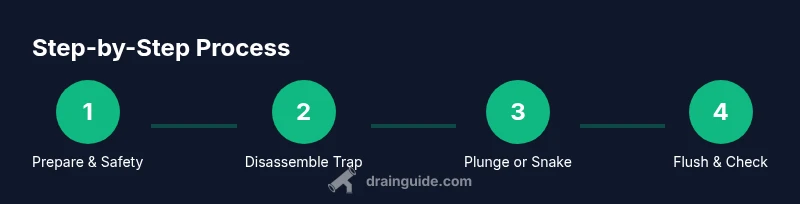
Steps
Estimated time: 45-90 minutes
- 1
Shut off water supply
Turn off the cold water under-sink valve to prevent new water from entering the drain while you work. This minimizes splashing and keeps the workspace dry. If you have a garbage disposal, unplug it and keep it off during the entire process.
Tip: Have a rag or towel handy to catch drips and keep your workspace clean. - 2
Prepare area and protect surfaces
Place a bucket under the trap area and lay towels to catch spills. Clear the cabinet and lay out your tools so you don’t scramble for items mid-task. This setup makes the project smoother and reduces the risk of dropping small parts.
Tip: Take a quick photo of how connections are oriented before you disassemble. - 3
Remove the P-trap
Use the adjustable wrench to loosen the slip nuts on both ends of the P-trap. Let the water drain into the bucket as you release the trap, keeping it level to minimize spills. Inspect the interior for debris and note any signs of wear on washers or seals.
Tip: Loosen nuts gradually and avoid twisting the trap harshly to prevent cracking. - 4
Clean and inspect the trap
Disassemble the trap and remove all debris. Rinse the trap with warm water and scrub with a brush to remove buildup. Check washers and gaskets; replace if worn.
Tip: If debris is stubborn, soak the trap briefly in warm soapy water. - 5
Reassemble and test
Reconnect the trap ensuring the washers are seated correctly. Hand-tighten first, then snug with the wrench without over-tightening. Refill the sink and run water to check for leaks and smooth drainage.
Tip: Watch for leaks at both joints; if you see drips, tighten slightly more and re-test. - 6
Plunge the drain
If the drain is still sluggish, fill the sink a bit to cover the plunger and give firm, consistent plunges for 20-30 seconds. Release and check drainage. Repeat if needed.
Tip: Ensure a strong seal around the drain; a poor seal reduces plunging effectiveness. - 7
Use the drain snake
Insert the snake into the drain, rotating the handle clockwise as you feed it in. When you feel resistance, pull back slowly while continuing to rotate to capture the obstruction. Remove debris and rerun the water.
Tip: Keep steady pressure and avoid forcing the snake through a joint; stop and reassess if resistance becomes excessive. - 8
Final flush and evaluation
Flush the drain with hot water for several minutes to clear any remaining residue. Reassess for leaks and confirm that water drains quickly. If the clog recurs, consider professional assessment.
Tip: Document the steps you took in case you need to reference them later.
Got Questions?
Can I use chemical drain cleaners on a kitchen sink?
Chemical drain cleaners can damage disposals and pipes, and they often fail to reach deep clogs. They should be used as a last resort, if at all.
Chemical drain cleaners can damage pipes and disposals, and are best avoided as a first option.
How long should I plunge before stopping?
If water doesn’t move after about 30 to 60 seconds of plunging, switch methods or inspect the trap again.
If you don’t see progress in 30 to 60 seconds, try another method.
Is it safe to use a drain snake if I have a garbage disposal?
Yes, but unplug the disposal and feed the snake into the main drain rather than into the disposal chamber to avoid blades and damage.
Yes—unplug the disposal and be careful around the blades.
What maintenance prevents clogs?
Scrape plates, avoid grease down the drain, and use a mesh strainer. Flush with hot water weekly to reduce buildup.
Keep a strainer, avoid grease, and flush with hot water regularly.
When should I call a professional?
If clogs persist after multiple methods or you notice leaks, you should contact a licensed plumber for a diagnosis.
Call a pro if the clog persists or you see leaks.
Watch Video
The Essentials
- Prioritize mechanical methods over chemicals.
- Shut off water and protect your workspace.
- Inspect and clean the P-trap for best results.
- Use a drain snake if plunging fails.
- Test flow with a hot-water flush after cleaning.