Tub Drain with Stopper: Step-by-Step Repair Guide
Learn to fix a tub drain with stopper with a clear, step-by-step approach. Identify stopper type, clean debris, reseat seals, or replace components. Safety tips and troubleshooting for common bathroom drains.


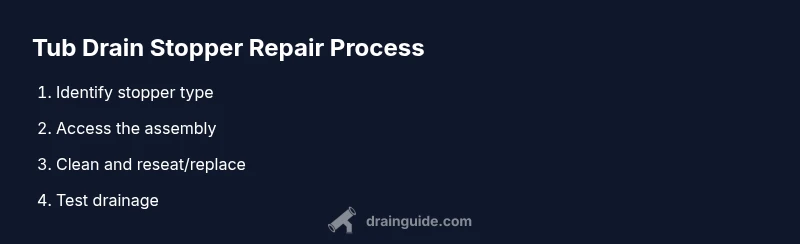
According to Drain Guide, you can fix a tub drain with stopper by inspecting the stopper type, cleaning debris, reseating or replacing the stopper, and testing for proper drainage. You'll need basic tools, a few spare parts, and a clear plan. This guide walks you through the steps with photos and safety tips.
Understanding the tub drain with stopper
A tub drain with stopper is designed to seal water in the tub while allowing quick drainage when opened. In most homes, the stopper sits in a lift-and-turn, toe-tap, or pop-up assembly connected to a plunger or lever. The exact parts vary by maker, but the goal is the same: create a water-tight seal when closed and a reliable release when opened. Drainage problems usually come from hair, soap scum, mineral buildup, or worn seals. Drain Guide notes that recognizing the stopper type is the first step in diagnosis, because different assemblies require different removal techniques. Before you begin, clear the work area, gather tools, and place a towel or bucket to catch any standing water. Be mindful of sharp edges and avoid forcing components that look stuck. If you’re unsure, consult your tub’s model manual or check for a manufacturer’s tag on the stopper. This guide uses plain-language steps that apply to most common designs and will help you restore proper drainage without unnecessary disassembly. According to Drain Guide, understanding the stopper mechanism is key to a safe, effective repair.
Common issues with tub drain stoppers
Most tub drains fail for similar reasons: hair and soap scum bind the stopper, mineral deposits dry the seal, or a worn gasket reduces suction. Lift-and-turn stoppers can loosen screws, toe-tap styles wear their pivot, and pop-up assemblies can separate at the connection point to the overflow plate. When drainage slows or water drains with gurgling noises, start by identifying the stopper type and removing visible debris. In many homes, a simple cleaning reveals the root cause. Drain Guide highlights that even a well-cleaned stopper can lose its seal if the metal surfaces corrode or if rubber seals have hardened. Checking the overflow faceplate for mineral buildup is often a quick win. By addressing the most common failure points, you’ll restore functionality and reduce the need for harsher chemical solutions.
Diagnosing the problem quickly: slow drain vs. complete blockage
A tub drain with stopper can act up in different ways. If water pools and drains slowly, the stopper may be seated poorly or there is hair buildup around the edge. If water won’t drain at all, the trap or the drain pipe may be blocked, or the stopper may be stuck in the closed position. To diagnose, remove the stopper and perform a visual check, then run water briefly to observe flow. If debris is evident, vacuum or wipe it away before testing again. For safety, turn off the faucet and keep children away while you work. Correct diagnosis saves time and prevents unnecessary parts replacement.
Tools, safety gear, and workspace setup
Preparing the right tools reduces frustration. You’ll want a 6- to 8-inch adjustable wrench, needle-nose pliers, a flathead and Phillips screwdriver, a bucket, old towels or rags, and a replacement stopper or gasket kit if you suspect wear. Wear gloves to protect your hands from sharp metal edges and from cleaners you may use during maintenance. Set the tub drain area over a towel so water and debris are contained. Keep a small flashlight handy to inspect crevices under the stopper assembly. A clean workspace reduces the chance of dropping screws or losing tiny parts inside the drain.
Cleaning, reseating, and testing the stopper (step-by-step interactions)
This section explains how to clean, reseat, or replace a stopper and related seals. Start by removing the stopper according to its type, then clean the seat and stem with a mild, non-abrasive cleaner. Rinse and dry to prevent corrosion. Reassemble loosely and test by filling the tub and draining; listen for leaks or slow drainage. If the seal still fails, inspect the gasket or o-ring for wear and replace as needed. Finally, test again and confirm water clears the tub promptly. If your stopper is old or damaged, investing in a replacement kit can save time in the long run. Throughout this process, maintain a steady pace and avoid forcing parts.
When to replace components or call a professional
If you identify a cracked stopper, corroded metal parts, or a damaged overflow seal, replacement is usually the best option. Some assemblies require specific stopper sizes and spring-loaded mechanisms that can be tricky to source. If you cannot disconnect the assembly without force or you notice persistent leaks after reseating, consult a professional plumber. Drain Guide recommends considering a professional if you encounter a non-standard tub drain with stopper or if the drain’s trap shows signs of damage. A quick evaluation can prevent water damage and mold growth behind walls.
Maintenance to prevent future clogs and leaks
After you complete a repair, implement a simple maintenance routine. Clean the stopper monthly, remove visible hair from the drain, and flush the line with hot water to reduce mineral buildup. Consider using a mesh stopper to trap hair, and inspect the overflow plate annually for signs of corrosion. Keeping the drain area dry and free of soap scum reduces odor and slows wear on gaskets. By establishing a routine, you’ll prolong the life of the tub drain with stopper and minimize calls for a plumber.
Tools & Materials
- Adjustable wrench(6- or 8-inch preferred, for loosening fittings under the stopper assembly)
- Needle-nose pliers(For removing hair and small clips)
- Flathead screwdriver(Small size for slot screws in stopper mechanism)
- Phillips screwdriver(For screws on lever/hinge components)
- Bucket(To catch water and debris during disassembly)
- Old towels or rags(Protect workspace and mop up spills)
- Replacement stopper or gasket kit(Match model or universal compatible kit)
- Gloves(Protect hands from sharp edges and cleaners)
Steps
Estimated time: 30-45 minutes
- 1
Identify stopper type
Begin by visualizing the stopper design. Lift-and-turn, toe-tap, and pop-up styles each remove differently. Use the model number if available to find the right removal method. This step prevents accidental damage and speeds up repair.
Tip: Take photos before disassembly to keep track of part orientation. - 2
Turn off water and prepare workspace
Shut off any water flow to the tub and place the bucket and towels within easy reach. Clear hair and cleaners from the surrounding area to avoid spills. A clean workspace reduces mistakes and loss of small parts.
Tip: Lay a cloth under screws and small components to prevent loss. - 3
Remove stopper assembly
Carefully disengage the stopper according to its type. If screws are present, keep them organized in a labeled container. Do not force stubborn parts; apply gentle leverage and, if needed, penetrating oil sparingly.
Tip: Document the order of parts as you remove them. - 4
Clean and inspect components
Wipe the seat, stem, and seals with a mild cleaner. Rinse and dry completely to prevent corrosion. Inspect rubber seals for cracking or hardening and check for hair buildup around the edge.
Tip: Replace any worn gaskets or seals rather than reusing damaged ones. - 5
Reassemble and test drainage
Reassemble the stopper loosely, then run water and test drainage. Tighten gradually if leaks appear, and ensure the stopper seals firmly when closed. Refill and test several times to confirm consistent flow.
Tip: Test both with full and partial water levels to assess seal performance. - 6
Replace worn parts if needed
If the stopper or seals show significant wear or damage, install a compatible replacement kit. A proper fit ensures long-term performance and reduces future maintenance calls.
Tip: Keep spare gaskets and a compatible stopper on hand for quick future fixes.
Got Questions?
What is the most common tub drain stopper problem?
Hair and soap scum buildup often prevent a clean seal. Mineral deposits and worn gaskets can worsen drainage. Regular cleaning and inspection prevent most issues.
Hair buildup and worn seals are the usual culprits; cleaning and replacing worn parts usually resolves the problem.
Do I need to remove the overflow plate to access the stopper?
Not always. Some stoppers are accessible from the top or beneath the tub surface. If you can’t unlink the stopper easily, you may need to remove the overflow plate to access the mechanism.
Sometimes you can access it from above, but in some cases you’ll need to remove the overflow plate.
Can chemical drain cleaners help tub drains with stoppers?
Harsh chemical cleaners can degrade rubber seals and metal parts. It’s safer to remove hair manually and use mild cleaners for the surfaces around the stopper.
Avoid harsh chemicals near rubber seals; manual cleaning is safer and usually effective.
What if I can’t identify the stopper type?
Check the model number on the tub or stopper, refer to the manufacturer’s diagram, or compare the design to common types. If in doubt, proceed carefully and avoid forcing parts.
If unsure, compare features to common types and work slowly to avoid damage.
When should I replace the stopper rather than repair?
If the stopper is cracked, corroded, or the seal is permanently worn, replacement is usually more cost-effective and reliable than ongoing repairs.
If damage is extensive, replacement is the best long-term fix.
Watch Video
The Essentials
- Identify stopper type before disassembly
- Clean and reseat to restore seal
- Replace worn seals for reliability
- Test drainage from full to partial levels